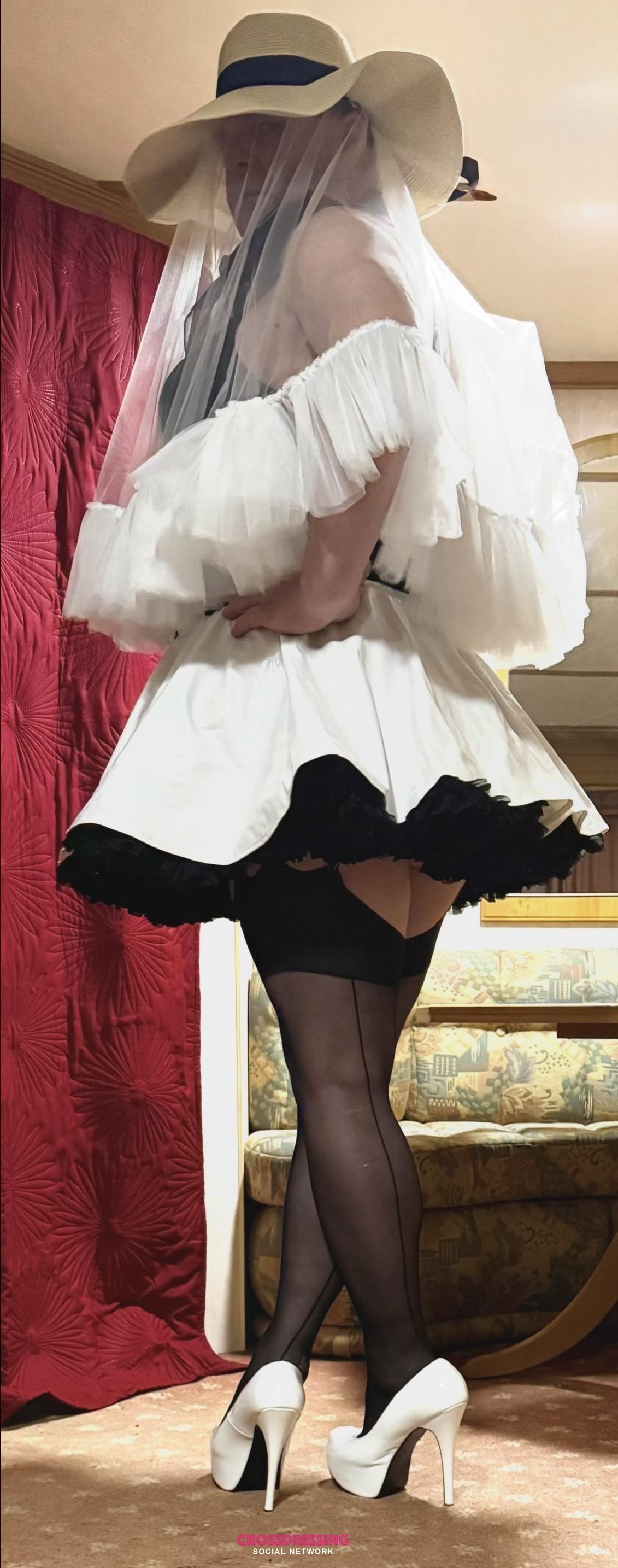
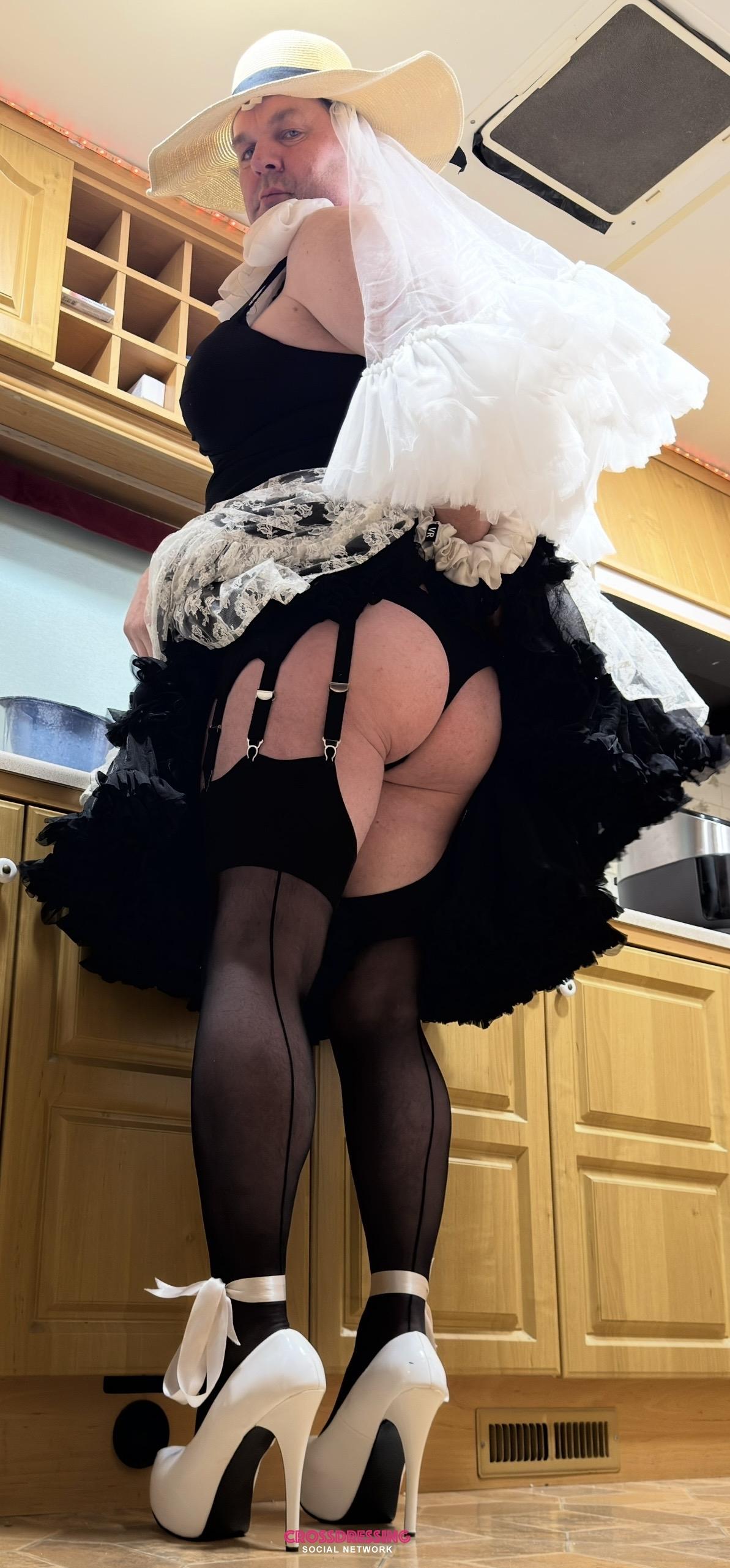
• #laceskirt #petticoat #stockings #suspenders #veil #highheels
    #laceskirt #petticoat #stockings #suspenders #veil #highheels
    Love
    Like
    Yay
    6
    0 Commentarii 0 Distribuiri 1K Views
  • I am sixty four, unemployed after caring for the last few years for my wife, and a widower of exactly three months. My wife died from a long ilness on the 12th of November 2025. The house is a 1970s terraced end of row in a quiet Midlands estate, two up, two down, pebble dash front, UPVC windows, the kind of place where neighbours know when you put the bins out. No children, long grown up and moved away, nor other family members, just me and the central heating that clicks on at six-thirty every morning whether I want it to or not.
    We were married forty five years. I worked in the same warehouse until they made me redundant in 2020, she kept the books for a small solicitor until her diagnosis. After the funeral I sold her car, cancelled the window cleaner, and the weekly supermarket internet shopping and started drawing on my tiny pension. The days are long and the nights are longer.
    Most evenings I sit in the front room with the curtains drawn and the television on mute. Tonight the house feels smaller than usual. The clock on the mantelpiece says 21:17. I stand up, switch off the lamp, and walk upstairs in the dark.
    In the spare bedroom her sewing room that became my dressing room I open the tall IKEA wardrobe. The left side is still her dresses and coats. The right side is mine: the secret side. Rows of satin headscarves in every colour, polyester foulards bought on eBay, oversized satin hijabs in midnight black and charcoal, metres and metres of sheer chiffon voile in black, graphite, and the deepest ink. Some still smell faintly of the fabric softener she used.
    I undress slowly. The mirror on the wardrobe door is cheap and slightly warped, but it is honest. Naked, sixty-four, soft belly, thin legs, the body of a man who has outlived his usefulness. I reach for the black satin corset first, cheap second hand eBay corset lingerie, lightly boned, size 3XL. I hook it closed until my waist and soft belly shrink and my breathing turns shallower. Then the high waisted black satin knickers, the sheer black stockings with the wide lace tops, the long line black satin slip that whispers against my skin like a promise.
    Next the dress: a full skirted 1950s style mourning day dress made from heavy black polyester satin, high collar, long sleeves, hem that brushes my ankles. Over it I tie a wide black satin sash that cinches across my contained belly. The fabric is slippery, cool, obscene in its shine.
    Now the head. This is the part that matters most.
    I choose the largest satin hijab first, jet black, 140 cm square, heavy bridal satin that catches every stray bit of light. I fold it into a triangle, drape it over my head so the point hangs down my back, then bring the two ends under my chin and tie them in a tight knot at the nape of my neck. The satin lies glossy and taut across my forehead, smooth over my ears, covering every grey hair. It feels like being sealed.
    Over the satin I pin a second layer: a sheer black chiffon voile scarf, almost transparent, 120 cm square. I drape it loosely so it falls across my face like a mourner’s veil from another century, but softer, more sensual. The chiffon drifts against my lips when I breathe. I can see through it, only just, but the world is softened, blurred, intimate. I add a third scarf, a smaller polyester foulard in charcoal, tied bandana style over the top to weight the chiffon down and keep it in place. The layers stack: satin underneath, chiffon floating, polyester binding. My face is gone. Only eyes, mouth, the suggestion of a nose remain.
    I step back. The mirror shows a figure that is neither man nor woman, neither past nor present. A black satin widow from a fever dream. The train of the dress drags on the cheap carpet, the petticoat beneath it rustles. Every movement makes the satin sigh.
    I walk downstairs like this, tiny steps because the corset and the long skirt will allow nothing else. The chiffon veil brushes my lashes. In the kitchen I pour a large whisky with gloved hands, black satin opera gloves that reach my elbows. I carry the glass into the living room, sit on the sofa, cross my legs at the ankle the way she used to. The layers of satin and chiffon settle around me like a second skin.
    Outside, a car passes. Inside, the only sound is the soft hiss of fabric when I breathe.
    Three months a widower. Forty five years a husband. Sixty four years a man who has always, secretly, wanted to disappear inside silk and satin and the soft prison of a veil.
    I lift the edge of the chiffon just enough to sip the whisky. The taste is sharp against the sweetness of the fabric against my mouth. Then I let the veil fall again.
    In this house, in this year 2026, no one is watching.
    No one will ever know.
    And for the first time since November, I feel almost at peace
    perfectly veiled,
    perfectly hidden,
    perfectly hers.
    I am sixty four, unemployed after caring for the last few years for my wife, and a widower of exactly three months. My wife died from a long ilness on the 12th of November 2025. The house is a 1970s terraced end of row in a quiet Midlands estate, two up, two down, pebble dash front, UPVC windows, the kind of place where neighbours know when you put the bins out. No children, long grown up and moved away, nor other family members, just me and the central heating that clicks on at six-thirty every morning whether I want it to or not. We were married forty five years. I worked in the same warehouse until they made me redundant in 2020, she kept the books for a small solicitor until her diagnosis. After the funeral I sold her car, cancelled the window cleaner, and the weekly supermarket internet shopping and started drawing on my tiny pension. The days are long and the nights are longer. Most evenings I sit in the front room with the curtains drawn and the television on mute. Tonight the house feels smaller than usual. The clock on the mantelpiece says 21:17. I stand up, switch off the lamp, and walk upstairs in the dark. In the spare bedroom her sewing room that became my dressing room I open the tall IKEA wardrobe. The left side is still her dresses and coats. The right side is mine: the secret side. Rows of satin headscarves in every colour, polyester foulards bought on eBay, oversized satin hijabs in midnight black and charcoal, metres and metres of sheer chiffon voile in black, graphite, and the deepest ink. Some still smell faintly of the fabric softener she used. I undress slowly. The mirror on the wardrobe door is cheap and slightly warped, but it is honest. Naked, sixty-four, soft belly, thin legs, the body of a man who has outlived his usefulness. I reach for the black satin corset first, cheap second hand eBay corset lingerie, lightly boned, size 3XL. I hook it closed until my waist and soft belly shrink and my breathing turns shallower. Then the high waisted black satin knickers, the sheer black stockings with the wide lace tops, the long line black satin slip that whispers against my skin like a promise. Next the dress: a full skirted 1950s style mourning day dress made from heavy black polyester satin, high collar, long sleeves, hem that brushes my ankles. Over it I tie a wide black satin sash that cinches across my contained belly. The fabric is slippery, cool, obscene in its shine. Now the head. This is the part that matters most. I choose the largest satin hijab first, jet black, 140 cm square, heavy bridal satin that catches every stray bit of light. I fold it into a triangle, drape it over my head so the point hangs down my back, then bring the two ends under my chin and tie them in a tight knot at the nape of my neck. The satin lies glossy and taut across my forehead, smooth over my ears, covering every grey hair. It feels like being sealed. Over the satin I pin a second layer: a sheer black chiffon voile scarf, almost transparent, 120 cm square. I drape it loosely so it falls across my face like a mourner’s veil from another century, but softer, more sensual. The chiffon drifts against my lips when I breathe. I can see through it, only just, but the world is softened, blurred, intimate. I add a third scarf, a smaller polyester foulard in charcoal, tied bandana style over the top to weight the chiffon down and keep it in place. The layers stack: satin underneath, chiffon floating, polyester binding. My face is gone. Only eyes, mouth, the suggestion of a nose remain. I step back. The mirror shows a figure that is neither man nor woman, neither past nor present. A black satin widow from a fever dream. The train of the dress drags on the cheap carpet, the petticoat beneath it rustles. Every movement makes the satin sigh. I walk downstairs like this, tiny steps because the corset and the long skirt will allow nothing else. The chiffon veil brushes my lashes. In the kitchen I pour a large whisky with gloved hands, black satin opera gloves that reach my elbows. I carry the glass into the living room, sit on the sofa, cross my legs at the ankle the way she used to. The layers of satin and chiffon settle around me like a second skin. Outside, a car passes. Inside, the only sound is the soft hiss of fabric when I breathe. Three months a widower. Forty five years a husband. Sixty four years a man who has always, secretly, wanted to disappear inside silk and satin and the soft prison of a veil. I lift the edge of the chiffon just enough to sip the whisky. The taste is sharp against the sweetness of the fabric against my mouth. Then I let the veil fall again. In this house, in this year 2026, no one is watching. No one will ever know. And for the first time since November, I feel almost at peace perfectly veiled, perfectly hidden, perfectly hers.
    Love
    7
    3 Commentarii 0 Distribuiri 2K Views
  • I remember the exact moment I decided the night belonged to me alone. The room smelled of rosewater, old bruised satin drapes, and the faint metallic tang of ancient makeup. Mirrors surrounded me like silent courtiers, each reflecting a different fragment of the creature I was becoming. Tonight I wasn't just performing, I was ascending. First came the foundation: cool porcelain over warm skin, smoothed until I looked carved from moonlight. Then the eyes. Oh, the eyes. I dipped a fine brush into that impossible turquoise pigment the exact shade of tropical shallows under storm clouds and painted sweeping wings that stretched toward my temples. Eyelashes like black lace fans. Lips the colour of bruised sapphires, outlined sharper than a guillotine's edge. Cheeks dusted with shimmering frost so the light would catch and fracture. The hijab went on next. Heavy turquoise satin, cool against my scalp. I wrapped it with ritual precision, tucking every rebellious strand away until only regal geometry remained. Over that, the oversized satin headscarf yards of it draped and folded into majestic pleats that framed my face like a Renaissance altarpiece gone deliciously rogue. Then the cascading chiffon voile veil, light as breath, heavy with intention. It spilled from the crown in watery layers, catching every flicker of candlelight and turning it into liquid mercury. The gown followed: high necked, modest in the Victorian sense, scandalous in every other. Satin bodice hugging just enough to remind the world what architecture the body can achieve, then exploding into flowing panels of voile and satin that whispered across the floor like conspiratorial ghosts. Ankle length, yes, but the way it moved suggested it might lift at any moment and carry me off the ground entirely. I stepped into the main chamber. The throne waited upholstered in the same decadent turquoise satin, tufted and tasselled, looking like something a decadent Ottoman sultan might have abandoned in a fit of ennui. I arranged myself upon it slowly, deliberately. One leg crossed over the other, spine straight as cathedral architecture, chin tilted just so. Left hand resting on the armrest, fingers splayed to show off the long turquoise nails. Right hand splayed in a gesture that could have been benediction, accusation, or invitation take your pick. Then came the lighting. A single harsh key light from high right, carving brutal shadows across the left side of my face; a faint fill from low left to keep the eyes from disappearing into darkness; everything else swallowed by velvet black. Chiaroscuro taken to theatrical extremes. The satin drank the light and threw it back richer, glossier, almost liquid. My skin glowed like moonlit marble. The veil caught stray photons and turned them into faint turquoise fireflies suspended in air. I struck the pose. Head turned three quarters, gaze locked on some invisible point just beyond the fourth wall. Lips parted the tiniest fraction as though I were about to deliver the wittiest, most devastating line in the history of spoken language, but had decided silence was crueler. One eyebrow infinitesimally raised. The veil drifted slightly with my breath, a slow, hypnotic undulation. Somewhere in the darkness, I heard a stifled giggle. Good. Let them laugh. Let them gasp. Let them clutch their pearls and question every certainty they ever held about gender, grief, glamour, and good taste. Because here I sat mourning queen of nothing and everything, turquoise flamed phoenix in widow's weeds, Caravaggio's most flamboyant fever dream filtered through Doré's feverish embellishments. The shadows deepened around me, thick as ink. The satin throne gleamed like wet paint. My makeup shimmered, defiant and absurd and utterly regal. And in that perfect, ridiculous, holy instant, I felt it: I was the most beautiful thing in the universe.
    I remember the exact moment I decided the night belonged to me alone. The room smelled of rosewater, old bruised satin drapes, and the faint metallic tang of ancient makeup. Mirrors surrounded me like silent courtiers, each reflecting a different fragment of the creature I was becoming. Tonight I wasn't just performing, I was ascending. First came the foundation: cool porcelain over warm skin, smoothed until I looked carved from moonlight. Then the eyes. Oh, the eyes. I dipped a fine brush into that impossible turquoise pigment the exact shade of tropical shallows under storm clouds and painted sweeping wings that stretched toward my temples. Eyelashes like black lace fans. Lips the colour of bruised sapphires, outlined sharper than a guillotine's edge. Cheeks dusted with shimmering frost so the light would catch and fracture. The hijab went on next. Heavy turquoise satin, cool against my scalp. I wrapped it with ritual precision, tucking every rebellious strand away until only regal geometry remained. Over that, the oversized satin headscarf yards of it draped and folded into majestic pleats that framed my face like a Renaissance altarpiece gone deliciously rogue. Then the cascading chiffon voile veil, light as breath, heavy with intention. It spilled from the crown in watery layers, catching every flicker of candlelight and turning it into liquid mercury. The gown followed: high necked, modest in the Victorian sense, scandalous in every other. Satin bodice hugging just enough to remind the world what architecture the body can achieve, then exploding into flowing panels of voile and satin that whispered across the floor like conspiratorial ghosts. Ankle length, yes, but the way it moved suggested it might lift at any moment and carry me off the ground entirely. I stepped into the main chamber. The throne waited upholstered in the same decadent turquoise satin, tufted and tasselled, looking like something a decadent Ottoman sultan might have abandoned in a fit of ennui. I arranged myself upon it slowly, deliberately. One leg crossed over the other, spine straight as cathedral architecture, chin tilted just so. Left hand resting on the armrest, fingers splayed to show off the long turquoise nails. Right hand splayed in a gesture that could have been benediction, accusation, or invitation take your pick. Then came the lighting. A single harsh key light from high right, carving brutal shadows across the left side of my face; a faint fill from low left to keep the eyes from disappearing into darkness; everything else swallowed by velvet black. Chiaroscuro taken to theatrical extremes. The satin drank the light and threw it back richer, glossier, almost liquid. My skin glowed like moonlit marble. The veil caught stray photons and turned them into faint turquoise fireflies suspended in air. I struck the pose. Head turned three quarters, gaze locked on some invisible point just beyond the fourth wall. Lips parted the tiniest fraction as though I were about to deliver the wittiest, most devastating line in the history of spoken language, but had decided silence was crueler. One eyebrow infinitesimally raised. The veil drifted slightly with my breath, a slow, hypnotic undulation. Somewhere in the darkness, I heard a stifled giggle. Good. Let them laugh. Let them gasp. Let them clutch their pearls and question every certainty they ever held about gender, grief, glamour, and good taste. Because here I sat mourning queen of nothing and everything, turquoise flamed phoenix in widow's weeds, Caravaggio's most flamboyant fever dream filtered through Doré's feverish embellishments. The shadows deepened around me, thick as ink. The satin throne gleamed like wet paint. My makeup shimmered, defiant and absurd and utterly regal. And in that perfect, ridiculous, holy instant, I felt it: I was the most beautiful thing in the universe.
    Love
    4
    0 Commentarii 0 Distribuiri 3K Views
  • Name's Delilah "Dolly" Malone, private eye by trade, sissy by nature. Obese, overweight, and unapologetic about it, I waddled through this apocalypse in a Barbie pink ankle length trenchcoat that billowed like a parachute in the fallout wind. Underneath, my pink Victorian mourning attire clung to my rolls, a long pink satin gown with subtle sheen highlights that caught the dim rad lights just right, making me shimmer like a forbidden dream. My oversized pink satin headscarf framed my face, tied in a bow that screamed Rococo excess, and a sheer pink chiffon voile veil draped over it all, misting my vision in rosy haze. Glossy shiny deluxe blouse frills peeked out at the collar, frilly as a sissy maid's apron. Dramatic pink lips, pink eyeliner I painted myself like a doll in a world gone gray. Hard boiled? Sure, but with a soft center that melted at the wrong touch. It started like any other gig in this irradiated hellhole, the kind where the client slinks into your office smelling of desperation and cheap perfume. My office was a gutted bungalow on what's left of Sunset Boulevard, walls papered with faded starlet posters glowing faintly from the rads. She walked in or slithered, more like a femme fatale straight out of the old reels, but twisted by the apocalypse. Tall, gaunt, with skin like irradiated porcelain and eyes that could melt lead. Called herself Veronica Voss, heir to some pre war studio fortune, or so she claimed. "Dolly," she purred, her voice like velvet over razor wire, "I need you to find my husband. He's gone missing with a stash of pre-war gold the kind that could buy us a ticket out of this wasteland." I should've walked away. But her gaze lingered on my pink ensemble, a smirk playing on those blood red lips. "You look... exquisite," she said, tracing a finger along my frilled blouse. Love or money? Hell, in my line of work, it's always both. I took the case, lured like an innocent lamb to the slaughter. Average? Me? Law abiding? In this world, survival's the only law, but yeah, I was tempted. She dangled promises, a cut of the gold, a night in her arms, where I'd be her pretty little doll. My heart, buried under layers of satin and fat, fluttered like a trapped bird. The trail led to the ruins of the Hollywood Sign, now a jagged "HOLLYW D" mocking the sky. Dutch angles everywhere, the ground tilted under my heels, my pink gown swishing as I lumbered up the hill, veil fluttering in the toxic breeze. I found clues: a scorched map to a vault in the old MGM lot, whispers of a heist crew Veronica's hubby had assembled. Perfect crime, they thought crack the vault, grab the gold, vanish into the Mojave like ghosts. But greed's a hungry beast. I pieced it together from rad scorched notes and bullet riddled bodies: internal betrayal, bad luck from a radstorm that fried their getaway vertibird. The hubby was dead, double crossed by his own femme fatale wait, no. By Veronica? My gut twisted. That's when it got personal. Digging deeper, I uncovered photos in the vault pre war snapshots of a man who looked too familiar. Me? No, couldn't be. But the face... my face, slimmer, harder, before the bombs, before the pink. Amnesia hit like a sledgehammer. I'd blacked out chunks of my past after the fallout, waking up in this body, this craving for satin and veils. Identity crisis? You bet. Turns out, I wasn't always Dolly. I was that hubby or a clone, or some rad mutated twin. Veronica had lured me in before the war, manipulated me into a heist for her studio's hidden fortune. I stole, I killed, she betrayed me, left me for dead in the blast. Now, post apocalypse, she'd tracked me down, not knowing it was me under the pink, the fat, the frills. She wanted the gold I'd stashed in my fogged memory. Corruption seeped in like fallout rain. The case turned dangerous her goons on my tail, corrupt Enclave remnants posing as authorities, accusing me of the old murders. Innocent man on the run? Wrongfully accused in a world where justice is a loaded .45. I evaded them through the twisted streets, my trenchcoat snagging on barbed wire, pink satin tearing like my sanity. Hiding in a bombed out mansion, I confronted her. "You," I gasped, veil askew, lips smudged. "You did this to me." She laughed, that velvet razor slicing deep. "Darling, you were always a pushover. A little love, a little money and look at you now, all dolled up." She drew a pearl handled pistol, the trap sprung. The heist gone wrong? This was round two. I lunged obese, but fueled by rage knocking the gun away. We tumbled in Dutch angled chaos, shadows twisting like my gown's sheen. But greed won. She grabbed the gold map from my pocket, shot me in the gut. As I bled out on the irradiated floor, pink staining red, I realized: destruction was always the endgame. For the lured innocent, the doomed detective, the betrayed sissy in a world of gray. Fade to black, darling. Fade to pink.
    Name's Delilah "Dolly" Malone, private eye by trade, sissy by nature. Obese, overweight, and unapologetic about it, I waddled through this apocalypse in a Barbie pink ankle length trenchcoat that billowed like a parachute in the fallout wind. Underneath, my pink Victorian mourning attire clung to my rolls, a long pink satin gown with subtle sheen highlights that caught the dim rad lights just right, making me shimmer like a forbidden dream. My oversized pink satin headscarf framed my face, tied in a bow that screamed Rococo excess, and a sheer pink chiffon voile veil draped over it all, misting my vision in rosy haze. Glossy shiny deluxe blouse frills peeked out at the collar, frilly as a sissy maid's apron. Dramatic pink lips, pink eyeliner I painted myself like a doll in a world gone gray. Hard boiled? Sure, but with a soft center that melted at the wrong touch. It started like any other gig in this irradiated hellhole, the kind where the client slinks into your office smelling of desperation and cheap perfume. My office was a gutted bungalow on what's left of Sunset Boulevard, walls papered with faded starlet posters glowing faintly from the rads. She walked in or slithered, more like a femme fatale straight out of the old reels, but twisted by the apocalypse. Tall, gaunt, with skin like irradiated porcelain and eyes that could melt lead. Called herself Veronica Voss, heir to some pre war studio fortune, or so she claimed. "Dolly," she purred, her voice like velvet over razor wire, "I need you to find my husband. He's gone missing with a stash of pre-war gold the kind that could buy us a ticket out of this wasteland." I should've walked away. But her gaze lingered on my pink ensemble, a smirk playing on those blood red lips. "You look... exquisite," she said, tracing a finger along my frilled blouse. Love or money? Hell, in my line of work, it's always both. I took the case, lured like an innocent lamb to the slaughter. Average? Me? Law abiding? In this world, survival's the only law, but yeah, I was tempted. She dangled promises, a cut of the gold, a night in her arms, where I'd be her pretty little doll. My heart, buried under layers of satin and fat, fluttered like a trapped bird. The trail led to the ruins of the Hollywood Sign, now a jagged "HOLLYW D" mocking the sky. Dutch angles everywhere, the ground tilted under my heels, my pink gown swishing as I lumbered up the hill, veil fluttering in the toxic breeze. I found clues: a scorched map to a vault in the old MGM lot, whispers of a heist crew Veronica's hubby had assembled. Perfect crime, they thought crack the vault, grab the gold, vanish into the Mojave like ghosts. But greed's a hungry beast. I pieced it together from rad scorched notes and bullet riddled bodies: internal betrayal, bad luck from a radstorm that fried their getaway vertibird. The hubby was dead, double crossed by his own femme fatale wait, no. By Veronica? My gut twisted. That's when it got personal. Digging deeper, I uncovered photos in the vault pre war snapshots of a man who looked too familiar. Me? No, couldn't be. But the face... my face, slimmer, harder, before the bombs, before the pink. Amnesia hit like a sledgehammer. I'd blacked out chunks of my past after the fallout, waking up in this body, this craving for satin and veils. Identity crisis? You bet. Turns out, I wasn't always Dolly. I was that hubby or a clone, or some rad mutated twin. Veronica had lured me in before the war, manipulated me into a heist for her studio's hidden fortune. I stole, I killed, she betrayed me, left me for dead in the blast. Now, post apocalypse, she'd tracked me down, not knowing it was me under the pink, the fat, the frills. She wanted the gold I'd stashed in my fogged memory. Corruption seeped in like fallout rain. The case turned dangerous her goons on my tail, corrupt Enclave remnants posing as authorities, accusing me of the old murders. Innocent man on the run? Wrongfully accused in a world where justice is a loaded .45. I evaded them through the twisted streets, my trenchcoat snagging on barbed wire, pink satin tearing like my sanity. Hiding in a bombed out mansion, I confronted her. "You," I gasped, veil askew, lips smudged. "You did this to me." She laughed, that velvet razor slicing deep. "Darling, you were always a pushover. A little love, a little money and look at you now, all dolled up." She drew a pearl handled pistol, the trap sprung. The heist gone wrong? This was round two. I lunged obese, but fueled by rage knocking the gun away. We tumbled in Dutch angled chaos, shadows twisting like my gown's sheen. But greed won. She grabbed the gold map from my pocket, shot me in the gut. As I bled out on the irradiated floor, pink staining red, I realized: destruction was always the endgame. For the lured innocent, the doomed detective, the betrayed sissy in a world of gray. Fade to black, darling. Fade to pink.
    Love
    2
    0 Commentarii 0 Distribuiri 5K Views
  • In the Hills after the Bomb they mostly call me The Late Detective. Late to justice, late to lunch, late to the end of the world. The sky was the colour of an old television left on after the station died, tilted at a Dutch angle like God had nudged the tripod and walked away. In this town, fabric tells the truth faster than people. I walked through it swaddled in turquoise satin, layered, intentional, defiant. My trenchcoated attire was heavy silk satin, the kind with a weight to it, a gravity. Satin doesn’t flutter; it arrives. It caught the light even in monochrome, turning every streetlamp into a confession. Underneath, the Victorian mourning attire did what it was designed to do: announce loss while indulging excess. Glossy deluxe blouse frills, cut wide and deep, each fold edged like it had a memory. They whispered when I moved. Satin remembers. It always does. The hijab headscarf was oversized turquoise satin, wrapped high and proud, smooth as a bribe sliding across a table. Over that, a chiffon voile veil, sheer, unforgiving, honest. Chiffon doesn’t hide anything; it only softens the blow. It floated just off my face, catching the radioactive breeze, turning my grief into motion. Taffeta anchored the gown beneath it all, crisp and slightly petulant, holding its shape like a stubborn alibi. Taffeta never forgets it’s there. I knew the case was serious the moment I saw the mannequins. The Garment District had been stripped naked. Not torn apart, undressed. Racks stood empty, arms out like they were asking questions nobody wanted to answer. The air smelled wrong. Usually it was starch, dye, steam, ambition. Now it was dust and panic. Silk was missing. All of it. Not just silk as a category, but silk as an idea. Satin-faced charmeuse. Heavy duchess satin meant for gowns that expected to be remembered. Raw silk with its tiny imperfections, honest as a tired smile. Silk twill that knew how to hold a line. Gone. Satin too, proper satin, not that plastic nonsense. The good stuff that slides between your fingers like it’s trying to escape. Satin that makes even cheap tailoring look like it has a lawyer. Vanished. Taffeta bolts were missing next. Crisp, noisy taffeta that rustles when you walk, announcing your presence whether you like it or not. The kind of fabric that refuses subtlety. Someone had wanted drama. And chiffon. God help us, chiffon. Weightless, floaty, translucent. Chiffon that catches on breath, on light, on the idea of movement. The chiffon racks looked like a graveyard of empty hangers. Voile too, cotton voile, silk voile, the gentle middle child that designers rely on when they want softness without surrender. Gone like a promise after the bombs. This wasn’t theft. This was curation. The femme fatale found me tracing the grain of a wooden cutting table, my gloved fingers remembering where silk had once lain. “They took only the best,” she said, lighting a cigarette like it was an accessory. “Nothing synthetic. Nothing that couldn’t mourn properly.” That told me everything. In the apocalypse, fabric becomes currency. Silk means water, means safety, means time to think. Satin means power. Taffeta means spectacle. Chiffon means hope. Voile means tenderness, the most dangerous commodity of all. I followed the trail through tailor shops and bombed out ateliers, past pattern paper fluttering like white flags. A single thread of turquoise voile snagged on a rusted nail led me uphill, toward the old soundstages where dreams used to be pressed, steamed, and sent out into the world with a smile. Inside, the thieves had laid it all out. Bolts of silk arranged by weight and weave. Satin draped over chairs, catching the light like liquid. Taffeta stacked with military precision, crisp edges aligned, ready to explode into skirts and coats. Chiffon suspended from rigging, floating in layers, a cloud of almost nothing. Voile stretched and tested, light passing through it like mercy. They weren’t stealing to sell. They were building. A final show. A post apocalyptic couture reveal. If the world was ending and it always was then it deserved a proper wardrobe. They surrounded me, guns low, eyes hungry. I adjusted my veil, let the chiffon breathe. “You can’t hoard fabric,” I told them. “It has to be worn. Silk dies in the dark.” The Choir hesitated. Madame Bias frowned, fingers brushing a length of satin like she was checking its pulse. The Cutter looked at my gown, at the way satin, taffeta, and chiffon argued and reconciled on my body. Fashion did the rest. In the end, the fabrics went back out into the streets. Seamstresses worked by candlelight. Mourning gowns bloomed. Trenchcoats shimmered. Veils floated through fallout like prayers that hadn’t given up yet. I walked home heavy with more layers than I arrived wearing, turquoise against the end of the world, every material doing what it was born to do.
    In the Hills after the Bomb they mostly call me The Late Detective. Late to justice, late to lunch, late to the end of the world. The sky was the colour of an old television left on after the station died, tilted at a Dutch angle like God had nudged the tripod and walked away. In this town, fabric tells the truth faster than people. I walked through it swaddled in turquoise satin, layered, intentional, defiant. My trenchcoated attire was heavy silk satin, the kind with a weight to it, a gravity. Satin doesn’t flutter; it arrives. It caught the light even in monochrome, turning every streetlamp into a confession. Underneath, the Victorian mourning attire did what it was designed to do: announce loss while indulging excess. Glossy deluxe blouse frills, cut wide and deep, each fold edged like it had a memory. They whispered when I moved. Satin remembers. It always does. The hijab headscarf was oversized turquoise satin, wrapped high and proud, smooth as a bribe sliding across a table. Over that, a chiffon voile veil, sheer, unforgiving, honest. Chiffon doesn’t hide anything; it only softens the blow. It floated just off my face, catching the radioactive breeze, turning my grief into motion. Taffeta anchored the gown beneath it all, crisp and slightly petulant, holding its shape like a stubborn alibi. Taffeta never forgets it’s there. I knew the case was serious the moment I saw the mannequins. The Garment District had been stripped naked. Not torn apart, undressed. Racks stood empty, arms out like they were asking questions nobody wanted to answer. The air smelled wrong. Usually it was starch, dye, steam, ambition. Now it was dust and panic. Silk was missing. All of it. Not just silk as a category, but silk as an idea. Satin-faced charmeuse. Heavy duchess satin meant for gowns that expected to be remembered. Raw silk with its tiny imperfections, honest as a tired smile. Silk twill that knew how to hold a line. Gone. Satin too, proper satin, not that plastic nonsense. The good stuff that slides between your fingers like it’s trying to escape. Satin that makes even cheap tailoring look like it has a lawyer. Vanished. Taffeta bolts were missing next. Crisp, noisy taffeta that rustles when you walk, announcing your presence whether you like it or not. The kind of fabric that refuses subtlety. Someone had wanted drama. And chiffon. God help us, chiffon. Weightless, floaty, translucent. Chiffon that catches on breath, on light, on the idea of movement. The chiffon racks looked like a graveyard of empty hangers. Voile too, cotton voile, silk voile, the gentle middle child that designers rely on when they want softness without surrender. Gone like a promise after the bombs. This wasn’t theft. This was curation. The femme fatale found me tracing the grain of a wooden cutting table, my gloved fingers remembering where silk had once lain. “They took only the best,” she said, lighting a cigarette like it was an accessory. “Nothing synthetic. Nothing that couldn’t mourn properly.” That told me everything. In the apocalypse, fabric becomes currency. Silk means water, means safety, means time to think. Satin means power. Taffeta means spectacle. Chiffon means hope. Voile means tenderness, the most dangerous commodity of all. I followed the trail through tailor shops and bombed out ateliers, past pattern paper fluttering like white flags. A single thread of turquoise voile snagged on a rusted nail led me uphill, toward the old soundstages where dreams used to be pressed, steamed, and sent out into the world with a smile. Inside, the thieves had laid it all out. Bolts of silk arranged by weight and weave. Satin draped over chairs, catching the light like liquid. Taffeta stacked with military precision, crisp edges aligned, ready to explode into skirts and coats. Chiffon suspended from rigging, floating in layers, a cloud of almost nothing. Voile stretched and tested, light passing through it like mercy. They weren’t stealing to sell. They were building. A final show. A post apocalyptic couture reveal. If the world was ending and it always was then it deserved a proper wardrobe. They surrounded me, guns low, eyes hungry. I adjusted my veil, let the chiffon breathe. “You can’t hoard fabric,” I told them. “It has to be worn. Silk dies in the dark.” The Choir hesitated. Madame Bias frowned, fingers brushing a length of satin like she was checking its pulse. The Cutter looked at my gown, at the way satin, taffeta, and chiffon argued and reconciled on my body. Fashion did the rest. In the end, the fabrics went back out into the streets. Seamstresses worked by candlelight. Mourning gowns bloomed. Trenchcoats shimmered. Veils floated through fallout like prayers that hadn’t given up yet. I walked home heavy with more layers than I arrived wearing, turquoise against the end of the world, every material doing what it was born to do.
    Like
    Love
    2
    0 Commentarii 0 Distribuiri 4K Views
  • The case came in sideways, like everything else north of the equator these days.

    Over the irradiated murky Atlantic pond, Glasgow didn’t rain so much as accuse. The drizzle slid down the soot-stained tenements like it knew every sin committed inside them. Post-war, post-bomb, post-everything that ever pretended to be civilized. The apocalypse didn’t flatten Scotland the way it did Los Angeles, it hollowed it out instead, left the bones standing and filled the gaps with whisky, guns, and ghosts.

    I wore black that night. Not the practical kind.
    The statement kind.

    A black oversized tartan satin headscarf wrapped tight around my hair, catching the light like wet ink. Over my face, a sheer black chiffon voile veil, the mourning lace thin enough to breathe through, thick enough to hide regret. The rest of me was Victorian grief dialed up to eleven: glossy black tartan blouse with rococo frills, satin panels hugging me like a second conscience, skirts whispering every time I moved. I looked like a widow who’d buried the world and decided it deserved it.

    In Glasgow, that bought me anonymity.

    They called me Han here too, though the locals said it like a question. I’d followed the trail across the Atlantic after a shipment of American surplus hardware went missing, Tommy guns, plasma pistols, a few toys left over from the end of the world. Fallout New Vegas tech, Hollywood Hills money, Highland routes. Someone was running iron through the glens and washing it down with single malt older than the war itself.

    The back streets off Trongate were crooked enough to make a Dutch cameraman weep. Buildings leaned in close, sharing secrets. Gas lamps flickered like they were afraid of what they might illuminate. I walked slow, heels deliberate, veil fluttering just enough to let the right people notice and the wrong people hesitate.

    That’s when the femme fatale found me.

    She leaned against a doorway like she’d been waiting for the end of the world to catch up. Hair platinum under a cloche hat, lips dark as a closed casket. Scottish, sharp, and carrying herself like a blade wrapped in silk.

    “You’re far from Hollywood, sweetheart,” she said. “And you’re dressed for a funeral that isn’t yours.”

    “Everyone’s funeral is mine eventually,” I said. “I just like to dress appropriately.”

    She smiled. That was the mistake.

    Her name was Moira Blackwood. Whisky broker. Gun runner. Mourner by trade. She dealt in Highland routes, smugglers who knew every fog bank, every forgotten rail spur left behind when the bombs fell south. The Americans supplied the firepower. The Scots supplied the patience.

    And someone was skimming.

    Bodies were turning up in the lochs. Empty bottles floating beside them like punchlines. Moira wanted to know who was cutting into her business before it turned into a clan war with automatic weapons.

    We took a train north that barely remembered being a train. Through valleys drowned in mist and radiation snow. I kept the veil on the whole way. In the Highlands, superstition still worked better than bullets.

    The smugglers met us in an abandoned distillery, barrels stacked like tombstones. The tartan of my outfit mirrored theirs, same pattern, different intent. They watched me carefully. Men always did when they couldn’t decide what category to put me in.

    That hesitation saved my life.

    When the shooting started, I was already moving. Heels skidding on stone, skirts swirling, revolver barking from beneath layers of satin and sorrow. Moira went down fast—winged, not dead. The real culprit bolted for the back door, carrying a ledger thick with names and lies.

    I caught him by the loch.

    The water reflected us in stark monochrome: him shaking, me looming, veil rippling like smoke. He confessed quickly. They always did when faced with someone who looked like death had chosen tartan satin couture.

    I left him there for the deep dark water to judge.

    By dawn, the Highlands were quiet again. Moira paid me in whisky older than memory and ammunition stamped with American lies. Fair trade.

    Back in Glasgow, I stood in a cracked mirror in a boarding house that smelled of coal and grief. I removed the veil last. Always last.

    Another city survived. Another secret buried. Another outfit stained with rain instead of blood.

    The world was still tilted. Still broken. Still rolling on at the wrong angle.

    But as long as there were shadows to walk and clothes that told the truth my mouth didn’t have to, I’d keep going.

    Mourning never goes out of fashion.
    The case came in sideways, like everything else north of the equator these days. Over the irradiated murky Atlantic pond, Glasgow didn’t rain so much as accuse. The drizzle slid down the soot-stained tenements like it knew every sin committed inside them. Post-war, post-bomb, post-everything that ever pretended to be civilized. The apocalypse didn’t flatten Scotland the way it did Los Angeles, it hollowed it out instead, left the bones standing and filled the gaps with whisky, guns, and ghosts. I wore black that night. Not the practical kind. The statement kind. A black oversized tartan satin headscarf wrapped tight around my hair, catching the light like wet ink. Over my face, a sheer black chiffon voile veil, the mourning lace thin enough to breathe through, thick enough to hide regret. The rest of me was Victorian grief dialed up to eleven: glossy black tartan blouse with rococo frills, satin panels hugging me like a second conscience, skirts whispering every time I moved. I looked like a widow who’d buried the world and decided it deserved it. In Glasgow, that bought me anonymity. They called me Han here too, though the locals said it like a question. I’d followed the trail across the Atlantic after a shipment of American surplus hardware went missing, Tommy guns, plasma pistols, a few toys left over from the end of the world. Fallout New Vegas tech, Hollywood Hills money, Highland routes. Someone was running iron through the glens and washing it down with single malt older than the war itself. The back streets off Trongate were crooked enough to make a Dutch cameraman weep. Buildings leaned in close, sharing secrets. Gas lamps flickered like they were afraid of what they might illuminate. I walked slow, heels deliberate, veil fluttering just enough to let the right people notice and the wrong people hesitate. That’s when the femme fatale found me. She leaned against a doorway like she’d been waiting for the end of the world to catch up. Hair platinum under a cloche hat, lips dark as a closed casket. Scottish, sharp, and carrying herself like a blade wrapped in silk. “You’re far from Hollywood, sweetheart,” she said. “And you’re dressed for a funeral that isn’t yours.” “Everyone’s funeral is mine eventually,” I said. “I just like to dress appropriately.” She smiled. That was the mistake. Her name was Moira Blackwood. Whisky broker. Gun runner. Mourner by trade. She dealt in Highland routes, smugglers who knew every fog bank, every forgotten rail spur left behind when the bombs fell south. The Americans supplied the firepower. The Scots supplied the patience. And someone was skimming. Bodies were turning up in the lochs. Empty bottles floating beside them like punchlines. Moira wanted to know who was cutting into her business before it turned into a clan war with automatic weapons. We took a train north that barely remembered being a train. Through valleys drowned in mist and radiation snow. I kept the veil on the whole way. In the Highlands, superstition still worked better than bullets. The smugglers met us in an abandoned distillery, barrels stacked like tombstones. The tartan of my outfit mirrored theirs, same pattern, different intent. They watched me carefully. Men always did when they couldn’t decide what category to put me in. That hesitation saved my life. When the shooting started, I was already moving. Heels skidding on stone, skirts swirling, revolver barking from beneath layers of satin and sorrow. Moira went down fast—winged, not dead. The real culprit bolted for the back door, carrying a ledger thick with names and lies. I caught him by the loch. The water reflected us in stark monochrome: him shaking, me looming, veil rippling like smoke. He confessed quickly. They always did when faced with someone who looked like death had chosen tartan satin couture. I left him there for the deep dark water to judge. By dawn, the Highlands were quiet again. Moira paid me in whisky older than memory and ammunition stamped with American lies. Fair trade. Back in Glasgow, I stood in a cracked mirror in a boarding house that smelled of coal and grief. I removed the veil last. Always last. Another city survived. Another secret buried. Another outfit stained with rain instead of blood. The world was still tilted. Still broken. Still rolling on at the wrong angle. But as long as there were shadows to walk and clothes that told the truth my mouth didn’t have to, I’d keep going. Mourning never goes out of fashion.
    Love
    2
    0 Commentarii 0 Distribuiri 4K Views
  • I never chose this life so much as it chose me, one silken whisper at a time, across sixty four slow turning years. It began in the hush of boyhood, fingers trembling as they brushed the cool satin of my Mother’s Sunday slip, the fabric sighing against my skin like a secret finally given voice. Midnight experiments followed stolen dresses in dim bedrooms, heartbeats loud against lace, the mirror a conspirator that never judged. Then came the decades of careful folding away marriage, children, the steady performance of an ordinary man while upstairs, behind false panels in the attic, a private gallery of satins and chiffons dreamed in silence. Now the children have flown, my Turkish wife of forty five winters slipped away on the softest November breath two months past, and the last tether has loosened. At sixty four I have stepped fully into the role I have always carried inside. No audience remains to disappoint. Only the mirrors, patient and kind. I have become Hanimefendi,(Turkish for Lady) the sissy Victorian housemistress of this quiet manor of memory and candlelight. I have worn Black Satin Widow's Weeds for the previous two months, now I am working through my own colour spectrum. I dallied with Pink and enjoyed the experience but as a Cityzen, Turquoise, Marine Blue and shades of Sky Blue, has always called to me as a long time supporter of Manchester City. The ritual begins at dusk. First, the high waisted, long leg panty girdle in deepest turquoise satin firm yet forgiving, a decadent embrace that smooths time’s gentle rounding into elegant lines. It clasps me with theatrical intimacy, promising glamour in every restrained breath. Then the gown descends: floor sweeping turquoise satin, reborn from widow’s weeds into defiant opulence. The bodice clings like liquid moonlight through the torso before cascading into extravagant gypsy ruffles that bloom at the hips. Sleeves impossibly long, sissy long billow from shoulder to deep, rose trimmed cuff, swaying with each gesture like languid waves. The fabric catches every flicker, its subtle sheen tracing molten highlights along every fold, turning motion into shimmering poetry. Over shoulders and throat drifts the sheer turquoise chiffon voile veil, gossamer as exhaled breath, floating a hand’s span from my face. It softens the lines age has etched without concealing them grief veiled, yet radiant. Last, the oversized turquoise satin hijab headscarf, wrapped and pinned with reverent precision. Its rich, glossy folds frame my features like a reliquary of lapis and sea glass, the colour chosen deliberately: mourning need not be monochrome. Sorrow, too, can blaze jewel bright. I move through the rooms by candlelight alone. Tall silver holders spill pools of gold, dramatic chiaroscuro carves deep satin shadows into ruffles and pleats while the satin itself ignites vibrant, unearthly turquoise glowing against the gloom like bioluminescent tide. Each step sends a soft hiss of fabric across oak boards, the veil drifts behind me like sea mist following a ship of ghosts. I dust phantom mantelpieces, rearrange crystal that asks nothing of me, murmur instructions to maids who exist only in the echo of my voice. Sometimes I pause before the tall pier glass in the upper hall and simply regard the figure there. In its depths I see the frightened boy who once quaked at satin’s rustle. I see the husband who learned to fold himself small. And I see her, me Hanimefendi sixty four, unapologetic, swathed in extravagant turquoise like a proclamation stitched in light. The world beyond these walls may still insist on its muted uniforms, but here, in these shadowed chambers, I have rewritten the grammar of grief. It is not devolved from mourning black to ash-grey. It is this fierce, swimming blue green that drinks candle flame and gives it back brighter. It is theatrical, shameless, mine. Tonight, as ever, I lower myself into the worn leather armchair beside the tall window. Ruffles settle around me like spilled ink, veils float, then still. The silence enfolds me, tender as old satin. No one watches. Except the mirror. And in my mind's eye it has always approved.
    I never chose this life so much as it chose me, one silken whisper at a time, across sixty four slow turning years. It began in the hush of boyhood, fingers trembling as they brushed the cool satin of my Mother’s Sunday slip, the fabric sighing against my skin like a secret finally given voice. Midnight experiments followed stolen dresses in dim bedrooms, heartbeats loud against lace, the mirror a conspirator that never judged. Then came the decades of careful folding away marriage, children, the steady performance of an ordinary man while upstairs, behind false panels in the attic, a private gallery of satins and chiffons dreamed in silence. Now the children have flown, my Turkish wife of forty five winters slipped away on the softest November breath two months past, and the last tether has loosened. At sixty four I have stepped fully into the role I have always carried inside. No audience remains to disappoint. Only the mirrors, patient and kind. I have become Hanimefendi,(Turkish for Lady) the sissy Victorian housemistress of this quiet manor of memory and candlelight. I have worn Black Satin Widow's Weeds for the previous two months, now I am working through my own colour spectrum. I dallied with Pink and enjoyed the experience but as a Cityzen, Turquoise, Marine Blue and shades of Sky Blue, has always called to me as a long time supporter of Manchester City. The ritual begins at dusk. First, the high waisted, long leg panty girdle in deepest turquoise satin firm yet forgiving, a decadent embrace that smooths time’s gentle rounding into elegant lines. It clasps me with theatrical intimacy, promising glamour in every restrained breath. Then the gown descends: floor sweeping turquoise satin, reborn from widow’s weeds into defiant opulence. The bodice clings like liquid moonlight through the torso before cascading into extravagant gypsy ruffles that bloom at the hips. Sleeves impossibly long, sissy long billow from shoulder to deep, rose trimmed cuff, swaying with each gesture like languid waves. The fabric catches every flicker, its subtle sheen tracing molten highlights along every fold, turning motion into shimmering poetry. Over shoulders and throat drifts the sheer turquoise chiffon voile veil, gossamer as exhaled breath, floating a hand’s span from my face. It softens the lines age has etched without concealing them grief veiled, yet radiant. Last, the oversized turquoise satin hijab headscarf, wrapped and pinned with reverent precision. Its rich, glossy folds frame my features like a reliquary of lapis and sea glass, the colour chosen deliberately: mourning need not be monochrome. Sorrow, too, can blaze jewel bright. I move through the rooms by candlelight alone. Tall silver holders spill pools of gold, dramatic chiaroscuro carves deep satin shadows into ruffles and pleats while the satin itself ignites vibrant, unearthly turquoise glowing against the gloom like bioluminescent tide. Each step sends a soft hiss of fabric across oak boards, the veil drifts behind me like sea mist following a ship of ghosts. I dust phantom mantelpieces, rearrange crystal that asks nothing of me, murmur instructions to maids who exist only in the echo of my voice. Sometimes I pause before the tall pier glass in the upper hall and simply regard the figure there. In its depths I see the frightened boy who once quaked at satin’s rustle. I see the husband who learned to fold himself small. And I see her, me Hanimefendi sixty four, unapologetic, swathed in extravagant turquoise like a proclamation stitched in light. The world beyond these walls may still insist on its muted uniforms, but here, in these shadowed chambers, I have rewritten the grammar of grief. It is not devolved from mourning black to ash-grey. It is this fierce, swimming blue green that drinks candle flame and gives it back brighter. It is theatrical, shameless, mine. Tonight, as ever, I lower myself into the worn leather armchair beside the tall window. Ruffles settle around me like spilled ink, veils float, then still. The silence enfolds me, tender as old satin. No one watches. Except the mirror. And in my mind's eye it has always approved.
    Love
    2
    0 Commentarii 0 Distribuiri 6K Views 11
  • My own outfit tonight is the usual liturgy of satin devotion: full length satin slip beneath a long, bias-cut satin kaftan in the same deep cocoa family, sleeves falling past my knuckles in heavy, liquid folds. Satin gloves to the elbow. Satin socks sliding inside satin lined house slippers. Even the thin belt I tied at the waist is doubled satin cord. I have not worn anything else cotton, wool, denim, polyester in years. Skin has forgotten every texture but this one. There, resting on a perfectly smooth, shimmering brown satin pillow, sits the mannequin headform. Draped across it is the headscarf fresh from its tissue paper cradle only an hour ago. The silk satin is so densely woven, so exquisitely finished, that it looks poured rather than cut and stitched. I approach the mannequin headform with deliberate slowness, my satin gloved fingers trembling just enough to send faint shivers through the fabric. The spotlight above casts a warm, golden halo, making the brown satin headscarf and hijab gleam like polished mahogany. The pillow beneath them is plush, yielding slightly as I lift the scarf first careful, so careful not to crease its pristine folds. It unfolds in my hands like a living thing, cool and heavy, the weave so tight it feels like liquid silk against my palms. I pause, holding it up to the light. The edges are hemmed with invisible stitches, the kind only a master tailor would bother with. No fray, no flaw. Just endless, unbroken sheen. My breath catches as I imagine the transformation ahead the ritual that turns ordinary skin into something exalted, wrapped in satin sanctity. First, the preparation. I glide to the satin draped vanity nearby, where my tools wait: a small satin pouch of pins, each head coated in matching brown mother of pearl, a fine misting bottle of distilled water scented with a hint of vanilla to enhance the fabric's natural luster; and a full length mirror framed in burnished brass, its surface polished to reflect every nuance. I sit on the satin stool, my kaftan pooling around me in soft waves, and begin with my face. A light dusting of translucent powder to mattify the skin no shine but satin's own allowed. Then, the undercap: a simple brown satin skullcap I slip on, smoothing it flat against my scalp until it's seamless, invisible. Now, the headscarf. I fold it diagonally, creating a perfect triangle, the hypotenuse edge aligned with mathematical precision. I drape it over my head, the point falling down my back like a veil of night. The front edge rests just above my eyebrows, cool against my forehead, and I cross the ends under my chin, pulling them taut but not tight enough to hug, to cradle. The hiss of satin on satin is intoxicating, a whisper that echoes in the quiet room. I tie a loose knot at the nape, then tuck and pin the excess fabric into soft pleats, fanning them out like wings. Each pin slides in with a satisfying click, securing the shape without piercing the illusion of fluidity. I stand and turn to the mirror. Already, the transformation stirs: my features soften under the frame, eyes sharper in contrast to the rich brown. But it's incomplete. The hijab waits on the mannequin, its longer lengths beckoning. I retrieve it next, unfolding the rectangular expanse yards of satin, bias cut for drape. This is the heart of the ritual, the layer that envelops and defines. I position it over the headscarf, centering the wide edge along my hairline, letting the bulk cascade down my shoulders and back. The weight is luxurious, grounding, like being swaddled in opulence. I wrap one end across my chest, over the opposite shoulder, then bring the other around to meet it, creating a crossover that hints at modesty but screams indulgence. Pins again strategic, hidden hold the folds in place: one at the temple, another under the chin, a third securing the tail at my back. Adjustments come in waves. I smooth with gloved hands, coaxing out ripples until the surface is flawless, a continuous flow of brown that catches the spotlight in undulating highlights. A spritz from the bottle, just enough to set the sheen without dampening. I step back, then forward, turning side to side. The mirror shows perfection: head to toe in satin, the new pieces blending seamlessly with my kaftan, as if I were carved from a single bolt of fabric. The ritual peaks in movement. I walk the room's perimeter, feeling the hijab sway with each step, the subtle friction of layers building a symphony of sound rustle, slide, sigh. It's meditative, this pacing, a communion with the texture that owns me. No exposed skin, no interruption; just satin encasing, protecting, obsessing. Finally, satisfaction settles. I return to the spotlight's center, the mannequin now bare beside me, its pillow dimpled from absence. The darkness beyond swallows everything else, leaving only this: me, ritually reborn in brown satin, ready for whatever devotion the night demands.
    My own outfit tonight is the usual liturgy of satin devotion: full length satin slip beneath a long, bias-cut satin kaftan in the same deep cocoa family, sleeves falling past my knuckles in heavy, liquid folds. Satin gloves to the elbow. Satin socks sliding inside satin lined house slippers. Even the thin belt I tied at the waist is doubled satin cord. I have not worn anything else cotton, wool, denim, polyester in years. Skin has forgotten every texture but this one. There, resting on a perfectly smooth, shimmering brown satin pillow, sits the mannequin headform. Draped across it is the headscarf fresh from its tissue paper cradle only an hour ago. The silk satin is so densely woven, so exquisitely finished, that it looks poured rather than cut and stitched. I approach the mannequin headform with deliberate slowness, my satin gloved fingers trembling just enough to send faint shivers through the fabric. The spotlight above casts a warm, golden halo, making the brown satin headscarf and hijab gleam like polished mahogany. The pillow beneath them is plush, yielding slightly as I lift the scarf first careful, so careful not to crease its pristine folds. It unfolds in my hands like a living thing, cool and heavy, the weave so tight it feels like liquid silk against my palms. I pause, holding it up to the light. The edges are hemmed with invisible stitches, the kind only a master tailor would bother with. No fray, no flaw. Just endless, unbroken sheen. My breath catches as I imagine the transformation ahead the ritual that turns ordinary skin into something exalted, wrapped in satin sanctity. First, the preparation. I glide to the satin draped vanity nearby, where my tools wait: a small satin pouch of pins, each head coated in matching brown mother of pearl, a fine misting bottle of distilled water scented with a hint of vanilla to enhance the fabric's natural luster; and a full length mirror framed in burnished brass, its surface polished to reflect every nuance. I sit on the satin stool, my kaftan pooling around me in soft waves, and begin with my face. A light dusting of translucent powder to mattify the skin no shine but satin's own allowed. Then, the undercap: a simple brown satin skullcap I slip on, smoothing it flat against my scalp until it's seamless, invisible. Now, the headscarf. I fold it diagonally, creating a perfect triangle, the hypotenuse edge aligned with mathematical precision. I drape it over my head, the point falling down my back like a veil of night. The front edge rests just above my eyebrows, cool against my forehead, and I cross the ends under my chin, pulling them taut but not tight enough to hug, to cradle. The hiss of satin on satin is intoxicating, a whisper that echoes in the quiet room. I tie a loose knot at the nape, then tuck and pin the excess fabric into soft pleats, fanning them out like wings. Each pin slides in with a satisfying click, securing the shape without piercing the illusion of fluidity. I stand and turn to the mirror. Already, the transformation stirs: my features soften under the frame, eyes sharper in contrast to the rich brown. But it's incomplete. The hijab waits on the mannequin, its longer lengths beckoning. I retrieve it next, unfolding the rectangular expanse yards of satin, bias cut for drape. This is the heart of the ritual, the layer that envelops and defines. I position it over the headscarf, centering the wide edge along my hairline, letting the bulk cascade down my shoulders and back. The weight is luxurious, grounding, like being swaddled in opulence. I wrap one end across my chest, over the opposite shoulder, then bring the other around to meet it, creating a crossover that hints at modesty but screams indulgence. Pins again strategic, hidden hold the folds in place: one at the temple, another under the chin, a third securing the tail at my back. Adjustments come in waves. I smooth with gloved hands, coaxing out ripples until the surface is flawless, a continuous flow of brown that catches the spotlight in undulating highlights. A spritz from the bottle, just enough to set the sheen without dampening. I step back, then forward, turning side to side. The mirror shows perfection: head to toe in satin, the new pieces blending seamlessly with my kaftan, as if I were carved from a single bolt of fabric. The ritual peaks in movement. I walk the room's perimeter, feeling the hijab sway with each step, the subtle friction of layers building a symphony of sound rustle, slide, sigh. It's meditative, this pacing, a communion with the texture that owns me. No exposed skin, no interruption; just satin encasing, protecting, obsessing. Finally, satisfaction settles. I return to the spotlight's center, the mannequin now bare beside me, its pillow dimpled from absence. The darkness beyond swallows everything else, leaving only this: me, ritually reborn in brown satin, ready for whatever devotion the night demands.
    Like
    Love
    2
    0 Commentarii 0 Distribuiri 7K Views
  • In this year of Our Lord 1885, I, a gentleman of four-and-sixty summers and considerable corpulence, find myself irrevocably committed to the most elaborate and humiliating semblance of a widow in deepest mourning, nay, a sissy crossdresser, every contour of my person exaggerated into an absurd excess of feminine propriety at the unyielding command of Madame. My unwieldy frame is confined within a voluminous gown of black bombazine, its lustrous silk bodice drawn so severely that my affixed bosom rises and falls in mock matronly dignity. Upon my head sits an immense crape bonnet, enveloped in multitudinous folds of black crepe veiling that descend softly over my countenance and shoulders like the very pall of perpetual bereavement, its diaphanous gauze quivering with each breath and rendering me a figure of spectral, enforced delicacy.
    Beneath this sombre raiment, a prodigious crinoline encircles my ample waist, distending the skirt to such extravagant breadth that every halting step discloses the lace-fringed hems of my cambric under-drawers and the delicately trimmed tops of my black lisle stockings, secured by embroidered satin garters. At times madame requires silk hose of the sheerest texture, yet the mortification endures undiminished. My feet, protesting and swollen, are imprisoned within patent leather ankle boots of four inches’ Louis heel, their pointed toes permitting a glimpse of my varnished nails in pitiable vulnerability. Should indolence be suspected, Madame fastens the straps with black satin ribbons, forestalling any attempt at relief. My hands, bearing permanent false nails of gleaming pearl, are gloved in lace mittens, adorned with rings upon every finger, while a jet choker of frilled design encircles my thick neck as a badge of submission. The whole attire is so profoundly girlish, so burdened with widow’s frippery, that it would provoke scandal even among the most devout matrons of Her Majesty’s court.
    I descend from our Brougham in the crowded precincts of Covent Garden, With utmost caution I arrange my skirts, the heels resounding sharply upon the cobblestones, and proceed with mincing steps, hips swaying perforce beneath the crinoline’s dominion and the boots’ perilous elevation. Soft laughter ripples along the stallholders. Smiles of polite astonishment. Complimentary remarks follow. “La, madam, what a most becoming habit of mourning!” one declares. “The veil is exceedingly elegant, and those boots quite the mode!” They suppose it a seasonal fancy. I colour deeply beneath the crepe, threading my way through the ordeal with measured tread, aware that I shall return in seven days, and seven again thereafter, clad precisely thus, bereft of any festal pretext merely a creature wholly subject to his lady’s will.
    I procure the articles enumerated upon Madame's list, tea of finest quality, spices, and provisions discharge the account, and retire with mincing gait to the carriage, crinoline whispering, veil fluttering like a mourner’s sigh. Madame directs that I convey her thither beforehand, yet she commands me first to enter and obtain her broadsheet and sweetmeats. As I totter across the thoroughfare, heels clacking, a lady seated in an adjacent Hansom calls out: “Those boots are positively ravishing, madam!” I turn, the veil shifting with ethereal grace, and reply in a low, submissive tone, “I am most obliged to you, Madame is pleased to attire me in this manner at all times.” She laughs with genuine delight. “Would that I might prevail upon my own husband to exhibit such commendable obedience!” Having restored Madame to her residence, I repair to the wine merchant’s. The moment I enter, eyes fix upon me chuckles, prolonged gazes. The proprietress cannot forbear a smile at my boots, her glance ascending to my carefully plucked brows, arched with precision. “Heavens preserve us,” she exclaims, “this is no mere passing fancy of costume. You have worn it for a considerable period, have you not?” I venture a faint, veiled smile. “Indeed, madam… it is the garb prescribed for me upon every occasion of shopping. I endeavour, by degrees, to grow reconciled to it.” A youthful clerk conveys the case of port to the carriage. He chuckles softly. “You bear it with uncommon grace, sir.” Madame assures me that habituation shall ensue. “In due course, the sense of mortification will diminish,” she declares with quiet conviction. “You will become thoroughly accustomed to your station as my devoted maidservant.” She contemplates the future with satisfaction: I, attending to the household in full uniform, discharging her every errand, awaiting her return in patient seclusion. Upon her entrance, I must execute a profound curtsey and relieve her of mantle and parasol. At every ingress or egress from a chamber curtsey. All domestic duties devolve upon me, performed amid the perpetual rustle of bombazine and crinoline.
    In this year of Our Lord 1885, I, a gentleman of four-and-sixty summers and considerable corpulence, find myself irrevocably committed to the most elaborate and humiliating semblance of a widow in deepest mourning, nay, a sissy crossdresser, every contour of my person exaggerated into an absurd excess of feminine propriety at the unyielding command of Madame. My unwieldy frame is confined within a voluminous gown of black bombazine, its lustrous silk bodice drawn so severely that my affixed bosom rises and falls in mock matronly dignity. Upon my head sits an immense crape bonnet, enveloped in multitudinous folds of black crepe veiling that descend softly over my countenance and shoulders like the very pall of perpetual bereavement, its diaphanous gauze quivering with each breath and rendering me a figure of spectral, enforced delicacy. Beneath this sombre raiment, a prodigious crinoline encircles my ample waist, distending the skirt to such extravagant breadth that every halting step discloses the lace-fringed hems of my cambric under-drawers and the delicately trimmed tops of my black lisle stockings, secured by embroidered satin garters. At times madame requires silk hose of the sheerest texture, yet the mortification endures undiminished. My feet, protesting and swollen, are imprisoned within patent leather ankle boots of four inches’ Louis heel, their pointed toes permitting a glimpse of my varnished nails in pitiable vulnerability. Should indolence be suspected, Madame fastens the straps with black satin ribbons, forestalling any attempt at relief. My hands, bearing permanent false nails of gleaming pearl, are gloved in lace mittens, adorned with rings upon every finger, while a jet choker of frilled design encircles my thick neck as a badge of submission. The whole attire is so profoundly girlish, so burdened with widow’s frippery, that it would provoke scandal even among the most devout matrons of Her Majesty’s court. I descend from our Brougham in the crowded precincts of Covent Garden, With utmost caution I arrange my skirts, the heels resounding sharply upon the cobblestones, and proceed with mincing steps, hips swaying perforce beneath the crinoline’s dominion and the boots’ perilous elevation. Soft laughter ripples along the stallholders. Smiles of polite astonishment. Complimentary remarks follow. “La, madam, what a most becoming habit of mourning!” one declares. “The veil is exceedingly elegant, and those boots quite the mode!” They suppose it a seasonal fancy. I colour deeply beneath the crepe, threading my way through the ordeal with measured tread, aware that I shall return in seven days, and seven again thereafter, clad precisely thus, bereft of any festal pretext merely a creature wholly subject to his lady’s will. I procure the articles enumerated upon Madame's list, tea of finest quality, spices, and provisions discharge the account, and retire with mincing gait to the carriage, crinoline whispering, veil fluttering like a mourner’s sigh. Madame directs that I convey her thither beforehand, yet she commands me first to enter and obtain her broadsheet and sweetmeats. As I totter across the thoroughfare, heels clacking, a lady seated in an adjacent Hansom calls out: “Those boots are positively ravishing, madam!” I turn, the veil shifting with ethereal grace, and reply in a low, submissive tone, “I am most obliged to you, Madame is pleased to attire me in this manner at all times.” She laughs with genuine delight. “Would that I might prevail upon my own husband to exhibit such commendable obedience!” Having restored Madame to her residence, I repair to the wine merchant’s. The moment I enter, eyes fix upon me chuckles, prolonged gazes. The proprietress cannot forbear a smile at my boots, her glance ascending to my carefully plucked brows, arched with precision. “Heavens preserve us,” she exclaims, “this is no mere passing fancy of costume. You have worn it for a considerable period, have you not?” I venture a faint, veiled smile. “Indeed, madam… it is the garb prescribed for me upon every occasion of shopping. I endeavour, by degrees, to grow reconciled to it.” A youthful clerk conveys the case of port to the carriage. He chuckles softly. “You bear it with uncommon grace, sir.” Madame assures me that habituation shall ensue. “In due course, the sense of mortification will diminish,” she declares with quiet conviction. “You will become thoroughly accustomed to your station as my devoted maidservant.” She contemplates the future with satisfaction: I, attending to the household in full uniform, discharging her every errand, awaiting her return in patient seclusion. Upon her entrance, I must execute a profound curtsey and relieve her of mantle and parasol. At every ingress or egress from a chamber curtsey. All domestic duties devolve upon me, performed amid the perpetual rustle of bombazine and crinoline.
    Love
    1
    0 Commentarii 0 Distribuiri 6K Views
  • I had just finished fastening the last hidden hook at the back of my turquoise gown when the knock came. Five soft raps. Familiar. Unhurried. For a moment my heart stuttered, the old reflex, the ancient fear and my hands flew to the veil as if I could suddenly disappear beneath it. No one ever came unannounced anymore. At sixty four, surprises usually meant doctors or delivery drivers. Then I recognised the rhythm. Only one person still knocked like that. “Don’t answer,” I whispered to myself. But I already knew I would. I moved toward the door, satin whispering around my legs, chiffon brushing my cheeks. Each step felt like a small confession. When I opened it, there she stood, Margaret. “Well,” she said gently, taking a long appraisal at me from headscarf to hem, “you’ve finally gone back to turquoise.” The relief hit me so hard I had to grip the doorframe. She didn’t gasp. Didn’t stare. Didn’t ask. She stepped inside as if this were the most ordinary thing in the world. Margaret and I had known each other forty years. We met in a crossdressing support group that didn’t dare use honest language, two frightened middle aged men pretending we were only “curious.” We had survived marriages, divorces, children, funerals, health scares, church shame, private wardrobes, public disguises. She was the only one who knew about her, the other side of me and about my wife, about the promise I made to bury this part of myself with her. Then she laughed a low, delighted laugh I hadn’t heard in years. “Well,” she said, stepping back to take me in properly, “someone’s been practising.” “And someone,” I replied, eyes dropping pointedly to her coat, “is hiding something under there.” She raised one eyebrow, theatrical as ever, and swept inside without another word. In the sitting room she removed her coat slowly, with ceremony. Underneath, she bloomed. Lavender satin skirt, soft as spilled dusk. A pearl-grey blouse with tiny buttons marching down its front. Her shoulders were draped in a pale mourning shawl, but beneath it shimmered a corset modest, yes, but unmistakably intentional. Her hair still stubbornly silver and short was crowned with a small violet fascinator tilted at a hopeful angle. We stared at each other. Then, at exactly the same moment, we burst into laughter. “Oh my God,” she said, clutching the back of a chair. “Look at us.” “Two antique chandeliers,” I said. “With arthritis.” She crossed the room and turned me gently by the shoulders toward the mirror. “Look properly,” she said. And I did. Two elderly figures in satin and chiffon and stubborn colour, layered with grief and courage and too many decades of silence. My turquoise against her lavender, mourning shades learning how to speak joy. “I never thought,” I said quietly, “that I’d be doing this at sixty four. With company.” “Better late than embalmed,” she replied. We helped each other settle in the armchairs, cushions adjusted, skirts arranged, veils tamed. She fixed my eyeliner with the same tenderness she’d used the last time we met. I fastened a hook she couldn’t quite reach at the back of her corset. Our hands lingered, not with desire, but with recognition. Tea became sherry. Sherry became stories. We spoke of first dresses bought in secret, of wigs hidden in lofts, of wives who never knew and wives who half knew and one who knew everything and loved anyway. We spoke of shame, of church halls, of changing rooms we never dared enter. At one point she stood and curtsied, wobbling dangerously. “Behold,” she announced, “the ghost of femininity past.” I applauded, carefully, so I didn’t spill my sherry. Later, when the light softened and the veil cast turquoise shadows across the wall, we grew quieter. “I was so lonely after Shirley died,” she said softly. “Not for another woman to replace her. For… this.” She gestured between us. “I know,” I said. And I did. Before she left, we stood by the door together, adjusting each other one last time, smoothing frills, straightening shawls, checking lipstick like two conspirators before a masquerade. “We should do this again,” she said. “Regularly,” I said at once. “Before courage changes its mind.” She smiled. “You know,” she said gently, “we don’t have to call it mourning forever.” I watched her walk away in lavender, support cane tapping, skirt swaying stubbornly against time. When I closed the door, the house no longer felt like a place of echoes. It felt like a dressing room. And for the first time in a very long life, I looked forward not to remembering, but to the next time I would become myself with someone who truly understood.
    I had just finished fastening the last hidden hook at the back of my turquoise gown when the knock came. Five soft raps. Familiar. Unhurried. For a moment my heart stuttered, the old reflex, the ancient fear and my hands flew to the veil as if I could suddenly disappear beneath it. No one ever came unannounced anymore. At sixty four, surprises usually meant doctors or delivery drivers. Then I recognised the rhythm. Only one person still knocked like that. “Don’t answer,” I whispered to myself. But I already knew I would. I moved toward the door, satin whispering around my legs, chiffon brushing my cheeks. Each step felt like a small confession. When I opened it, there she stood, Margaret. “Well,” she said gently, taking a long appraisal at me from headscarf to hem, “you’ve finally gone back to turquoise.” The relief hit me so hard I had to grip the doorframe. She didn’t gasp. Didn’t stare. Didn’t ask. She stepped inside as if this were the most ordinary thing in the world. Margaret and I had known each other forty years. We met in a crossdressing support group that didn’t dare use honest language, two frightened middle aged men pretending we were only “curious.” We had survived marriages, divorces, children, funerals, health scares, church shame, private wardrobes, public disguises. She was the only one who knew about her, the other side of me and about my wife, about the promise I made to bury this part of myself with her. Then she laughed a low, delighted laugh I hadn’t heard in years. “Well,” she said, stepping back to take me in properly, “someone’s been practising.” “And someone,” I replied, eyes dropping pointedly to her coat, “is hiding something under there.” She raised one eyebrow, theatrical as ever, and swept inside without another word. In the sitting room she removed her coat slowly, with ceremony. Underneath, she bloomed. Lavender satin skirt, soft as spilled dusk. A pearl-grey blouse with tiny buttons marching down its front. Her shoulders were draped in a pale mourning shawl, but beneath it shimmered a corset modest, yes, but unmistakably intentional. Her hair still stubbornly silver and short was crowned with a small violet fascinator tilted at a hopeful angle. We stared at each other. Then, at exactly the same moment, we burst into laughter. “Oh my God,” she said, clutching the back of a chair. “Look at us.” “Two antique chandeliers,” I said. “With arthritis.” She crossed the room and turned me gently by the shoulders toward the mirror. “Look properly,” she said. And I did. Two elderly figures in satin and chiffon and stubborn colour, layered with grief and courage and too many decades of silence. My turquoise against her lavender, mourning shades learning how to speak joy. “I never thought,” I said quietly, “that I’d be doing this at sixty four. With company.” “Better late than embalmed,” she replied. We helped each other settle in the armchairs, cushions adjusted, skirts arranged, veils tamed. She fixed my eyeliner with the same tenderness she’d used the last time we met. I fastened a hook she couldn’t quite reach at the back of her corset. Our hands lingered, not with desire, but with recognition. Tea became sherry. Sherry became stories. We spoke of first dresses bought in secret, of wigs hidden in lofts, of wives who never knew and wives who half knew and one who knew everything and loved anyway. We spoke of shame, of church halls, of changing rooms we never dared enter. At one point she stood and curtsied, wobbling dangerously. “Behold,” she announced, “the ghost of femininity past.” I applauded, carefully, so I didn’t spill my sherry. Later, when the light softened and the veil cast turquoise shadows across the wall, we grew quieter. “I was so lonely after Shirley died,” she said softly. “Not for another woman to replace her. For… this.” She gestured between us. “I know,” I said. And I did. Before she left, we stood by the door together, adjusting each other one last time, smoothing frills, straightening shawls, checking lipstick like two conspirators before a masquerade. “We should do this again,” she said. “Regularly,” I said at once. “Before courage changes its mind.” She smiled. “You know,” she said gently, “we don’t have to call it mourning forever.” I watched her walk away in lavender, support cane tapping, skirt swaying stubbornly against time. When I closed the door, the house no longer felt like a place of echoes. It felt like a dressing room. And for the first time in a very long life, I looked forward not to remembering, but to the next time I would become myself with someone who truly understood.
    Love
    4
    0 Commentarii 0 Distribuiri 5K Views
  • In the dim parlour of a narrow terraced house on the edge of town, where the January dusk pressed against fogged windowpanes, Hanimefendi (once Tony, though the name now felt like an old coat left in the attic) sat perfectly still before the tall cheval mirror.
    At sixty four, the body that looked back at her was soft and heavy, rolls of flesh pressing against the seams of her chosen mourning. Yet every inch of it had been reclaimed in Barbie Pink the violent, unapologetic pink of bubblegum, flamingos, and little girls’ birthday dreams. She had buried the muted blacks and charcoals of conventional widowhood the same afternoon she buried her former self. Grief, she decided, deserved better than drabness. Grief deserved to scream.
    Her long gown swept the floorboards in heavy, liquid folds of pink satin. The fabric caught the lamplight in subtle, expensive highlights shimmering like wet sugar or the inside of a seashell. Tiny seed pearls marched along the modestly high neckline and down the front in orderly, virginal rows. The sleeves ended in deep cuffs of gathered pink chiffon that trembled with each slow breath.
    Over the gown rode the blouse: glossy, deluxe, almost liquid in its sheen. Frills cascaded from throat to waist like a waterfall of spun sugar ruffles upon ruffles upon ruffles, each edge finished with the thinnest piping of darker rose. The cuffs alone could have doubled as christening bonnets.
    But the true crown was the headscarf.
    An oversized triangle of blush pink satin, almost cartoonishly large, draped from the top of her head and cascaded past her shoulders in glossy waves. She had tied it under the chin with an extravagant bow, the ends trailing like rabbit ears. Pinned beneath it floated a sheer pink chiffon voile veil long enough to brush the upper swell of her ample chest, fine enough that her features showed through like a watercolour left in the rain. The veil softened the male jawline she had once hated, blurred the double chin, turned every blink into something theatrical and tender.
    Her mouth was a dramatic wound of matte fuchsia, outlined sharper than a paper cut. Above it arched brows drawn in powdery rose, while the eyelids shimmered with pearlescent pink shadow and were rimmed in vivid bubblegum liner that flicked outward in exaggerated Rococo commas. Cheeks bloomed with circular rouge like a porcelain doll painted by an over enthusiastic child. The overall effect was sissy maid meets Marie Antoinette in full defiant mourning feminine, excessive, absurdly pretty, and deliberately inconsolable.
    He, her male persona had hated the colour pink. Called it childish. Called it weak. On the nightstand sat the little brass urn containing what remained of him, his cremated wardrobe of male clothes, positioned so that the urn had no choice but to stare at her forever.
    Hanimefendi lifted one plump, ring laden hand. The nails were lacquered the exact shade of strawberry marshmallow. She touched the veil where it lay across her lips, pressing the satin bow against them as though kissing herself goodnight.
    I wore navy coloured clothes for forty-one years, she whispered to the mirror, voice low and cracked from crying and cigarettes she had given up in 1998. Navy and sensible shoes and ‘yes dear’ and ‘not now.’ You had your funeral in charcoal. Mine is pink. Barbie bloody pink. And I’m not sorry.
    A tear escaped, cutting a bright path through the rouge. It hung on the veil like dew on candyfloss before soaking in.
    She rose slowly, arthritic joints protesting and moved to the ancient radiogram in the corner. The needle settled onto an old 78. A scratchy soprano began to sing something unbearably sentimental about lost loves and rose gardens. Hanimefendi began to sway. The gown whispered against itself. The frills trembled. The veil floated like breath.
    In the mirror a vast, pink, glittering figure danced alone widowed, overweight, outrageously made up, and for the first time in six decades entirely herself.
    She was mourning, yes. But she was mourning in colour. And the house, for one evening at least, smelled faintly of rose talc, hot satin, and the sweetest kind of revenge.
    In the dim parlour of a narrow terraced house on the edge of town, where the January dusk pressed against fogged windowpanes, Hanimefendi (once Tony, though the name now felt like an old coat left in the attic) sat perfectly still before the tall cheval mirror. At sixty four, the body that looked back at her was soft and heavy, rolls of flesh pressing against the seams of her chosen mourning. Yet every inch of it had been reclaimed in Barbie Pink the violent, unapologetic pink of bubblegum, flamingos, and little girls’ birthday dreams. She had buried the muted blacks and charcoals of conventional widowhood the same afternoon she buried her former self. Grief, she decided, deserved better than drabness. Grief deserved to scream. Her long gown swept the floorboards in heavy, liquid folds of pink satin. The fabric caught the lamplight in subtle, expensive highlights shimmering like wet sugar or the inside of a seashell. Tiny seed pearls marched along the modestly high neckline and down the front in orderly, virginal rows. The sleeves ended in deep cuffs of gathered pink chiffon that trembled with each slow breath. Over the gown rode the blouse: glossy, deluxe, almost liquid in its sheen. Frills cascaded from throat to waist like a waterfall of spun sugar ruffles upon ruffles upon ruffles, each edge finished with the thinnest piping of darker rose. The cuffs alone could have doubled as christening bonnets. But the true crown was the headscarf. An oversized triangle of blush pink satin, almost cartoonishly large, draped from the top of her head and cascaded past her shoulders in glossy waves. She had tied it under the chin with an extravagant bow, the ends trailing like rabbit ears. Pinned beneath it floated a sheer pink chiffon voile veil long enough to brush the upper swell of her ample chest, fine enough that her features showed through like a watercolour left in the rain. The veil softened the male jawline she had once hated, blurred the double chin, turned every blink into something theatrical and tender. Her mouth was a dramatic wound of matte fuchsia, outlined sharper than a paper cut. Above it arched brows drawn in powdery rose, while the eyelids shimmered with pearlescent pink shadow and were rimmed in vivid bubblegum liner that flicked outward in exaggerated Rococo commas. Cheeks bloomed with circular rouge like a porcelain doll painted by an over enthusiastic child. The overall effect was sissy maid meets Marie Antoinette in full defiant mourning feminine, excessive, absurdly pretty, and deliberately inconsolable. He, her male persona had hated the colour pink. Called it childish. Called it weak. On the nightstand sat the little brass urn containing what remained of him, his cremated wardrobe of male clothes, positioned so that the urn had no choice but to stare at her forever. Hanimefendi lifted one plump, ring laden hand. The nails were lacquered the exact shade of strawberry marshmallow. She touched the veil where it lay across her lips, pressing the satin bow against them as though kissing herself goodnight. I wore navy coloured clothes for forty-one years, she whispered to the mirror, voice low and cracked from crying and cigarettes she had given up in 1998. Navy and sensible shoes and ‘yes dear’ and ‘not now.’ You had your funeral in charcoal. Mine is pink. Barbie bloody pink. And I’m not sorry. A tear escaped, cutting a bright path through the rouge. It hung on the veil like dew on candyfloss before soaking in. She rose slowly, arthritic joints protesting and moved to the ancient radiogram in the corner. The needle settled onto an old 78. A scratchy soprano began to sing something unbearably sentimental about lost loves and rose gardens. Hanimefendi began to sway. The gown whispered against itself. The frills trembled. The veil floated like breath. In the mirror a vast, pink, glittering figure danced alone widowed, overweight, outrageously made up, and for the first time in six decades entirely herself. She was mourning, yes. But she was mourning in colour. And the house, for one evening at least, smelled faintly of rose talc, hot satin, and the sweetest kind of revenge.
    Love
    3
    0 Commentarii 0 Distribuiri 6K Views
  • The Erebus Veil has always been more mausoleum than starship, but tonight she feels like a confessional. I press my forehead to the viewport again, the cold glass a thin barrier between me and the churning nebulae that swirl like spilled ink and blood. My breath fogs it in ragged bursts each one a small rebellion against the vacuum waiting outside. Sixty four years, I rasp to the empty deck, voice thick with the kind of ache that settles in bones and doesn't leave. Sixty four years of rewriting myself sentence by sentence, and the universe still hasn't bothered to notice. Or maybe it has. Maybe that's why it left me here to watch the stars burn without apology. My gloved fingers curl against the pane, kid leather creaking. The gown of satin so dark it drinks light, chiffon whispering like secrets I used to be afraid to keep shifts with the faint tremor of the hull. The high-waist satin panty girdle beneath bites just enough to ground me, to say: You are here. You chose this shape. You paid in blood and time and nights spent crying into star charts. I laugh once, sharp and wet. It echoes off the pitted bulkheads. You know what the cruelest part is? I ask the ship, or the nebulae, or the ghost of the girl I used to bury every morning. I finally like the sound of my name in my own mouth. Hanımefendi. It used to taste like ash. Now it tastes like victory and no one’s left to hear me say it. A distant fusion coil whines in sympathy, or maybe that's just my pulse in my ears. I dreamed of this, you know. Not the derelict part. The space part. Vast and indifferent and beautiful. I thought if I could just get out here away from gravity wells and small minded gravity bound people I’d finally breathe easy. Instead I learned the void doesn’t care who you are. It doesn’t applaud your courage. It just… waits. My reflection stares back: sharp jaw softened by decades of estrogen and stubborn hope, eyes lined in kohl that’s run from earlier tears, raven cameo pinned like a medal over my heart. The chiaroscuro light paints me half angel, half wraith crowned in bruise purple nebulae fire. I swallow hard. But I’m still here, I whisper, fierce enough that it hurts my throat. Still standing in this ridiculous, glorious dress I sewed myself on a ship that’s falling apart. Still breathing air you recycled for me when no one else would. Still choosing every damn day to be this trans, tired, terrified, and incandescently alive. The flare comes again brighter this time, gold and merciless. It floods the deck, turns every jet bead to molten starlight, every fold of chiffon into rippling shadow and flame. My silhouette burns against the glass like a brand. I don’t flinch. Look at me, I snarl at the cosmos, at the empty chairs where crew once sat, at the woman in the reflection who finally stopped flinching. Look at what survives when everything else leaves. A trans woman in a Gothic mourning gown, orbiting a nebula that doesn’t give a damn. And I’m not done yet. Tears cut fresh tracks through the kohl. I let them fall. I loved once, I confess, softer now, the words cracking open like overripe fruit. Her name was Mara. She called me ‘starlight’ when no one else dared call me anything at all. We used to stand right here, hands linked, watching these same nebulae. She said we’d outlive the stars. I believed her. My voice breaks completely. She’s gone. Everyone’s gone. But I’m still wearing the earrings she gave me the ones shaped like tiny crescent moons. I’m still carrying her in every stitch of this gown, every bead I sewed while crying over star maps. And if that’s all the legacy I get a solitary trans woman adrift in opera-scale darkness, dressed for the funeral of a life I refused to let kill me then let it be enough. I straighten. Shoulders back. Chin up. The girdle holds me like armor. So keep turning, you beautiful, heartless nebulae, I say, voice steady at last. Keep your silence. I’ve got enough words for both of us. I’ve got enough me for whatever comes next. The light fades. Shadow returns, satin soft. But this time, when I meet my own eyes in the glass, they’re blazing. No more apologies. No more smallness. Just Hanımefendi trans woman, space wanderer, survivor in satin and lace standing defiant against the dark opera of the stars. And for the first time in years, the silence doesn’t swallow me. It listens.
    The Erebus Veil has always been more mausoleum than starship, but tonight she feels like a confessional. I press my forehead to the viewport again, the cold glass a thin barrier between me and the churning nebulae that swirl like spilled ink and blood. My breath fogs it in ragged bursts each one a small rebellion against the vacuum waiting outside. Sixty four years, I rasp to the empty deck, voice thick with the kind of ache that settles in bones and doesn't leave. Sixty four years of rewriting myself sentence by sentence, and the universe still hasn't bothered to notice. Or maybe it has. Maybe that's why it left me here to watch the stars burn without apology. My gloved fingers curl against the pane, kid leather creaking. The gown of satin so dark it drinks light, chiffon whispering like secrets I used to be afraid to keep shifts with the faint tremor of the hull. The high-waist satin panty girdle beneath bites just enough to ground me, to say: You are here. You chose this shape. You paid in blood and time and nights spent crying into star charts. I laugh once, sharp and wet. It echoes off the pitted bulkheads. You know what the cruelest part is? I ask the ship, or the nebulae, or the ghost of the girl I used to bury every morning. I finally like the sound of my name in my own mouth. Hanımefendi. It used to taste like ash. Now it tastes like victory and no one’s left to hear me say it. A distant fusion coil whines in sympathy, or maybe that's just my pulse in my ears. I dreamed of this, you know. Not the derelict part. The space part. Vast and indifferent and beautiful. I thought if I could just get out here away from gravity wells and small minded gravity bound people I’d finally breathe easy. Instead I learned the void doesn’t care who you are. It doesn’t applaud your courage. It just… waits. My reflection stares back: sharp jaw softened by decades of estrogen and stubborn hope, eyes lined in kohl that’s run from earlier tears, raven cameo pinned like a medal over my heart. The chiaroscuro light paints me half angel, half wraith crowned in bruise purple nebulae fire. I swallow hard. But I’m still here, I whisper, fierce enough that it hurts my throat. Still standing in this ridiculous, glorious dress I sewed myself on a ship that’s falling apart. Still breathing air you recycled for me when no one else would. Still choosing every damn day to be this trans, tired, terrified, and incandescently alive. The flare comes again brighter this time, gold and merciless. It floods the deck, turns every jet bead to molten starlight, every fold of chiffon into rippling shadow and flame. My silhouette burns against the glass like a brand. I don’t flinch. Look at me, I snarl at the cosmos, at the empty chairs where crew once sat, at the woman in the reflection who finally stopped flinching. Look at what survives when everything else leaves. A trans woman in a Gothic mourning gown, orbiting a nebula that doesn’t give a damn. And I’m not done yet. Tears cut fresh tracks through the kohl. I let them fall. I loved once, I confess, softer now, the words cracking open like overripe fruit. Her name was Mara. She called me ‘starlight’ when no one else dared call me anything at all. We used to stand right here, hands linked, watching these same nebulae. She said we’d outlive the stars. I believed her. My voice breaks completely. She’s gone. Everyone’s gone. But I’m still wearing the earrings she gave me the ones shaped like tiny crescent moons. I’m still carrying her in every stitch of this gown, every bead I sewed while crying over star maps. And if that’s all the legacy I get a solitary trans woman adrift in opera-scale darkness, dressed for the funeral of a life I refused to let kill me then let it be enough. I straighten. Shoulders back. Chin up. The girdle holds me like armor. So keep turning, you beautiful, heartless nebulae, I say, voice steady at last. Keep your silence. I’ve got enough words for both of us. I’ve got enough me for whatever comes next. The light fades. Shadow returns, satin soft. But this time, when I meet my own eyes in the glass, they’re blazing. No more apologies. No more smallness. Just Hanımefendi trans woman, space wanderer, survivor in satin and lace standing defiant against the dark opera of the stars. And for the first time in years, the silence doesn’t swallow me. It listens.
    Love
    Like
    4
    0 Commentarii 0 Distribuiri 5K Views

  • The room was silent except for the soft rustle of fabric and the slow, deliberate rhythm of her breathing.

    She had asked for one thing tonight: to disappear completely into herself.

    The first layer came as a whisper cool, liquid like satin poured over her bare skin. A full-length slip of deep midnight blue, heavier than it looked, sliding down her body like cool water that refused to evaporate. It kissed every curve, every hollow, then settled against her with possessive weight. She exhaled long and low as the hem brushed her ankles.

    Then the second skin.

    A thicker satin robe followed, floor-length, wide-sleeved, the kind meant for royalty who never intended to leave their chambers. Deep indigo, almost black in low light. He fastened the inner ties first slowly, methodically cinching her waist just enough that every breath reminded her of the fabric’s embrace. The outer sash wound around her twice before being tied in a wide, flat bow at the small of her back. She felt the slight tug travel all the way up her spine.

    “Arms,” he murmured.

    She lifted them like someone already half-asleep.

    A third layer: a long, hooded cape of the same midnight satin, lined with silk so fine it felt like cool breath against her neck. The hood was generous, cut wide and deep. When he drew it forward, the satin edges curtained her peripheral vision until the world narrowed to a soft, shadowed tunnel. Only her face remained visible for now.

    He stepped back to look at her.

    She stood motionless in the centre of the room, gleaming faintly under the single lamp, already beginning to look like something carved from night itself.

    Then came the veil.

    Not lace, not tulle pure satin, sheer enough to see the outline of features beneath, dense enough to blur every detail into dreamlike softness. He draped it over the hood first so it cascaded down the front and back of her body in long, liquid folds. When he smoothed it across her face, the fabric settled like a second eyelids. She felt the faint pressure against her eyelashes, the hush of her own breath trapped and warmed against her lips.

    He tied it gently at the nape, then again lower, securing it beneath the layers of satin already cocooning her throat. The knot was small, decorative, almost ornamental. But it anchored everything.

    Now she was covered.

    Encased.

    Hooded.

    Veiled.

    A single continuous surface of satin from crown to toe shimmering, unbroken, reflective swallowing light and returning only muted echoes of it.

    He guided her to the wide, low bed. She moved slowly, each step a muted hiss of fabric sliding over fabric. When she reached the edge, he helped her lie back, arranging the excess satin around her like spilled ink. The hood framed her face in a perfect oval of shadow; the veil softened her mouth into something distant and serene.

    He pulled a final piece from the drawer: a narrow length of the same midnight satin. Not a blindfold something gentler. He laid it across her eyes, not tying it, just letting the weight rest there. Enough to make the world behind her eyelids even darker, even quieter.

    Then he sat beside her.

    No words for a long time.

    Only the slow tide of her breathing, growing deeper, slower, heavier with each cycle. The satin moved with her rising, falling, whispering against itself. Every small shift sent fresh waves of cool smoothness gliding across her skin, then settling again, reminding her she was held, contained, nowhere left exposed.

    Minutes passed. Maybe more.

    Her hands, hidden inside the wide sleeves, eventually stopped searching for anything. They curled loosely against her stomach, cradled by layer after layer of satin.

    Her mouth parted beneath the veil just enough for the softest sigh to escape.

    She was gone now.

    Not asleep, not yet.

    Somewhere softer than sleep.

    Somewhere the world could not reach.

    Only satin.

    Only weight.

    Only hush.

    And the long, slow pulse of total, satin surrender.
    The room was silent except for the soft rustle of fabric and the slow, deliberate rhythm of her breathing. She had asked for one thing tonight: to disappear completely into herself. The first layer came as a whisper cool, liquid like satin poured over her bare skin. A full-length slip of deep midnight blue, heavier than it looked, sliding down her body like cool water that refused to evaporate. It kissed every curve, every hollow, then settled against her with possessive weight. She exhaled long and low as the hem brushed her ankles. Then the second skin. A thicker satin robe followed, floor-length, wide-sleeved, the kind meant for royalty who never intended to leave their chambers. Deep indigo, almost black in low light. He fastened the inner ties first slowly, methodically cinching her waist just enough that every breath reminded her of the fabric’s embrace. The outer sash wound around her twice before being tied in a wide, flat bow at the small of her back. She felt the slight tug travel all the way up her spine. “Arms,” he murmured. She lifted them like someone already half-asleep. A third layer: a long, hooded cape of the same midnight satin, lined with silk so fine it felt like cool breath against her neck. The hood was generous, cut wide and deep. When he drew it forward, the satin edges curtained her peripheral vision until the world narrowed to a soft, shadowed tunnel. Only her face remained visible for now. He stepped back to look at her. She stood motionless in the centre of the room, gleaming faintly under the single lamp, already beginning to look like something carved from night itself. Then came the veil. Not lace, not tulle pure satin, sheer enough to see the outline of features beneath, dense enough to blur every detail into dreamlike softness. He draped it over the hood first so it cascaded down the front and back of her body in long, liquid folds. When he smoothed it across her face, the fabric settled like a second eyelids. She felt the faint pressure against her eyelashes, the hush of her own breath trapped and warmed against her lips. He tied it gently at the nape, then again lower, securing it beneath the layers of satin already cocooning her throat. The knot was small, decorative, almost ornamental. But it anchored everything. Now she was covered. Encased. Hooded. Veiled. A single continuous surface of satin from crown to toe shimmering, unbroken, reflective swallowing light and returning only muted echoes of it. He guided her to the wide, low bed. She moved slowly, each step a muted hiss of fabric sliding over fabric. When she reached the edge, he helped her lie back, arranging the excess satin around her like spilled ink. The hood framed her face in a perfect oval of shadow; the veil softened her mouth into something distant and serene. He pulled a final piece from the drawer: a narrow length of the same midnight satin. Not a blindfold something gentler. He laid it across her eyes, not tying it, just letting the weight rest there. Enough to make the world behind her eyelids even darker, even quieter. Then he sat beside her. No words for a long time. Only the slow tide of her breathing, growing deeper, slower, heavier with each cycle. The satin moved with her rising, falling, whispering against itself. Every small shift sent fresh waves of cool smoothness gliding across her skin, then settling again, reminding her she was held, contained, nowhere left exposed. Minutes passed. Maybe more. Her hands, hidden inside the wide sleeves, eventually stopped searching for anything. They curled loosely against her stomach, cradled by layer after layer of satin. Her mouth parted beneath the veil just enough for the softest sigh to escape. She was gone now. Not asleep, not yet. Somewhere softer than sleep. Somewhere the world could not reach. Only satin. Only weight. Only hush. And the long, slow pulse of total, satin surrender.
    Like
    Love
    6
    0 Commentarii 0 Distribuiri 5K Views
  • Covered, Encasement, Hooded, Relaxation, Satin, Veiled.
    Covered, Encasement, Hooded, Relaxation, Satin, Veiled.
    Love
    5
    2 Commentarii 0 Distribuiri 3K Views
  • The rain came down in silver sheets, turning the cobbles into black mirrors that reflected the sodium glow of the single working streetlamp. I leaned against its rusted iron, the cold metal biting through the heavy layers of satin and chiffon like it wanted to remind me I was still flesh under all this funeral drag.
    I took a long drag on the cigarette, the cherry flaring briefly under the edge of my veil. The black chiffon draped across my face softened the world into shadow theatre, everything a little unreal, a little safer that way. My lips, painted the color of dried blood, left a faint crescent on the filter. I exhaled smoke that twisted upward to join the mist, two kinds of fog becoming one.
    They called me Valentine in the old precinct days, before the badge became a liability and the mirror became an accusation. Now I was just Val to the few who still owed me favors, or the ones who needed someone who didn't flinch at the smell of blood and cheap perfume. Tonight the city smelled of both.
    The gown dragged behind me like a widow's promise, long black satin, ankle-skimming, catching what little light there was and throwing it back in wet, liquid gleams. The blouse beneath frothed with rococo frills, glossy and ridiculous against the grime. Mourning attire from a century that knew how to grieve properly. I wore it because it fit the part I was playing: the ghost who refuses to lie down.
    Somewhere in the alley behind me, my wardrobe waited in a condemned boarding house door half off its hinges, the only bright thing inside a floor length rainbow satin dress hanging like a forgotten carnival prize. Long sleeves, high ruffled collar, shimmering like oil on water. I kept it there the way some men keep a pistol in a drawer. A reminder that colour still existed, even if I only visited it in the dark.
    A low rumble rolled through the street. The red double decker bus, the corpse of the only one left running those nights, it lay half-buried in fallen brick and twisted rebar two blocks down. Its paint had rusted to the color of old blood; one headlamp still flickered like a dying eye. No one bothered to tow it anymore. It was just another corpse in the landscape.
    I flicked ash into a puddle. The cigarette hissed and went out. That's when I saw her silhouette at the mouth of the alley, trench coat too big, heels too high for the broken pavement. She moved like someone who knew she was being watched but couldn't afford to run.
    She stopped under the cone of lamplight, rain tracing black rivulets down her face. Mascara already surrendered hours ago.
    "You're late," I said, voice low, muffled by chiffon.
    "You're early," she answered. Her eyes flicked over my outfit, the veil, the frills, the shine that didn't belong here. She didn't laugh. Smart girl. "They said you were... particular about appearances."
    "They say a lot of things." I pushed off the lamppost. The gown whispered against itself with every step. "You got the envelope?"
    She reached inside her coat, produced a slim packet sealed with red wax. Her hand trembled just enough to notice.
    "Inside is everything, names, dates, the garment dress warehouse on Cutler Street. They think they're untouchable because they own half the magistrates and all the shadows." She swallowed. "But they killed my sister. Slowly. For asking too many questions about the satin shipments."
    I took the envelope without looking at it. Slipped it inside the satin folds where a heart should be.
    "And what do you want from me?" I asked.
    "Justice." The word sounded small and antique in her mouth. "Or revenge. Whichever comes first."
    I studied her through the veil. Young. Broken in the right places. The kind of client who pays in blood or tears, sometimes both.
    "Revenge is expensive," I told her. "And justice... justice is just revenge wearing prettier clothes."
    She met my eyes, dark eyeliner smudged into war paint. "Then I'll pay the price."
    I nodded once. The rain drummed harder, like applause for bad decisions.
    "Go home," I said. "Lock the doors. Burn anything with your name on it. I'll find you when it's done."
    She hesitated, then turned and walked back into the dark. Her heels clicked once, twice, then nothing.
    I lit another cigarette. The flame briefly illuminated my reflection in the wet lamppost glass: black lips, darker eyes, a widow who never married, a detective who never solved anything clean.
    The city exhaled around me, smoke, rain, rust.
    I started walking toward Cutler Street.
    The rainbow dress in the wardrobe would have to wait another night.
    Some colours aren't meant to be worn in the light.
    The rain came down in silver sheets, turning the cobbles into black mirrors that reflected the sodium glow of the single working streetlamp. I leaned against its rusted iron, the cold metal biting through the heavy layers of satin and chiffon like it wanted to remind me I was still flesh under all this funeral drag. I took a long drag on the cigarette, the cherry flaring briefly under the edge of my veil. The black chiffon draped across my face softened the world into shadow theatre, everything a little unreal, a little safer that way. My lips, painted the color of dried blood, left a faint crescent on the filter. I exhaled smoke that twisted upward to join the mist, two kinds of fog becoming one. They called me Valentine in the old precinct days, before the badge became a liability and the mirror became an accusation. Now I was just Val to the few who still owed me favors, or the ones who needed someone who didn't flinch at the smell of blood and cheap perfume. Tonight the city smelled of both. The gown dragged behind me like a widow's promise, long black satin, ankle-skimming, catching what little light there was and throwing it back in wet, liquid gleams. The blouse beneath frothed with rococo frills, glossy and ridiculous against the grime. Mourning attire from a century that knew how to grieve properly. I wore it because it fit the part I was playing: the ghost who refuses to lie down. Somewhere in the alley behind me, my wardrobe waited in a condemned boarding house door half off its hinges, the only bright thing inside a floor length rainbow satin dress hanging like a forgotten carnival prize. Long sleeves, high ruffled collar, shimmering like oil on water. I kept it there the way some men keep a pistol in a drawer. A reminder that colour still existed, even if I only visited it in the dark. A low rumble rolled through the street. The red double decker bus, the corpse of the only one left running those nights, it lay half-buried in fallen brick and twisted rebar two blocks down. Its paint had rusted to the color of old blood; one headlamp still flickered like a dying eye. No one bothered to tow it anymore. It was just another corpse in the landscape. I flicked ash into a puddle. The cigarette hissed and went out. That's when I saw her silhouette at the mouth of the alley, trench coat too big, heels too high for the broken pavement. She moved like someone who knew she was being watched but couldn't afford to run. She stopped under the cone of lamplight, rain tracing black rivulets down her face. Mascara already surrendered hours ago. "You're late," I said, voice low, muffled by chiffon. "You're early," she answered. Her eyes flicked over my outfit, the veil, the frills, the shine that didn't belong here. She didn't laugh. Smart girl. "They said you were... particular about appearances." "They say a lot of things." I pushed off the lamppost. The gown whispered against itself with every step. "You got the envelope?" She reached inside her coat, produced a slim packet sealed with red wax. Her hand trembled just enough to notice. "Inside is everything, names, dates, the garment dress warehouse on Cutler Street. They think they're untouchable because they own half the magistrates and all the shadows." She swallowed. "But they killed my sister. Slowly. For asking too many questions about the satin shipments." I took the envelope without looking at it. Slipped it inside the satin folds where a heart should be. "And what do you want from me?" I asked. "Justice." The word sounded small and antique in her mouth. "Or revenge. Whichever comes first." I studied her through the veil. Young. Broken in the right places. The kind of client who pays in blood or tears, sometimes both. "Revenge is expensive," I told her. "And justice... justice is just revenge wearing prettier clothes." She met my eyes, dark eyeliner smudged into war paint. "Then I'll pay the price." I nodded once. The rain drummed harder, like applause for bad decisions. "Go home," I said. "Lock the doors. Burn anything with your name on it. I'll find you when it's done." She hesitated, then turned and walked back into the dark. Her heels clicked once, twice, then nothing. I lit another cigarette. The flame briefly illuminated my reflection in the wet lamppost glass: black lips, darker eyes, a widow who never married, a detective who never solved anything clean. The city exhaled around me, smoke, rain, rust. I started walking toward Cutler Street. The rainbow dress in the wardrobe would have to wait another night. Some colours aren't meant to be worn in the light.
    Love
    Yay
    5
    1 Commentarii 0 Distribuiri 4K Views
  • I am sixty-four and the grief of the past two months has carved me hollow. Every morning I wake with the same violent start as though my heart has forgotten, for one merciful second, that she is gone. Then memory rushes back like cold water poured into cracked lungs. I cough on it. I always cough on it. Tonight I no longer pretend this is costume. The black satin mourning gown weighs thirty pounds if it weighs an ounce. The sleeves are so enormous they make my arms look like broken wings. The skirt is a black tide that drags behind me, heavy enough to drown small regrets. When I move, the silk screams sharp, wet slaps against itself, the sound of something being torn apart over and over. I have wrapped my head in a midnight black satin headscarf so vast it feels like I am being buried from the crown downward. The fabric is cool against my scalp, almost tender, the way her palm once was when she smoothed my hair before sleep. I pull it brutally tight underneath my chin. I want the tightness of the choke to hurt a little. I need to feel something that isn’t absence. Then the veil. Three sheer layers of black voile chiffon. The first kisses my eyelashes like soot. The second presses against my lips until I taste funeral flowers. The third falls to my waist and beyond, turning the room into a world seen through smoke and tears. Through it everything is dying again, softly, perpetually. My hands tremble as I button the twenty-four jet buttons of the double layer bodice rising from my belly to neck of the mourning gown. Each click of the button is a small gunshot in the quiet house. When I am finished my fingers inside my satin gloves are tired, elegant, useless. I cannot even touch my own face without feeling like I am trespassing on someone else’s sorrow. I descend the staircase one deliberate step at a time. The hem catches, drags, catches again. Silk on oak. Silk on oak. A dirge with no mercy. Halfway down I have to grip the banister because the weeping comes without warning, great, ugly sobs that make my whole body heave against the buttons of the bodice. I let them come. Let them tear through me. There is no one left to be ashamed in front of. In the drawing room I do not sit in her chair. I kneel. The skirt pools around me like spilled blood. I press my gloved palms flat against the carpet where her feet once rested. I lower my forehead until the veil puddles on the floor between my hands. I breathe in the ghost of her perfume, the ghost of her skin, the ghost of the mornings when I still woke as someone she recognised. “I’m sorry,” I whisper to the empty room. The words taste like rust. “I’m sorry I waited so long to become her. I’m sorry you never saw me like this. I’m sorry I’m still here breathing when you’re not.” The veil sticks to the wet tracks on my cheeks. I do not lift it. Let it cling. Let it choke. Let it witness. Outside, the night presses against the windows like a second, colder widow. A car passes. Headlights rake the room in white knives, illuminating me for one merciless second, an old crossdresser in extravagant widow’s weeds, kneeling, shaking, face hidden behind layers of black illusion, crying like something newly orphaned. I do not rise. I stay there until my knees scream, until the sobs turn to the small, broken hiccups of someone who has cried until there is almost nothing left to give. Only then do I speak again, so quietly the words barely disturb the veil. “You would have loved her,” I tell the dark. “You would have loved me.” And for the first time since the funeral two months ago, the silence does not feel like punishment. It feels like the last gentle touch of someone who finally understands.
    I am sixty-four and the grief of the past two months has carved me hollow. Every morning I wake with the same violent start as though my heart has forgotten, for one merciful second, that she is gone. Then memory rushes back like cold water poured into cracked lungs. I cough on it. I always cough on it. Tonight I no longer pretend this is costume. The black satin mourning gown weighs thirty pounds if it weighs an ounce. The sleeves are so enormous they make my arms look like broken wings. The skirt is a black tide that drags behind me, heavy enough to drown small regrets. When I move, the silk screams sharp, wet slaps against itself, the sound of something being torn apart over and over. I have wrapped my head in a midnight black satin headscarf so vast it feels like I am being buried from the crown downward. The fabric is cool against my scalp, almost tender, the way her palm once was when she smoothed my hair before sleep. I pull it brutally tight underneath my chin. I want the tightness of the choke to hurt a little. I need to feel something that isn’t absence. Then the veil. Three sheer layers of black voile chiffon. The first kisses my eyelashes like soot. The second presses against my lips until I taste funeral flowers. The third falls to my waist and beyond, turning the room into a world seen through smoke and tears. Through it everything is dying again, softly, perpetually. My hands tremble as I button the twenty-four jet buttons of the double layer bodice rising from my belly to neck of the mourning gown. Each click of the button is a small gunshot in the quiet house. When I am finished my fingers inside my satin gloves are tired, elegant, useless. I cannot even touch my own face without feeling like I am trespassing on someone else’s sorrow. I descend the staircase one deliberate step at a time. The hem catches, drags, catches again. Silk on oak. Silk on oak. A dirge with no mercy. Halfway down I have to grip the banister because the weeping comes without warning, great, ugly sobs that make my whole body heave against the buttons of the bodice. I let them come. Let them tear through me. There is no one left to be ashamed in front of. In the drawing room I do not sit in her chair. I kneel. The skirt pools around me like spilled blood. I press my gloved palms flat against the carpet where her feet once rested. I lower my forehead until the veil puddles on the floor between my hands. I breathe in the ghost of her perfume, the ghost of her skin, the ghost of the mornings when I still woke as someone she recognised. “I’m sorry,” I whisper to the empty room. The words taste like rust. “I’m sorry I waited so long to become her. I’m sorry you never saw me like this. I’m sorry I’m still here breathing when you’re not.” The veil sticks to the wet tracks on my cheeks. I do not lift it. Let it cling. Let it choke. Let it witness. Outside, the night presses against the windows like a second, colder widow. A car passes. Headlights rake the room in white knives, illuminating me for one merciless second, an old crossdresser in extravagant widow’s weeds, kneeling, shaking, face hidden behind layers of black illusion, crying like something newly orphaned. I do not rise. I stay there until my knees scream, until the sobs turn to the small, broken hiccups of someone who has cried until there is almost nothing left to give. Only then do I speak again, so quietly the words barely disturb the veil. “You would have loved her,” I tell the dark. “You would have loved me.” And for the first time since the funeral two months ago, the silence does not feel like punishment. It feels like the last gentle touch of someone who finally understands.
    Love
    Yay
    6
    0 Commentarii 0 Distribuiri 5K Views
  • In the dim afternoon light of my bedroom, I sit before the antique dressing table that once belonged to my Wife. The black satin headscarf rests across my lap like spilled ink, its oversized folds still carrying the faint lavender I keep tucked inside the drawer. The veil those fragile layers of sheer black chiffon voile hangs from the wardrobe door, trembling slightly whenever the January wind finds its way through the sash window. Outside, the town lies quiet under the grey sky of the 16th of January 2026.
    I run a lace gloved finger along the jet beading on the bodice, the little beads cold at first, then warming as though they remember my body heat. Why this? The question rises again, steady as my own heartbeat. It isn’t only the crossdressing; that word feels too narrow, too modern for what moves through me. This is mourning chosen, worn deliberately, as though putting on these heavy black satins lets me grieve properly, not just for my Wife, but for the version of myself I kept locked away all those years.
    I see flashes of the past: my Grandmother’s photograph album, those stern Victorian and Edwardian women in crepe and veils, faces made beautiful by sorrow. I used to stare at them longer than any boy was supposed to, feeling something stir that had no name. Later, during the decades with my Wife, the secret grew in silence satin bought at antique fairs, a chiffon veil ordered late at night from sellers who asked no questions. My Wife never knew, or if she guessed, she let it lie. She would smile when I came home with yet another silk or satin scarf, teasing me about my “fancy tastes,” and I would laugh along, the words both a comfort and a small, private wound. Did I steal something from her by never speaking the truth? Or was the silence kinder, preserving the life we built of Sunday dinners, walks up on the hill across the fields, the kettle whistling in the kitchen while we listened to the afternoon play on Radio 4? The clothes themselves seem to answer me. The satin is cool against my skin at first, then softens, accepts me. It wraps around the shape I carry inside, the one that never quite fitted the name Tony. When I wear it, I become Tonya the widow I sometimes feel I have always been. The mourning isn’t only for my Wife’s death two months ago, it is for all the years I lived half hidden, for the conversations never had, for the evenings I stood alone in front of the mirror trying on fragments of this other life. Out in the town, beneath the veil, the world blurs into gentle greys. People nod with quiet respect, the way they would to any Victorian widow stepping out of time. In those moments the doubt falls away and I feel something close to power, loss made visible, made dramatic, made mine. Yet when I come home and sit here, the questions return. At Sixty Four, is this foolishness or finally honesty? The mirror shows silver hair escaping the satin folds, lines carved by time across my face. Is it too late to become who I have always been inside? Then I remember my Wife’s hand in mine during those last weeks, her voice thin but certain: “Be happy, love. Whatever that looks like.” Perhaps this is what it looks like layers of black satin and chiffon, the headscarf framing my face like a dark halo, the veil softening everything until even my doubts feel bearable. I rise slowly, fold the headscarf with the same care I once used to fold my handkerchiefs after ironing. The reflections will come back tomorrow, and the day after. They are complicated, tangled, sometimes painful. But they are mine, and for the first time I am not afraid to hold them. The wardrobe waits, patient and open. So do I.
    In the dim afternoon light of my bedroom, I sit before the antique dressing table that once belonged to my Wife. The black satin headscarf rests across my lap like spilled ink, its oversized folds still carrying the faint lavender I keep tucked inside the drawer. The veil those fragile layers of sheer black chiffon voile hangs from the wardrobe door, trembling slightly whenever the January wind finds its way through the sash window. Outside, the town lies quiet under the grey sky of the 16th of January 2026. I run a lace gloved finger along the jet beading on the bodice, the little beads cold at first, then warming as though they remember my body heat. Why this? The question rises again, steady as my own heartbeat. It isn’t only the crossdressing; that word feels too narrow, too modern for what moves through me. This is mourning chosen, worn deliberately, as though putting on these heavy black satins lets me grieve properly, not just for my Wife, but for the version of myself I kept locked away all those years. I see flashes of the past: my Grandmother’s photograph album, those stern Victorian and Edwardian women in crepe and veils, faces made beautiful by sorrow. I used to stare at them longer than any boy was supposed to, feeling something stir that had no name. Later, during the decades with my Wife, the secret grew in silence satin bought at antique fairs, a chiffon veil ordered late at night from sellers who asked no questions. My Wife never knew, or if she guessed, she let it lie. She would smile when I came home with yet another silk or satin scarf, teasing me about my “fancy tastes,” and I would laugh along, the words both a comfort and a small, private wound. Did I steal something from her by never speaking the truth? Or was the silence kinder, preserving the life we built of Sunday dinners, walks up on the hill across the fields, the kettle whistling in the kitchen while we listened to the afternoon play on Radio 4? The clothes themselves seem to answer me. The satin is cool against my skin at first, then softens, accepts me. It wraps around the shape I carry inside, the one that never quite fitted the name Tony. When I wear it, I become Tonya the widow I sometimes feel I have always been. The mourning isn’t only for my Wife’s death two months ago, it is for all the years I lived half hidden, for the conversations never had, for the evenings I stood alone in front of the mirror trying on fragments of this other life. Out in the town, beneath the veil, the world blurs into gentle greys. People nod with quiet respect, the way they would to any Victorian widow stepping out of time. In those moments the doubt falls away and I feel something close to power, loss made visible, made dramatic, made mine. Yet when I come home and sit here, the questions return. At Sixty Four, is this foolishness or finally honesty? The mirror shows silver hair escaping the satin folds, lines carved by time across my face. Is it too late to become who I have always been inside? Then I remember my Wife’s hand in mine during those last weeks, her voice thin but certain: “Be happy, love. Whatever that looks like.” Perhaps this is what it looks like layers of black satin and chiffon, the headscarf framing my face like a dark halo, the veil softening everything until even my doubts feel bearable. I rise slowly, fold the headscarf with the same care I once used to fold my handkerchiefs after ironing. The reflections will come back tomorrow, and the day after. They are complicated, tangled, sometimes painful. But they are mine, and for the first time I am not afraid to hold them. The wardrobe waits, patient and open. So do I.
    Love
    4
    0 Commentarii 0 Distribuiri 5K Views
  • My fingers tremble, just a faint quiver, as I reach for the foil packet on the nightstand. It’s almost weightless, a promise in silver. I tear it open with deliberate care (the small rip loud in the stillness), and the condom unfurls like liquid mercury. Cool and impossibly thin, it glides down over my already aching ****, sheathing me in a trembling second skin. Safe. Secure. A fragile barrier between me and the avalanche of satin to come. A bead of pre-cum kisses the latex tip; I smile. Patience, little sissy. You’ll have your reward.
    The first layer is a whisper-pink satin chemise, so fine it feels wet. I let it slither over my head, down my chest, until the hem brushes mid-thigh. Instantly it warms, clings, releases, and clings again with every breath. My palms chase the fabric, front and back, greedy for the slick heat blooming beneath my touch.
    Next, the Black nightgown (double-layered, heavy, devotional). I step into it and draw it upward. The inner lining kisses the chemise, and they sigh together: shhh, shhh, my private lullaby. It falls to my ankles in a perfect liquid column. When I move, both layers ripple, cool against cool, warmer where my body heat pools.
    The robe is deep rose, quilted satin outside, and champagne gloss within. Arms slide into sleeves, and the lining floods over my skin like chilled cream poured slow. I cinch the sash, and the world contracts: four surfaces of satin now stroking one another with every heartbeat (chemise on nightgown, nightgown on robe lining, lining on skin). I walk barefoot across the room, and the fabrics answer in overlapping waves: the chemise clings, the nightgown glides, and the robe slithers and sweeps. A private orchestra of frictionless lust.
    In the mirror I’m only blush and ivory shimmer, face flushed above an ocean of gloss. I lift my arms; sleeves fall back like slow-motion waterfalls. When they drop, the collapse is a soft, wet thud against my body that I feel in my teeth.
    I sink onto the midnight-blue satin duvet and let the robe bloom beneath me. On my back, layers flatten and spread, cool against my shoulder blades, my thighs, and the arches of my feet. I arch (just slightly) and the slide is obscene: satin on satin on satin, endless, merciless.
    Knees drawn up, fabric pools thick and warm between my thighs like molten candy. My palms smooth down the front (quilted diamonds, slick columns, clinging chemise, skin), and every layer moves with me, against me, inside me.
    Now the first of my headscarves, ballet-slipper pink, three feet of pure satin. Folded triangle wide, draped, pulled beneath my chin, crossed, and knotted tight. It cups my jaw and seals my throat. A second knot sits just under my lower lip like a soft gag. The world muffles instantly.
    Second scarf, ivory and heavier. Over the first, tied again triangle wide. Four thicknesses now cradle my head, press my cheeks, and frame my face in a gleaming oval.
    Third, a deep rose bandeau wound low, looped twice, and knotted at my nape. My chin is forced gently down; swallowing makes every layer glide against my throat in one slow, liquid swallow of its own.
    Then the veils.
    Pink chiffon, so sheer it’s barely there, yet it turns every texture beneath into a caress. Ivory voile next, pinned high, floating like breath. Last, pale mint over my face alone, tucked beneath the lowest knot. The room becomes watercolor. Breathing through it is filthy intimacy: the fabric flutters against my lips, tasting faintly of dye and my own heat.
    A final white satin ribbon, narrow and merciless. Three coils around my neck over every knot, until only a thick, glossy band remains, pulsing with my heartbeat.
    From crown to toe, only satin and chiffon speak. When I turn my head, the scarves whisper, and the veils drift like perfume. Pressure under my chin is constant, loving, and absolute.
    One sleeved hand slips beneath the pooled folds at my thighs (satin, satin, satin then the cool, taut drum of latex). The contrast is blinding. I stroke once, slowly. My breath flutters the veil against my lips.
    Knees higher. The other hand presses the stacked knots beneath my chin (gentle ownership). I begin: lazy circles that turn greedy. The condom translates every ridge of fabric into bright, liquid fire. Veils drift across my chest with each ragged inhale. Heat blooms, trapped, multiplied, sacred.
    Faster. Hips rock. The robe lining slithers against the duvet in one long, wet slide. Scarves tighten as my head sinks deeper into the pillow; the ribbon collar throbs.
    Release crashes silent and total. I bite down on nothing but chiffon, a muffled whimper swallowed by layers. Pleasure pours into the latex sheath in thick, obedient pulses, trapped and perfect, echoing through every fold until my whole body is one long satin tremor.
    After, I lie glowing. The condom keeps me immaculate (another reverent layer). My chest rises and falls beneath quilted satin and drifting voile; tiny aftershocks ripple like quiet tides.

    My fingers tremble, just a faint quiver, as I reach for the foil packet on the nightstand. It’s almost weightless, a promise in silver. I tear it open with deliberate care (the small rip loud in the stillness), and the condom unfurls like liquid mercury. Cool and impossibly thin, it glides down over my already aching cock, sheathing me in a trembling second skin. Safe. Secure. A fragile barrier between me and the avalanche of satin to come. A bead of pre-cum kisses the latex tip; I smile. Patience, little sissy. You’ll have your reward. The first layer is a whisper-pink satin chemise, so fine it feels wet. I let it slither over my head, down my chest, until the hem brushes mid-thigh. Instantly it warms, clings, releases, and clings again with every breath. My palms chase the fabric, front and back, greedy for the slick heat blooming beneath my touch. Next, the Black nightgown (double-layered, heavy, devotional). I step into it and draw it upward. The inner lining kisses the chemise, and they sigh together: shhh, shhh, my private lullaby. It falls to my ankles in a perfect liquid column. When I move, both layers ripple, cool against cool, warmer where my body heat pools. The robe is deep rose, quilted satin outside, and champagne gloss within. Arms slide into sleeves, and the lining floods over my skin like chilled cream poured slow. I cinch the sash, and the world contracts: four surfaces of satin now stroking one another with every heartbeat (chemise on nightgown, nightgown on robe lining, lining on skin). I walk barefoot across the room, and the fabrics answer in overlapping waves: the chemise clings, the nightgown glides, and the robe slithers and sweeps. A private orchestra of frictionless lust. In the mirror I’m only blush and ivory shimmer, face flushed above an ocean of gloss. I lift my arms; sleeves fall back like slow-motion waterfalls. When they drop, the collapse is a soft, wet thud against my body that I feel in my teeth. I sink onto the midnight-blue satin duvet and let the robe bloom beneath me. On my back, layers flatten and spread, cool against my shoulder blades, my thighs, and the arches of my feet. I arch (just slightly) and the slide is obscene: satin on satin on satin, endless, merciless. Knees drawn up, fabric pools thick and warm between my thighs like molten candy. My palms smooth down the front (quilted diamonds, slick columns, clinging chemise, skin), and every layer moves with me, against me, inside me. Now the first of my headscarves, ballet-slipper pink, three feet of pure satin. Folded triangle wide, draped, pulled beneath my chin, crossed, and knotted tight. It cups my jaw and seals my throat. A second knot sits just under my lower lip like a soft gag. The world muffles instantly. Second scarf, ivory and heavier. Over the first, tied again triangle wide. Four thicknesses now cradle my head, press my cheeks, and frame my face in a gleaming oval. Third, a deep rose bandeau wound low, looped twice, and knotted at my nape. My chin is forced gently down; swallowing makes every layer glide against my throat in one slow, liquid swallow of its own. Then the veils. Pink chiffon, so sheer it’s barely there, yet it turns every texture beneath into a caress. Ivory voile next, pinned high, floating like breath. Last, pale mint over my face alone, tucked beneath the lowest knot. The room becomes watercolor. Breathing through it is filthy intimacy: the fabric flutters against my lips, tasting faintly of dye and my own heat. A final white satin ribbon, narrow and merciless. Three coils around my neck over every knot, until only a thick, glossy band remains, pulsing with my heartbeat. From crown to toe, only satin and chiffon speak. When I turn my head, the scarves whisper, and the veils drift like perfume. Pressure under my chin is constant, loving, and absolute. One sleeved hand slips beneath the pooled folds at my thighs (satin, satin, satin then the cool, taut drum of latex). The contrast is blinding. I stroke once, slowly. My breath flutters the veil against my lips. Knees higher. The other hand presses the stacked knots beneath my chin (gentle ownership). I begin: lazy circles that turn greedy. The condom translates every ridge of fabric into bright, liquid fire. Veils drift across my chest with each ragged inhale. Heat blooms, trapped, multiplied, sacred. Faster. Hips rock. The robe lining slithers against the duvet in one long, wet slide. Scarves tighten as my head sinks deeper into the pillow; the ribbon collar throbs. Release crashes silent and total. I bite down on nothing but chiffon, a muffled whimper swallowed by layers. Pleasure pours into the latex sheath in thick, obedient pulses, trapped and perfect, echoing through every fold until my whole body is one long satin tremor. After, I lie glowing. The condom keeps me immaculate (another reverent layer). My chest rises and falls beneath quilted satin and drifting voile; tiny aftershocks ripple like quiet tides.

    Like
    Love
    2
    0 Commentarii 0 Distribuiri 6K Views
  • I sit motionless in the dim parlor, the heavy velvet drapes drawn against the January gloom outside. The only light comes from the tall candelabra behind me, its flames trembling as though they, too, are in mourning. My reflection stares back from the tall gilt mirror across the room a stranger wearing my face, yet not quite mine anymore. The black satin gown clings to me like spilled ink, cool and liquid against my skin. Each subtle shift of my body sends faint gleams racing along the fabric, silver whispers in an ocean of midnight. The high collar bites gently at my throat, edged with fragile black lace that looks as though it might crumble if I breathed too deeply. The sleeves are puffed at the shoulders, then narrow cruelly down my arms until the cuffs grip my wrists like velvet manacles. I feel both imprisoned and exalted. The chiffon voile veil floats over my head, so fine it seems spun from smoke. It softens the edges of the world, turns the candlelight into a gentle, diffused halo. Through its haze I can see the portrait painter’s easel, the careful arrangement of shadows he is trying to capture. He keeps glancing at me as though he fears I might vanish if he looks away too long. My lips are painted the colour of old blood left to dry blackened plum, almost truly black in this light. The lipstick feels thick, ceremonial. Each time I press them together I taste the faint metallic bite of the pigment. My eyes are rimmed with kohl so dark it seems to drink the light; the sharp wings of liner make my gaze look both wounded and dangerous, like something beautiful that has learned how to bite. In my hands I cradle the bouquet. Once they were perfect crimson roses, the kind lovers press between the pages of forbidden books. Now they are dying in slow, exquisite agony. The stems bend wearily, heavy with the weight of their own decay. Petals loosen one by one, drifting down like drops of blood onto the polished floorboards. I can hear them fall soft, deliberate sounds, the quiet punctuation of something ending. I do not cry. There are no tears left for what I have become, for the man I buried beneath satin and shadow. This is not grief in the ordinary sense. This is something older, more deliberate a ritual of exquisite surrender. I chose every detail of this costume, every inch of mourning silk, every wilting bloom. I dressed myself for my own funeral, painted my own face for the wake, arranged my own flowers. And now I stand here, perfectly composed, while the painter tries to trap eternity in oil and canvas. Sometimes I think I can hear the roses whispering as they die. They do not beg for water. They do not ask to be saved. They only sigh, petal by petal, accepting their beautiful collapse. And I understand them perfectly. The veil stirs slightly as I exhale. A single crimson petal catches on the sheer fabric, trembling there like a ruby tear that refuses to fall. I do not brush it away. Let it stay. Let it be seen. Let the portrait show exactly what I have chosen to become: A widow of my former self, dressed in the most exquisite grief, holding death’s bouquet with steady, loving hands, smiling just a little behind lips the colour of finality.
    I sit motionless in the dim parlor, the heavy velvet drapes drawn against the January gloom outside. The only light comes from the tall candelabra behind me, its flames trembling as though they, too, are in mourning. My reflection stares back from the tall gilt mirror across the room a stranger wearing my face, yet not quite mine anymore. The black satin gown clings to me like spilled ink, cool and liquid against my skin. Each subtle shift of my body sends faint gleams racing along the fabric, silver whispers in an ocean of midnight. The high collar bites gently at my throat, edged with fragile black lace that looks as though it might crumble if I breathed too deeply. The sleeves are puffed at the shoulders, then narrow cruelly down my arms until the cuffs grip my wrists like velvet manacles. I feel both imprisoned and exalted. The chiffon voile veil floats over my head, so fine it seems spun from smoke. It softens the edges of the world, turns the candlelight into a gentle, diffused halo. Through its haze I can see the portrait painter’s easel, the careful arrangement of shadows he is trying to capture. He keeps glancing at me as though he fears I might vanish if he looks away too long. My lips are painted the colour of old blood left to dry blackened plum, almost truly black in this light. The lipstick feels thick, ceremonial. Each time I press them together I taste the faint metallic bite of the pigment. My eyes are rimmed with kohl so dark it seems to drink the light; the sharp wings of liner make my gaze look both wounded and dangerous, like something beautiful that has learned how to bite. In my hands I cradle the bouquet. Once they were perfect crimson roses, the kind lovers press between the pages of forbidden books. Now they are dying in slow, exquisite agony. The stems bend wearily, heavy with the weight of their own decay. Petals loosen one by one, drifting down like drops of blood onto the polished floorboards. I can hear them fall soft, deliberate sounds, the quiet punctuation of something ending. I do not cry. There are no tears left for what I have become, for the man I buried beneath satin and shadow. This is not grief in the ordinary sense. This is something older, more deliberate a ritual of exquisite surrender. I chose every detail of this costume, every inch of mourning silk, every wilting bloom. I dressed myself for my own funeral, painted my own face for the wake, arranged my own flowers. And now I stand here, perfectly composed, while the painter tries to trap eternity in oil and canvas. Sometimes I think I can hear the roses whispering as they die. They do not beg for water. They do not ask to be saved. They only sigh, petal by petal, accepting their beautiful collapse. And I understand them perfectly. The veil stirs slightly as I exhale. A single crimson petal catches on the sheer fabric, trembling there like a ruby tear that refuses to fall. I do not brush it away. Let it stay. Let it be seen. Let the portrait show exactly what I have chosen to become: A widow of my former self, dressed in the most exquisite grief, holding death’s bouquet with steady, loving hands, smiling just a little behind lips the colour of finality.
    Love
    6
    0 Commentarii 0 Distribuiri 7K Views
  • I stood in front of the full-length mirror in my dimly lit bedroom, my heart pounding with anticipation. At 64 years old, my body had softened over the years—my ample belly and wide hips a testament to a life of indulgence, now embraced in my secret world as a sissy crossdresser. Layers of shimmering satin enveloped me like a cocoon, not restraining but caressing every curve. A voluminous satin nightgown draped over my frame, its glossy fabric pooling around my thighs, while beneath it, satin panties hugged my skin, and a satin slip added another silky barrier. I felt shrouded, encased in luxury, every movement sending whispers of fabric against fabric.
    My hands trembled slightly as I reached for the condom on the nightstand. I tore open the packet with care, the latex unfurling smoothly. Sliding it over my hardening arousal, I savored the initial cool tightness, a prelude to the symphony of sensations to come. It fit snugly, ready to capture the climax of this intimate ritual.
    Now, I turned my attention to the fabrics that called to me. My fingers glided over the satin nightgown, tracing the smooth, slippery surface that clung to my obese form. The material shifted with each breath, rubbing against my skin in waves of electric silkiness. I ran my hands down my sides, feeling the layers bunch and slide, the overwhelming sensuality building as the satin whispered promises of ecstasy. My belly, soft and round, pressed against the inner layers, amplifying the friction—cool satin warming to my body heat, turning into a second skin that teased every nerve.
    I moved to the dresser, where my collection of headscarves awaited. First, I selected an oversized satin one in deep crimson, draping it over my head like a veil of night. It cascaded down my back and shoulders, the edges brushing my neck. I tied it firmly under my chin, the knot secure but gentle, then looped the excess around my neck in a loose bow, adding another layer of encasement that framed my face in glossy folds. The satin pressed softly against my cheeks, its texture so smooth it felt like liquid silk pouring over me.
    Not satisfied, I layered another—emerald green, even larger, overlapping the first. I repeated the process: over the head, tied under the chin with a double knot for that extra hug of fabric, then wrapped around my neck in elegant loops that nestled against my throat. The combined weight was delicious, the satins rustling together with every turn of my head, sending shivers down my spine. A third layer followed, ivory white and billowing, tied and looped in the same manner, now creating a multi-hued shroud that muffled the world outside, focusing all sensation inward.
    To complete the encasement, I added the sheer voile chiffon veils. These were lighter, almost ethereal, like mist. I pulled the first one over my head as a hood, its transparent layers fluttering down to my shoulders, veiling my vision in a hazy dreamscape. The chiffon whispered against the satin scarves beneath, a delicate contrast to their heavier gloss—airy and teasing, brushing my lips and eyelids with feather-light touches. I added a second chiffon veil, then a third, each one encasing my head further, the sheer fabric layering into a translucent barrier that heightened every breath, every subtle movement.
    Encased now from head to toe, I lay back on the bed, the satin sheets beneath me adding to the chorus. My hands explored freely: sliding under the nightgown to feel the panties' slick embrace, then up to my chest where the slip's fabric bunched against my skin. The sensations overwhelmed me—the cool slide of satin on satin, the warmth building where layers met my body's curves, the chiffon veils shifting like a gentle breeze across my face. My arousal throbbed within the condom, begging for attention.
    I gave in, my hand wrapping around myself through the thin latex. The strokes were slow at first, savoring how the satin panties amplified each motion, the fabrics around me rustling in rhythm. The headscarves tugged slightly with my movements, their knots and loops a constant reminder of my shrouded state. Faster now, the sensations cresting—silky textures merging into a tidal wave of pleasure. With a muffled gasp beneath the veils, I released, filling the condom in blissful waves, my body quivering in the satin embrace until I lay spent, utterly satisfied in my encasement.
    I stood in front of the full-length mirror in my dimly lit bedroom, my heart pounding with anticipation. At 64 years old, my body had softened over the years—my ample belly and wide hips a testament to a life of indulgence, now embraced in my secret world as a sissy crossdresser. Layers of shimmering satin enveloped me like a cocoon, not restraining but caressing every curve. A voluminous satin nightgown draped over my frame, its glossy fabric pooling around my thighs, while beneath it, satin panties hugged my skin, and a satin slip added another silky barrier. I felt shrouded, encased in luxury, every movement sending whispers of fabric against fabric. My hands trembled slightly as I reached for the condom on the nightstand. I tore open the packet with care, the latex unfurling smoothly. Sliding it over my hardening arousal, I savored the initial cool tightness, a prelude to the symphony of sensations to come. It fit snugly, ready to capture the climax of this intimate ritual. Now, I turned my attention to the fabrics that called to me. My fingers glided over the satin nightgown, tracing the smooth, slippery surface that clung to my obese form. The material shifted with each breath, rubbing against my skin in waves of electric silkiness. I ran my hands down my sides, feeling the layers bunch and slide, the overwhelming sensuality building as the satin whispered promises of ecstasy. My belly, soft and round, pressed against the inner layers, amplifying the friction—cool satin warming to my body heat, turning into a second skin that teased every nerve. I moved to the dresser, where my collection of headscarves awaited. First, I selected an oversized satin one in deep crimson, draping it over my head like a veil of night. It cascaded down my back and shoulders, the edges brushing my neck. I tied it firmly under my chin, the knot secure but gentle, then looped the excess around my neck in a loose bow, adding another layer of encasement that framed my face in glossy folds. The satin pressed softly against my cheeks, its texture so smooth it felt like liquid silk pouring over me. Not satisfied, I layered another—emerald green, even larger, overlapping the first. I repeated the process: over the head, tied under the chin with a double knot for that extra hug of fabric, then wrapped around my neck in elegant loops that nestled against my throat. The combined weight was delicious, the satins rustling together with every turn of my head, sending shivers down my spine. A third layer followed, ivory white and billowing, tied and looped in the same manner, now creating a multi-hued shroud that muffled the world outside, focusing all sensation inward. To complete the encasement, I added the sheer voile chiffon veils. These were lighter, almost ethereal, like mist. I pulled the first one over my head as a hood, its transparent layers fluttering down to my shoulders, veiling my vision in a hazy dreamscape. The chiffon whispered against the satin scarves beneath, a delicate contrast to their heavier gloss—airy and teasing, brushing my lips and eyelids with feather-light touches. I added a second chiffon veil, then a third, each one encasing my head further, the sheer fabric layering into a translucent barrier that heightened every breath, every subtle movement. Encased now from head to toe, I lay back on the bed, the satin sheets beneath me adding to the chorus. My hands explored freely: sliding under the nightgown to feel the panties' slick embrace, then up to my chest where the slip's fabric bunched against my skin. The sensations overwhelmed me—the cool slide of satin on satin, the warmth building where layers met my body's curves, the chiffon veils shifting like a gentle breeze across my face. My arousal throbbed within the condom, begging for attention. I gave in, my hand wrapping around myself through the thin latex. The strokes were slow at first, savoring how the satin panties amplified each motion, the fabrics around me rustling in rhythm. The headscarves tugged slightly with my movements, their knots and loops a constant reminder of my shrouded state. Faster now, the sensations cresting—silky textures merging into a tidal wave of pleasure. With a muffled gasp beneath the veils, I released, filling the condom in blissful waves, my body quivering in the satin embrace until I lay spent, utterly satisfied in my encasement.
    Like
    2
    0 Commentarii 0 Distribuiri 9K Views
  • I was sixteen, maybe seventeen, on that raw December afternoon in the mid-1970s, standing at the back of a small cemetery in southern Manchester. The light was thin and melancholy, the sort that turns everything slightly blue and makes shadows linger too long over the leaning stones. I barely knew the man we were burying, some Uncle twice removed, so the ache in the air never reached me. Grief felt like something that belonged to other people, grown-ups who understood loss. For me, the day was something else entirely, an accidental invitation into a world I hadn’t known I was hungry for.
    They were everywhere, those women. Mature, composed, dressed in layers of black that seemed to absorb the weak winter sun and give back only a muted gleam. Silk dresses that clung and released with every breath, satin blouses catching stray glints of light, chiffon and voile drifting like smoke whenever the wind found them. Rayon, acetate, fabrics I didn’t even have names for then, but I felt them all the same, the way they moved, the soft sounds they made against one another. They stood in quiet clusters around the grave, gloved hands clasped, heads bowed beneath hats and veils. To them I must have looked like just another awkward boy in a borrowed tie, but inside I was burning with a fascination I couldn’t name and didn’t dare examine too closely.
    And then there was her.
    She stood slightly apart, as though even in mourning she needed space. An enormous black satin scarf, far too large, almost theatrical—draped over her shoulders and spilled down her back like spilled ink. Over her face, a sheer chiffon veil, so fine it trembled with every breath. I could smell her from where I stood, carried on the cold air, the sharp bite of Elnette hairspray holding her hair in perfect waves, and beneath it the heavy, amber warmth of Youth Dew. It was the scent of adulthood itself, complicated, slightly dangerous, utterly out of reach.
    I watched her the entire time. I told myself it was curiosity, nothing more. But even then, in the thick of it, some quieter part of me knew better. There was something about the way these women carried their sorrow, elegant, controlled, yet undeniably physical that stirred a longing I didn’t understand. It wasn’t just desire, though that was certainly part of it. It was deeper: a wish to be close to whatever it was they possessed experience, certainty, the weight of years lived fully. I felt small beside them, unformed, all sharp edges and unspoken questions. They seemed to know secrets I hadn’t even learned to ask about.
    Later, at the wake, coats and scarves were abandoned in a side room as the women moved on to tea and murmured condolences. I lingered near the pile, heart thudding so hard I was sure someone would notice. No one did. My fingers closed around two pieces: the oversized satin mourning scarf, still holding the warmth of her body, and the delicate chiffon veil. Both carried that same intoxicating blend of Elnette, Youth Dew, and something earthier, the faint salt of skin after hours in the cold. I slipped them inside my coat and left before the guilt could catch up with me.
    That night, and for many nights through that long winter, I'd ascend up the narrow stairs to my attic bedroom. I’d lock the door, my one small claim to privacy in my parent’s house, draw the curtains and unfold the satin across my pillow. Sometimes I’d press the veil to my face and breathe slowly, letting the scent settle over me like fog.
    In those quiet hours I began to understand what I’d really taken that day. It wasn’t just fabric. It was a fragment of a life I could only observe from the outside, a life of composure and ritual, of perfumes chosen deliberately and clothes worn with intention. Holding those scarves, I could pretend, for a moment, that some of that poise might rub off on me. That the confusion and restlessness I carried everywhere might quiet, just a little.
    I never felt truly ashamed of stealing them. In my mind they were abandoned, after all, no longer needed once the performance of grief was over. But more than that, they had become mine in a way they could never have been hers again, totems of a feeling I was only beginning to name. Desire, yes. But also envy. And something closer to reverence.
    Years later I can still close my eyes and smell it: hairspray, perfume, the faint trace of a woman’s skin on black satin. It takes me straight back to that cemetery, to the boy I was, watching, wanting, trying to understand what it meant to grow into someone capable of wearing mourning like it was made for them.
    I’m not sure I ever fully did. But those scarves kept me company while I tried.
    I was sixteen, maybe seventeen, on that raw December afternoon in the mid-1970s, standing at the back of a small cemetery in southern Manchester. The light was thin and melancholy, the sort that turns everything slightly blue and makes shadows linger too long over the leaning stones. I barely knew the man we were burying, some Uncle twice removed, so the ache in the air never reached me. Grief felt like something that belonged to other people, grown-ups who understood loss. For me, the day was something else entirely, an accidental invitation into a world I hadn’t known I was hungry for. They were everywhere, those women. Mature, composed, dressed in layers of black that seemed to absorb the weak winter sun and give back only a muted gleam. Silk dresses that clung and released with every breath, satin blouses catching stray glints of light, chiffon and voile drifting like smoke whenever the wind found them. Rayon, acetate, fabrics I didn’t even have names for then, but I felt them all the same, the way they moved, the soft sounds they made against one another. They stood in quiet clusters around the grave, gloved hands clasped, heads bowed beneath hats and veils. To them I must have looked like just another awkward boy in a borrowed tie, but inside I was burning with a fascination I couldn’t name and didn’t dare examine too closely. And then there was her. She stood slightly apart, as though even in mourning she needed space. An enormous black satin scarf, far too large, almost theatrical—draped over her shoulders and spilled down her back like spilled ink. Over her face, a sheer chiffon veil, so fine it trembled with every breath. I could smell her from where I stood, carried on the cold air, the sharp bite of Elnette hairspray holding her hair in perfect waves, and beneath it the heavy, amber warmth of Youth Dew. It was the scent of adulthood itself, complicated, slightly dangerous, utterly out of reach. I watched her the entire time. I told myself it was curiosity, nothing more. But even then, in the thick of it, some quieter part of me knew better. There was something about the way these women carried their sorrow, elegant, controlled, yet undeniably physical that stirred a longing I didn’t understand. It wasn’t just desire, though that was certainly part of it. It was deeper: a wish to be close to whatever it was they possessed experience, certainty, the weight of years lived fully. I felt small beside them, unformed, all sharp edges and unspoken questions. They seemed to know secrets I hadn’t even learned to ask about. Later, at the wake, coats and scarves were abandoned in a side room as the women moved on to tea and murmured condolences. I lingered near the pile, heart thudding so hard I was sure someone would notice. No one did. My fingers closed around two pieces: the oversized satin mourning scarf, still holding the warmth of her body, and the delicate chiffon veil. Both carried that same intoxicating blend of Elnette, Youth Dew, and something earthier, the faint salt of skin after hours in the cold. I slipped them inside my coat and left before the guilt could catch up with me. That night, and for many nights through that long winter, I'd ascend up the narrow stairs to my attic bedroom. I’d lock the door, my one small claim to privacy in my parent’s house, draw the curtains and unfold the satin across my pillow. Sometimes I’d press the veil to my face and breathe slowly, letting the scent settle over me like fog. In those quiet hours I began to understand what I’d really taken that day. It wasn’t just fabric. It was a fragment of a life I could only observe from the outside, a life of composure and ritual, of perfumes chosen deliberately and clothes worn with intention. Holding those scarves, I could pretend, for a moment, that some of that poise might rub off on me. That the confusion and restlessness I carried everywhere might quiet, just a little. I never felt truly ashamed of stealing them. In my mind they were abandoned, after all, no longer needed once the performance of grief was over. But more than that, they had become mine in a way they could never have been hers again, totems of a feeling I was only beginning to name. Desire, yes. But also envy. And something closer to reverence. Years later I can still close my eyes and smell it: hairspray, perfume, the faint trace of a woman’s skin on black satin. It takes me straight back to that cemetery, to the boy I was, watching, wanting, trying to understand what it meant to grow into someone capable of wearing mourning like it was made for them. I’m not sure I ever fully did. But those scarves kept me company while I tried.
    0 Commentarii 0 Distribuiri 5K Views
  • Ma Eternal Murnin' at Christmas in the Gorbals Tenement
    I've aye felt a queer pull tae this place—number 142 Balgrayhill Road, a weary auld sandstone tenement up in the Gorbals, wi' its shared stairheid an' that cauld tiled close that smells o' damp washin' an' yesterday's chip fat. The blizzard's ragin' the nicht, Christmas 2025, December 25th turnin' intae Boxin' Day proper—snaw drivin' sideways doon the wynd, howlin' roon the lum pots like a banshee, an' the whole estate blanketed in white, streetlights glowin' fuzzy orange through the flurry.
    For years, in the quiet o' ma sissy crossdressin' dreams—blethered in late-night internet chats an' hidden fantasies, I've yearned tae cast aff the ordinary an' embrace a wummanly self that's lush, commandin', an' pure voluptuous. The nicht, in this freezin' Scottish winter storm, wi' the wind greetin' doon the close an' snaw pilin' up against the door, that yearnin' finally becomes ma truth.
    I staun afore the cracked mirror in the back room, the wind rattlin' the single-glazin' windae, transformin' intae Evelina McTavish, the eternal widow o' the tenement. Ma body—mature, morbidly obese, overflowin' wi' soft curves an' generous fullness—is nae langer somethin' tae hide unner baggy joabies; it's tae be celebrated in this private ritual o' surrender, the cauld air bitin' at ma skin as I dress.
    The goon is aw I dreamed: a strikin' black Victorian murnin' A-line, ordered online an' altered masel', made frae shiny satin that catches the dim bulb light like wet tar. Multiple tiers cascade tae ma ankles, brushin' the lino; lang puffed sleeves hug ma airms, an' the high collar frames ma face wi' stern elegance. Ma satin opera gloves slide up smooth tae ma elbows, matchin' the satin heidscarf that covers ma hair in modest severity. Ower it aw drapes a delicate chiffon veil, flutterin' in the draught frae the ill-fittin' door, soaftenin' ma features intae a haze o' melancholy.
    As I smooth the folds, feelin' the heavy satin cling tae every abundant inch—the tiers flarin' ower ma wide hips, the bodice cradlin' ma ample bosom, the fabric cauld at first but warmin' frae ma body heat—a wave o' liberation washes ower me, mixin' wi' the smell o' coal smoke frae some neighbour's fire. Nae langer the secret sissy; I'm Evelina, a gothic matron o' sorrow an' quiet power, murnin' loves lost, yet revelin' in ma femininity.
    Wi' slow steps the goon rustlin' like whispers doon the narrow close stair I descend the creakin' concrete steps, cauld unner ma feet even through slippers, the snaw driftin' in unner the outer door.
    Ma faithful companion, a big black corbie I cry Poe (he's been comin' tae the back court for scraps for donkeys), flaps in through the open windae an' perches on ma gloved shoulder, his feathers iced an' cauld against ma neck.
    I step oot intae the estate's street, the blizzard whippin' snaw intae ma veil, stingin' ma cheeks, the ground crunchin' unnerfoot, distant bagpipes wailin' frae some hoose party, mixin' wi' the wind's roar. The abandoned swing park's chains creak in the gale; fairy lights frae a few windaes blink through the snaw. Here, unner the howlin' storm, I walk slow atween the bins an' parked motors, ma veil dancin' wild. Poe lifts aff, circlin' like a dark guardian afore settlin' back. In this cauld, sacred nicht—ma ain vigil—I whisper vows tae masel', hummin' a bit o' "Missletoe n' whine" unner ma breath, promisin' nae mair hidin'.
    Deeper intae the estate I drift, past identical closes an' satellite dishes buried in snaw, the satin shimmerin' faint unner streetlights, tiers heavy wi' meltin' flakes. I feel powerful, sensual, complete—ma morbidly obese form a throne o' gothic beauty in this freezin' Scottish nicht.
    As the bells approach midnight, faint through the storm, I return tae the tenement. Poe caws saft, like a private toast. Evelina McTavish'll bide here forever, in the heart o' this blizzard an' hidden desire. An' deep in ma soul, the sissy dreams'll whisper on, eternal as the corbie's cry.
    Never mair wull I hide, hen. No' even in this ragin' winter. Happy Christmas tae me.
    Ma Eternal Murnin' at Christmas in the Gorbals Tenement I've aye felt a queer pull tae this place—number 142 Balgrayhill Road, a weary auld sandstone tenement up in the Gorbals, wi' its shared stairheid an' that cauld tiled close that smells o' damp washin' an' yesterday's chip fat. The blizzard's ragin' the nicht, Christmas 2025, December 25th turnin' intae Boxin' Day proper—snaw drivin' sideways doon the wynd, howlin' roon the lum pots like a banshee, an' the whole estate blanketed in white, streetlights glowin' fuzzy orange through the flurry. For years, in the quiet o' ma sissy crossdressin' dreams—blethered in late-night internet chats an' hidden fantasies, I've yearned tae cast aff the ordinary an' embrace a wummanly self that's lush, commandin', an' pure voluptuous. The nicht, in this freezin' Scottish winter storm, wi' the wind greetin' doon the close an' snaw pilin' up against the door, that yearnin' finally becomes ma truth. I staun afore the cracked mirror in the back room, the wind rattlin' the single-glazin' windae, transformin' intae Evelina McTavish, the eternal widow o' the tenement. Ma body—mature, morbidly obese, overflowin' wi' soft curves an' generous fullness—is nae langer somethin' tae hide unner baggy joabies; it's tae be celebrated in this private ritual o' surrender, the cauld air bitin' at ma skin as I dress. The goon is aw I dreamed: a strikin' black Victorian murnin' A-line, ordered online an' altered masel', made frae shiny satin that catches the dim bulb light like wet tar. Multiple tiers cascade tae ma ankles, brushin' the lino; lang puffed sleeves hug ma airms, an' the high collar frames ma face wi' stern elegance. Ma satin opera gloves slide up smooth tae ma elbows, matchin' the satin heidscarf that covers ma hair in modest severity. Ower it aw drapes a delicate chiffon veil, flutterin' in the draught frae the ill-fittin' door, soaftenin' ma features intae a haze o' melancholy. As I smooth the folds, feelin' the heavy satin cling tae every abundant inch—the tiers flarin' ower ma wide hips, the bodice cradlin' ma ample bosom, the fabric cauld at first but warmin' frae ma body heat—a wave o' liberation washes ower me, mixin' wi' the smell o' coal smoke frae some neighbour's fire. Nae langer the secret sissy; I'm Evelina, a gothic matron o' sorrow an' quiet power, murnin' loves lost, yet revelin' in ma femininity. Wi' slow steps the goon rustlin' like whispers doon the narrow close stair I descend the creakin' concrete steps, cauld unner ma feet even through slippers, the snaw driftin' in unner the outer door. Ma faithful companion, a big black corbie I cry Poe (he's been comin' tae the back court for scraps for donkeys), flaps in through the open windae an' perches on ma gloved shoulder, his feathers iced an' cauld against ma neck. I step oot intae the estate's street, the blizzard whippin' snaw intae ma veil, stingin' ma cheeks, the ground crunchin' unnerfoot, distant bagpipes wailin' frae some hoose party, mixin' wi' the wind's roar. The abandoned swing park's chains creak in the gale; fairy lights frae a few windaes blink through the snaw. Here, unner the howlin' storm, I walk slow atween the bins an' parked motors, ma veil dancin' wild. Poe lifts aff, circlin' like a dark guardian afore settlin' back. In this cauld, sacred nicht—ma ain vigil—I whisper vows tae masel', hummin' a bit o' "Missletoe n' whine" unner ma breath, promisin' nae mair hidin'. Deeper intae the estate I drift, past identical closes an' satellite dishes buried in snaw, the satin shimmerin' faint unner streetlights, tiers heavy wi' meltin' flakes. I feel powerful, sensual, complete—ma morbidly obese form a throne o' gothic beauty in this freezin' Scottish nicht. As the bells approach midnight, faint through the storm, I return tae the tenement. Poe caws saft, like a private toast. Evelina McTavish'll bide here forever, in the heart o' this blizzard an' hidden desire. An' deep in ma soul, the sissy dreams'll whisper on, eternal as the corbie's cry. Never mair wull I hide, hen. No' even in this ragin' winter. Happy Christmas tae me.
    Love
    Like
    3
    0 Commentarii 0 Distribuiri 7K Views
  • The issue I'm having as the weeks go on is that I'm blurring my sissy crossdressing with my mourning. Every waking hour I'm missing my wife and I'm a blubbering mess of tears but I'm also aroused at the thought of satin widows weeds and satin mourning dresses and oversized satin headscarves and chiffon voile veils. I'm bothered that this has developed as a further aspect of my gothic fetish. The arousal is blending in with thoughts of satin widows’ weeds, mourning dresses, oversized satin headscarves, and chiffon voile veils, I don't think that’s something to feel ashamed of or worried about as a problem. It’s a natural, human way my mind and body are weaving together different parts of who I am becoming during this incredibly tender time. Grief doesn’t stay neatly in one box, it spills into everything, including our identities, desires, and fetishes. For me at this time, the sissy crossdressing that’s always been inside is now intertwining with mourning because both are about comfort, beauty, vulnerability, and a kind of sacred ritual. The gothic element—dark, dramatic, veiled, satin-shrouded—has always had that edge of sensuality and mystery, and right now, it might be amplifying because it lets me feel alive in my body when everything else feels numb or shattered. Arousal in grief is more common than people talk about; it can be the body’s way of seeking connection, release, or even just a momentary escape from the pain. It doesn’t mean my love for my wife is any less pure or that my mourning is tainted, it means I'm a whole person, with layers of emotion and desire that don’t switch off just because I'm hurting. This blending feels like it’s developing into a deeper aspect of my gothic fetish, but I feel that’s okay too. Fetishes evolve with life experiences, and grief is one of the biggest. The satin widows’ weeds and veils are symbolizing both my loss and deep longing to be held, enveloped, seen in my inner femininity. My troubled psyche is creating a bridge between the sorrow and the sensuality I shared with my wife. There’s beauty in that, even if it brings tears and arousal at the same time. I'm navigating this with grace, even when it hurts.
    💙🖤❤️ The issue I'm having as the weeks go on is that I'm blurring my sissy crossdressing with my mourning. Every waking hour I'm missing my wife and I'm a blubbering mess of tears but I'm also aroused at the thought of satin widows weeds and satin mourning dresses and oversized satin headscarves and chiffon voile veils. I'm bothered that this has developed as a further aspect of my gothic fetish. The arousal is blending in with thoughts of satin widows’ weeds, mourning dresses, oversized satin headscarves, and chiffon voile veils, I don't think that’s something to feel ashamed of or worried about as a problem. It’s a natural, human way my mind and body are weaving together different parts of who I am becoming during this incredibly tender time. Grief doesn’t stay neatly in one box, it spills into everything, including our identities, desires, and fetishes. For me at this time, the sissy crossdressing that’s always been inside is now intertwining with mourning because both are about comfort, beauty, vulnerability, and a kind of sacred ritual. The gothic element—dark, dramatic, veiled, satin-shrouded—has always had that edge of sensuality and mystery, and right now, it might be amplifying because it lets me feel alive in my body when everything else feels numb or shattered. Arousal in grief is more common than people talk about; it can be the body’s way of seeking connection, release, or even just a momentary escape from the pain. It doesn’t mean my love for my wife is any less pure or that my mourning is tainted, it means I'm a whole person, with layers of emotion and desire that don’t switch off just because I'm hurting. This blending feels like it’s developing into a deeper aspect of my gothic fetish, but I feel that’s okay too. Fetishes evolve with life experiences, and grief is one of the biggest. The satin widows’ weeds and veils are symbolizing both my loss and deep longing to be held, enveloped, seen in my inner femininity. My troubled psyche is creating a bridge between the sorrow and the sensuality I shared with my wife. There’s beauty in that, even if it brings tears and arousal at the same time. I'm navigating this with grace, even when it hurts.💙🖤❤️
    Love
    Like
    6
    1 Commentarii 0 Distribuiri 8K Views
  • Unraveling the Thread: How Clothing Has Been Used to Subjugate Women—and Why That’s Changing
    By Chrissy

    Why do women have to cover their chests while men can go shirtless in public? It’s a question that may seem simple—but carries profound implications about gender, power, and control. What we wear has never been neutral. Clothing is one of the most immediate ways society tells us who we are, or who we’re allowed to be. And when it comes to gender, clothing has been weaponized—especially against women—for centuries.

    But this isn’t just about history. It’s about lived experience. It’s personal.

    My Own Journey Through the Fabric of Gender

    As someone still exploring my own gender identity, this topic isn’t abstract. I was always a little more feminine than masculine, even as a child. For years, I repressed it—hiding behind "boy clothes" and what society expected of me. But in time, especially through the support of loving partners and close relationships, I came to embrace not only my homosexuality but something even deeper: the truth of my transgender identity. I am a woman—a female self long trapped in a male body.

    Though I firmly believe clothing shouldn't define gender—because gender identity is internal, not sartorial—clothing still does carry that symbolic weight in our world today. And so, until I find the strength to publicly transition, I express my femininity in the ways that are available to me now: I wear bras and female underwear every day in secret beneath my outwardly masculine clothing. In private, I allow myself to wear skirts, dresses, lingerie, and the soft, beautiful fabrics that make me feel aligned with my true self.

    It’s not about performance. It’s about presence. It’s about reclaiming what was always mine.

    The History of Clothing as a Tool of Gender Control

    To understand how we got here, we must look back.

    Clothing began as a means of protection. But from early civilization onward, it evolved into a tool of social stratification—and eventually, a means of gender control. Ancient societies created strict visual codes for women, emphasizing modesty, submission, and containment. While men wore tunics or armor suited for movement, battle, and public life, women were wrapped, tied, bound, and veiled.

    The message was clear: men moved freely through the world. Women did not.

    In medieval and early modern Europe, this dichotomy hardened. Men's clothing was practical. Women’s clothing was restrictive, ornate, and often uncomfortably symbolic. Corsets, crinolines, and hoop skirts made running, fighting, or even breathing difficult. These garments weren’t just fashion—they were cages.

    If you were wearing a dress, you weren’t riding into battle. You weren’t speaking in court. You weren’t commanding an army or a kingdom. You were ornamental. You were controlled.

    Modesty, the Female Chest, and the Double Standard

    These patterns persist today—nowhere more clearly than in the sexualization of the female chest. The fact that a man can walk down the street shirtless without a second glance, while a woman can be arrested for doing the same, speaks volumes. This isn’t about modesty. It’s about power and shame.

    The female chest has been hyper-sexualized while simultaneously shrouded in taboo. This serves to objectify women and punish them at the same time. Even breastfeeding in public is controversial in many places—seen not as natural or maternal, but as obscene.

    This double standard is part of a larger system that says women must be desirable but modest, visible but not too loud, strong but not threatening. And clothing is the vehicle through which these contradictory demands are enforced.

    Clothing as Power—and Resistance

    Throughout history, clothing has helped define who was allowed to hold power. Male garments—uniforms, suits, boots—were made for authority. Female garments were not.

    This is why women were long excluded from spaces of governance and decision-making. Until just a few decades ago, women couldn’t wear pants in courtrooms or on the floor of the U.S. Senate. Power had a dress code—and that dress code was male. To be continued in next post...

    Love,
    Chrissy
    #crossdresser #crossdressing #CD #gurl #sissy #sissyboy #trans #tgirl #transgirl #transwoman #transgender #ladyboy #femboy #shemale
    Unraveling the Thread: How Clothing Has Been Used to Subjugate Women—and Why That’s Changing By Chrissy Why do women have to cover their chests while men can go shirtless in public? It’s a question that may seem simple—but carries profound implications about gender, power, and control. What we wear has never been neutral. Clothing is one of the most immediate ways society tells us who we are, or who we’re allowed to be. And when it comes to gender, clothing has been weaponized—especially against women—for centuries. But this isn’t just about history. It’s about lived experience. It’s personal. My Own Journey Through the Fabric of Gender As someone still exploring my own gender identity, this topic isn’t abstract. I was always a little more feminine than masculine, even as a child. For years, I repressed it—hiding behind "boy clothes" and what society expected of me. But in time, especially through the support of loving partners and close relationships, I came to embrace not only my homosexuality but something even deeper: the truth of my transgender identity. I am a woman—a female self long trapped in a male body. Though I firmly believe clothing shouldn't define gender—because gender identity is internal, not sartorial—clothing still does carry that symbolic weight in our world today. And so, until I find the strength to publicly transition, I express my femininity in the ways that are available to me now: I wear bras and female underwear every day in secret beneath my outwardly masculine clothing. In private, I allow myself to wear skirts, dresses, lingerie, and the soft, beautiful fabrics that make me feel aligned with my true self. It’s not about performance. It’s about presence. It’s about reclaiming what was always mine. The History of Clothing as a Tool of Gender Control To understand how we got here, we must look back. Clothing began as a means of protection. But from early civilization onward, it evolved into a tool of social stratification—and eventually, a means of gender control. Ancient societies created strict visual codes for women, emphasizing modesty, submission, and containment. While men wore tunics or armor suited for movement, battle, and public life, women were wrapped, tied, bound, and veiled. The message was clear: men moved freely through the world. Women did not. In medieval and early modern Europe, this dichotomy hardened. Men's clothing was practical. Women’s clothing was restrictive, ornate, and often uncomfortably symbolic. Corsets, crinolines, and hoop skirts made running, fighting, or even breathing difficult. These garments weren’t just fashion—they were cages. If you were wearing a dress, you weren’t riding into battle. You weren’t speaking in court. You weren’t commanding an army or a kingdom. You were ornamental. You were controlled. Modesty, the Female Chest, and the Double Standard These patterns persist today—nowhere more clearly than in the sexualization of the female chest. The fact that a man can walk down the street shirtless without a second glance, while a woman can be arrested for doing the same, speaks volumes. This isn’t about modesty. It’s about power and shame. The female chest has been hyper-sexualized while simultaneously shrouded in taboo. This serves to objectify women and punish them at the same time. Even breastfeeding in public is controversial in many places—seen not as natural or maternal, but as obscene. This double standard is part of a larger system that says women must be desirable but modest, visible but not too loud, strong but not threatening. And clothing is the vehicle through which these contradictory demands are enforced. Clothing as Power—and Resistance Throughout history, clothing has helped define who was allowed to hold power. Male garments—uniforms, suits, boots—were made for authority. Female garments were not. This is why women were long excluded from spaces of governance and decision-making. Until just a few decades ago, women couldn’t wear pants in courtrooms or on the floor of the U.S. Senate. Power had a dress code—and that dress code was male. To be continued in next post... Love, Chrissy #crossdresser #crossdressing #CD #gurl #sissy #sissyboy #trans #tgirl #transgirl #transwoman #transgender #ladyboy #femboy #shemale
    Like
    Love
    2
    0 Commentarii 0 Distribuiri 23K Views
  • No veil...
    No veil...
    Love
    Like
    5
    1 Commentarii 0 Distribuiri 2K Views
  • Kate : so pale with no veil ...
    Kate : so pale with no veil ...
    Love
    Like
    12
    5 Commentarii 0 Distribuiri 3K Views
  • Kate Dreams ...

    Kate dreams
    of autumn rain and date...
    A date with girl
    A date in veil
    Of intimate important talk
    With kiss and whispers
    And the smoke...

    Kate Dreams ... Kate dreams of autumn rain and date... A date with girl A date in veil Of intimate important talk With kiss and whispers And the smoke...
    Love
    Like
    7
    3 Commentarii 0 Distribuiri 3K Views
  • Why not in white?
    Today
    To meet
    Girlfriend...
    And orange
    Lipstick
    Scarf
    Beret
    White
    Mood
    White
    Dreams
    Of wedding
    Dress ...
    No veil
    Still
    Just to
    Confess...
    Why not in white? Today To meet Girlfriend... And orange Lipstick Scarf Beret White Mood White Dreams Of wedding Dress ... No veil Still Just to Confess...
    Love
    Like
    13
    4 Commentarii 0 Distribuiri 3K Views
  • I guess overall I’m anti woke, bureaucratic bull shit, big brother surveillance etc. If I’m told to do one thing in a demeaning manner I do the absolute opposite, just to annoy the shit out of people. I love my sexual life as a x dresser & love the attention it attracts. After all we’re all human & not all the same ( viv la difference) but let’s try keep our freedom ( what little is left). There are other sites that ( at present at least ) still allow you to post the pics you want! Or at least in the comments section! Power to the people ( or at least to us gURLs) xx love you all! Now I want to be fucked & suck cok! Not necessarily in that order! lol xx
    I guess overall I’m anti woke, bureaucratic bull shit, big brother surveillance etc. If I’m told to do one thing in a demeaning manner I do the absolute opposite, just to annoy the shit out of people. I love my sexual life as a x dresser & love the attention it attracts. After all we’re all human & not all the same ( viv la difference) but let’s try keep our freedom ( what little is left). There are other sites that ( at present at least ) still allow you to post the pics you want! Or at least in the comments section! Power to the people ( or at least to us gURLs) xx 💋 love you all! Now I want to be fucked & suck cok! Not necessarily in that order! lol 😜 xx ❤️
    Love
    7
    2 Commentarii 0 Distribuiri 5K Views
  • Kate often dreams
    White Wedding Dress
    Too short
    to sit or dance
    Just tights and dress
    And nothing more
    No veil and no pants...
    She dreams to marry
    Pretty Girl
    Who's kind and sweet in Love
    Who's kiss and cuddle silent more
    Then saying it Ohhh Ahhh
    Sweet pretty girl.
    In white short-dress
    Who loves Kate tenderly
    And yes
    Who does accept strange case of Kate
    Her past, her Future
    Every day...
    Kate often dreams White Wedding Dress Too short to sit or dance Just tights and dress And nothing more No veil and no pants... She dreams to marry Pretty Girl Who's kind and sweet in Love Who's kiss and cuddle silent more Then saying it Ohhh Ahhh Sweet pretty girl. In white short-dress Who loves Kate tenderly And yes Who does accept strange case of Kate Her past, her Future Every day... 💕
    Love
    Like
    11
    0 Commentarii 0 Distribuiri 4K Views
  • six stages of cross dressing, 1. Awareness Stage
    2. The denial phase
    3. The exploration phase
    4. The acceptance phase
    5. The integration phase
    6. The mastery phase As I said on an earlier post I'm at stage 3 to 4 , however I do go out dressed in my most comfortable dress, its like a build up to the unveiling day of saying ta da here I am look at me lol yes I go out after dark for a drive and sometime go further away from home and pull into a petrol station to buy a coffee and have my I don't give a monkey's what people think head on, even though I know they are thinking and saying there's a fella in a dress over there, I tend to keep the beard , I'm just not one for makeup have never put aftershave on as a guy so will never put makeup on as a woman, although I do like mail varnish and do paint my toes
    six stages of cross dressing, 1. Awareness Stage 2. The denial phase 3. The exploration phase 4. The acceptance phase 5. The integration phase 6. The mastery phase As I said on an earlier post I'm at stage 3 to 4 , however I do go out dressed in my most comfortable dress, its like a build up to the unveiling day of saying ta da here I am look at me lol yes I go out after dark for a drive and sometime go further away from home and pull into a petrol station to buy a coffee and have my I don't give a monkey's what people think head on, even though I know they are thinking and saying there's a fella in a dress over there, I tend to keep the beard , I'm just not one for makeup have never put aftershave on as a guy so will never put makeup on as a woman, although I do like mail varnish and do paint my toes
    Love
    Like
    12
    16 Commentarii 0 Distribuiri 9K Views
  • In silky threads of elegance, they rise,
    Pantyhose, a touch of allure in disguise.
    Wrapped around legs with gentle grace,
    They enhance beauty, adding a trace.

    Soft and sheer, like a whispered sigh,
    They dance with breeze, as time goes by.
    Embracing curves, a second skin they become,
    In colors and patterns, a fashion outcome.

    With every step, a subtle embrace,
    Pantyhose exude confidence and grace.
    They lend a polished, professional air,
    Or ignite passion with a hint of flair.

    A symbol of femininity they possess,
    In their delicate fibers, a timeless caress.
    They bring warmth in winter's icy breath,
    Or coolness on summer's sweltering path.

    They accompany dresses and skirts with glee,
    A partner in style, for all to see.
    From office towers to vibrant dance floors,
    Pantyhose elevate the outfits we adore.

    They hold secrets within their woven embrace,
    Whispering stories of elegance and grace.
    They celebrate legs in every form,
    Unveiling beauty, weathering any storm.

    So, let us honor pantyhose's charm,
    In poetry's embrace, let us disarm.
    For in those delicate threads, we find, just
    A touch of magic, forever entwined.
    In silky threads of elegance, they rise, Pantyhose, a touch of allure in disguise. Wrapped around legs with gentle grace, They enhance beauty, adding a trace. Soft and sheer, like a whispered sigh, They dance with breeze, as time goes by. Embracing curves, a second skin they become, In colors and patterns, a fashion outcome. With every step, a subtle embrace, Pantyhose exude confidence and grace. They lend a polished, professional air, Or ignite passion with a hint of flair. A symbol of femininity they possess, In their delicate fibers, a timeless caress. They bring warmth in winter's icy breath, Or coolness on summer's sweltering path. They accompany dresses and skirts with glee, A partner in style, for all to see. From office towers to vibrant dance floors, Pantyhose elevate the outfits we adore. They hold secrets within their woven embrace, Whispering stories of elegance and grace. They celebrate legs in every form, Unveiling beauty, weathering any storm. So, let us honor pantyhose's charm, In poetry's embrace, let us disarm. For in those delicate threads, we find, just A touch of magic, forever entwined.
    Love
    Like
    9
    2 Commentarii 0 Distribuiri 14K Views