

 Chat Rooms
I am sixty-five years old, and there are mornings when my bones creak like old floorboards, when the mirror offers me a face that has known too many winters. But there is also satin.
It begins there, always.
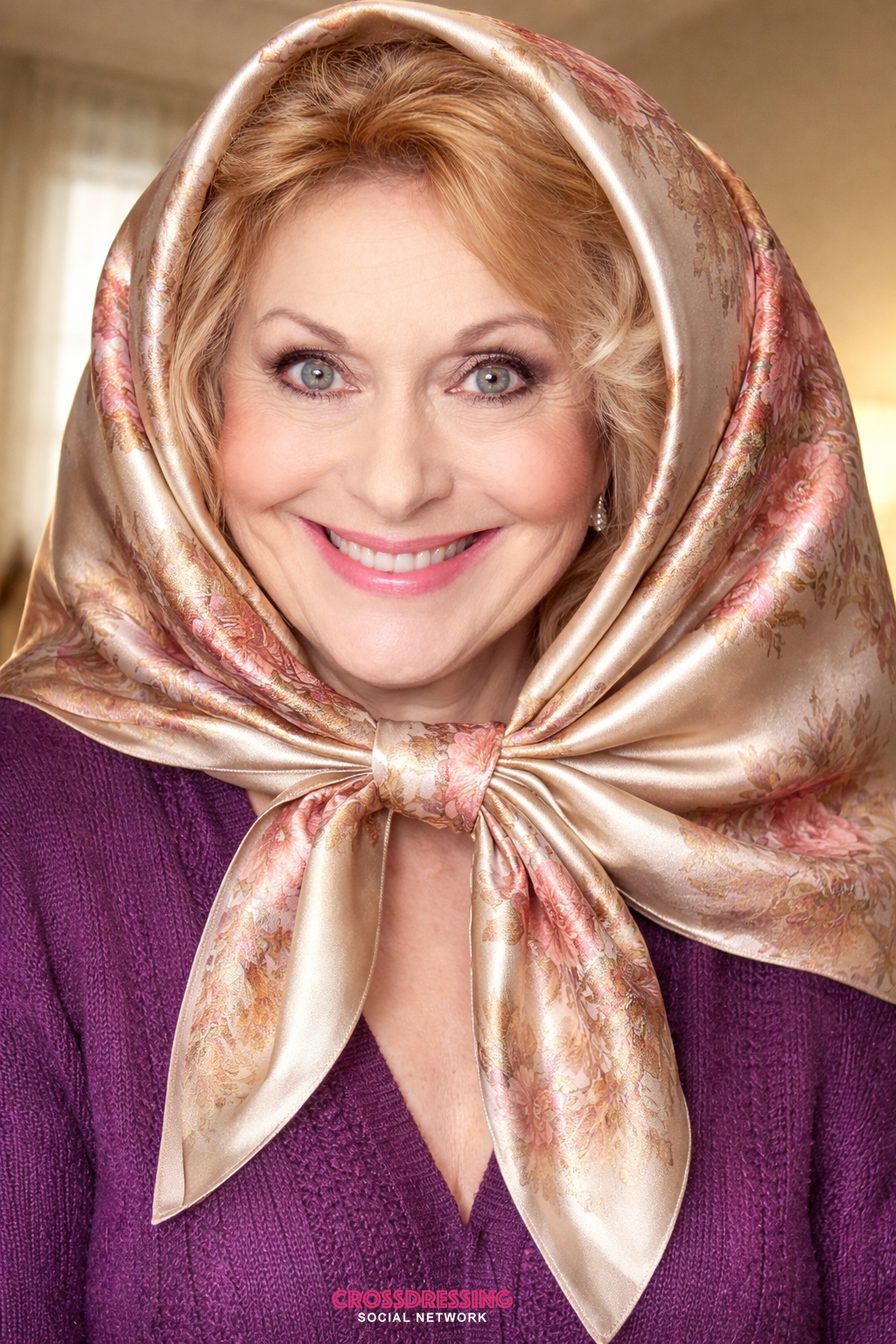
Not with the clothes people expect, not dresses or heels or anything loud, but with the quiet, shimmering certainty of a headscarf unfolded across my lap. Oversized. Generous. A full square of light, as if someone had captured a piece of dawn and stitched its edges.
I keep them in a pine ottoman chest at the foot of my bed. When I lift the lid, the faint scent of pine wood and time rises, mingling with the cool, whispering smoothness of fabric. They are stacked carefully: florals, paisleys, deep jewel tones, pale creams, even one the colour of storm clouds just before rain. Some are silk satin, impossibly soft, almost liquid. Others are polyester blends still glossy, still kind to the touch, but sturdier, as if meant for endurance.
I tell myself it began for practical reasons. Hair protection, I say. Friction reduction. At my age, what hair remains deserves gentleness. And it’s true the satin glides where cotton drags, it soothes where wool irritates. At night, when I wrap my head, I sleep more peacefully, my scalp free from the tug and dryness that used to wake me.
But that is only the surface of it.
The truth is, when I lift one of those oversized scarves sometimes a full 130 centimeters across it feels like lifting a veil between lives.
I was not always honest about who I was. For decades, I wore what was expected, spoke in the tones expected, moved through the world like a man following a script written long before I was born. There is a heaviness to that kind of living. It settles into your shoulders, your spine, your breath.
The first time I wrapped a satin headscarf around my head, I did it clumsily. I had watched videos, read guides. Fold into a triangle, they said. Bring the corners forward, tie at the nape or under the chin. Smooth the edges. Adjust.
I remember the colour deep burgundy, with a faint floral pattern that caught the light. When I tied it, the fabric slipped against itself with a soft hush, like a secret being kept.
And then I looked in the mirror.
I did not see a caricature. I did not see something absurd or theatrical. I saw softness. I saw a version of myself that had been waiting, patiently, beneath years of denial. The scarf framed my face, softened the lines, held me together in a way nothing else ever had.
Now, it is ritual.
In the mornings, I choose carefully. If I am staying in, I might select something large and enveloping a square so wide it can drape over my shoulders, falling like a shawl. Sometimes I wrap it turban style, tucking the ends neatly, letting the fabric build a quiet crown around my head. Other times, I let it hang loose, a triangle tied under my chin, like something out of an old photograph.
When I go out rarely, but more often than I used to, I choose patterns that feel like companions rather than disguises. A muted paisley. A soft, vintage floral. Nothing too bold, but never apologetic.
People look, of course. Some with curiosity, some with confusion. A few with kindness. I have learned to endure the rest. At sixty five, you realize that most people are too occupied with their own reflections to truly see yours.
At home, the scarves become more than adornment. They are utility, yes sleep caps, shoulder wraps, even something to tie around a bag handle for a touch of colour. But they are also comfort. When I feel the weight of years pressing too hard, I wrap one around my shoulders and sit by the window.
The satin catches the light differently at every hour. Morning makes it glow. Afternoon sharpens its sheen. Evening turns it into something softer, almost like memory.
Sometimes I run the fabric between my fingers, back and forth, feeling its smooth resistance, the way it refuses to snag or cling. It reminds me that gentleness can be strong. That something soft can endure.
I have more than I need. I know that. A drawer full, a chest full, a small collection that borders on obsession. There are handmade ones, with careful stitching at the edges. Reversible ones, satin on both sides, offering two moods in one piece. Silk feel ones that mimic luxury so well it hardly matters that they are not the real thing.
Each has a story, or at least a feeling attached to it. This one for sleepless nights. That one for quiet afternoons. Another for the rare courage of stepping outside as I am.
I do not pretend that a headscarf changes everything. The world is still the world. My body is still heavy, my steps still slow, my past still filled with compromises I cannot undo.
But when I tie that satin around my head, something aligns.
The fabric smooths not just my hair, but something deeper something that has always been frayed. It holds me, gently but firmly, in a shape that feels right.
And for a little while, that is enough.
It begins there, always.
Not with the clothes people expect, not dresses or heels or anything loud, but with the quiet, shimmering certainty of a headscarf unfolded across my lap. Oversized. Generous. A full square of light, as if someone had captured a piece of dawn and stitched its edges.
I keep them in a pine ottoman chest at the foot of my bed. When I lift the lid, the faint scent of pine wood and time rises, mingling with the cool, whispering smoothness of fabric. They are stacked carefully: florals, paisleys, deep jewel tones, pale creams, even one the colour of storm clouds just before rain. Some are silk satin, impossibly soft, almost liquid. Others are polyester blends still glossy, still kind to the touch, but sturdier, as if meant for endurance.
I tell myself it began for practical reasons. Hair protection, I say. Friction reduction. At my age, what hair remains deserves gentleness. And it’s true the satin glides where cotton drags, it soothes where wool irritates. At night, when I wrap my head, I sleep more peacefully, my scalp free from the tug and dryness that used to wake me.
But that is only the surface of it.
The truth is, when I lift one of those oversized scarves sometimes a full 130 centimeters across it feels like lifting a veil between lives.
I was not always honest about who I was. For decades, I wore what was expected, spoke in the tones expected, moved through the world like a man following a script written long before I was born. There is a heaviness to that kind of living. It settles into your shoulders, your spine, your breath.
The first time I wrapped a satin headscarf around my head, I did it clumsily. I had watched videos, read guides. Fold into a triangle, they said. Bring the corners forward, tie at the nape or under the chin. Smooth the edges. Adjust.
I remember the colour deep burgundy, with a faint floral pattern that caught the light. When I tied it, the fabric slipped against itself with a soft hush, like a secret being kept.
And then I looked in the mirror.
I did not see a caricature. I did not see something absurd or theatrical. I saw softness. I saw a version of myself that had been waiting, patiently, beneath years of denial. The scarf framed my face, softened the lines, held me together in a way nothing else ever had.
Now, it is ritual.
In the mornings, I choose carefully. If I am staying in, I might select something large and enveloping a square so wide it can drape over my shoulders, falling like a shawl. Sometimes I wrap it turban style, tucking the ends neatly, letting the fabric build a quiet crown around my head. Other times, I let it hang loose, a triangle tied under my chin, like something out of an old photograph.
When I go out rarely, but more often than I used to, I choose patterns that feel like companions rather than disguises. A muted paisley. A soft, vintage floral. Nothing too bold, but never apologetic.
People look, of course. Some with curiosity, some with confusion. A few with kindness. I have learned to endure the rest. At sixty five, you realize that most people are too occupied with their own reflections to truly see yours.
At home, the scarves become more than adornment. They are utility, yes sleep caps, shoulder wraps, even something to tie around a bag handle for a touch of colour. But they are also comfort. When I feel the weight of years pressing too hard, I wrap one around my shoulders and sit by the window.
The satin catches the light differently at every hour. Morning makes it glow. Afternoon sharpens its sheen. Evening turns it into something softer, almost like memory.
Sometimes I run the fabric between my fingers, back and forth, feeling its smooth resistance, the way it refuses to snag or cling. It reminds me that gentleness can be strong. That something soft can endure.
I have more than I need. I know that. A drawer full, a chest full, a small collection that borders on obsession. There are handmade ones, with careful stitching at the edges. Reversible ones, satin on both sides, offering two moods in one piece. Silk feel ones that mimic luxury so well it hardly matters that they are not the real thing.
Each has a story, or at least a feeling attached to it. This one for sleepless nights. That one for quiet afternoons. Another for the rare courage of stepping outside as I am.
I do not pretend that a headscarf changes everything. The world is still the world. My body is still heavy, my steps still slow, my past still filled with compromises I cannot undo.
But when I tie that satin around my head, something aligns.
The fabric smooths not just my hair, but something deeper something that has always been frayed. It holds me, gently but firmly, in a shape that feels right.
And for a little while, that is enough.
I am sixty-five years old, and there are mornings when my bones creak like old floorboards, when the mirror offers me a face that has known too many winters. But there is also satin.
It begins there, always.
Not with the clothes people expect, not dresses or heels or anything loud, but with the quiet, shimmering certainty of a headscarf unfolded across my lap. Oversized. Generous. A full square of light, as if someone had captured a piece of dawn and stitched its edges.
I keep them in a pine ottoman chest at the foot of my bed. When I lift the lid, the faint scent of pine wood and time rises, mingling with the cool, whispering smoothness of fabric. They are stacked carefully: florals, paisleys, deep jewel tones, pale creams, even one the colour of storm clouds just before rain. Some are silk satin, impossibly soft, almost liquid. Others are polyester blends still glossy, still kind to the touch, but sturdier, as if meant for endurance.
I tell myself it began for practical reasons. Hair protection, I say. Friction reduction. At my age, what hair remains deserves gentleness. And it’s true the satin glides where cotton drags, it soothes where wool irritates. At night, when I wrap my head, I sleep more peacefully, my scalp free from the tug and dryness that used to wake me.
But that is only the surface of it.
The truth is, when I lift one of those oversized scarves sometimes a full 130 centimeters across it feels like lifting a veil between lives.
I was not always honest about who I was. For decades, I wore what was expected, spoke in the tones expected, moved through the world like a man following a script written long before I was born. There is a heaviness to that kind of living. It settles into your shoulders, your spine, your breath.
The first time I wrapped a satin headscarf around my head, I did it clumsily. I had watched videos, read guides. Fold into a triangle, they said. Bring the corners forward, tie at the nape or under the chin. Smooth the edges. Adjust.
I remember the colour deep burgundy, with a faint floral pattern that caught the light. When I tied it, the fabric slipped against itself with a soft hush, like a secret being kept.
And then I looked in the mirror.
I did not see a caricature. I did not see something absurd or theatrical. I saw softness. I saw a version of myself that had been waiting, patiently, beneath years of denial. The scarf framed my face, softened the lines, held me together in a way nothing else ever had.
Now, it is ritual.
In the mornings, I choose carefully. If I am staying in, I might select something large and enveloping a square so wide it can drape over my shoulders, falling like a shawl. Sometimes I wrap it turban style, tucking the ends neatly, letting the fabric build a quiet crown around my head. Other times, I let it hang loose, a triangle tied under my chin, like something out of an old photograph.
When I go out rarely, but more often than I used to, I choose patterns that feel like companions rather than disguises. A muted paisley. A soft, vintage floral. Nothing too bold, but never apologetic.
People look, of course. Some with curiosity, some with confusion. A few with kindness. I have learned to endure the rest. At sixty five, you realize that most people are too occupied with their own reflections to truly see yours.
At home, the scarves become more than adornment. They are utility, yes sleep caps, shoulder wraps, even something to tie around a bag handle for a touch of colour. But they are also comfort. When I feel the weight of years pressing too hard, I wrap one around my shoulders and sit by the window.
The satin catches the light differently at every hour. Morning makes it glow. Afternoon sharpens its sheen. Evening turns it into something softer, almost like memory.
Sometimes I run the fabric between my fingers, back and forth, feeling its smooth resistance, the way it refuses to snag or cling. It reminds me that gentleness can be strong. That something soft can endure.
I have more than I need. I know that. A drawer full, a chest full, a small collection that borders on obsession. There are handmade ones, with careful stitching at the edges. Reversible ones, satin on both sides, offering two moods in one piece. Silk feel ones that mimic luxury so well it hardly matters that they are not the real thing.
Each has a story, or at least a feeling attached to it. This one for sleepless nights. That one for quiet afternoons. Another for the rare courage of stepping outside as I am.
I do not pretend that a headscarf changes everything. The world is still the world. My body is still heavy, my steps still slow, my past still filled with compromises I cannot undo.
But when I tie that satin around my head, something aligns.
The fabric smooths not just my hair, but something deeper something that has always been frayed. It holds me, gently but firmly, in a shape that feels right.
And for a little while, that is enough.



 English
 Arabic
 Spanish
 Portuguese
 Deutsch
 Turkish
 Dutch
Dutch
 Italiano
 Russian
 Romaian
 Portuguese (Brazil)
 Greek
Greek