


I am sixty four, unemployed after caring for the last few years for my wife, and a widower of exactly three months. My wife died from a long ilness on the 12th of November 2025. The house is a 1970s terraced end of row in a quiet Midlands estate, two up, two down, pebble dash front, UPVC windows, the kind of place where neighbours know when you put the bins out. No children, long grown up and moved away, nor other family members, just me and the central heating that clicks on at six-thirty every morning whether I want it to or not.
We were married forty five years. I worked in the same warehouse until they made me redundant in 2020, she kept the books for a small solicitor until her diagnosis. After the funeral I sold her car, cancelled the window cleaner, and the weekly supermarket internet shopping and started drawing on my tiny pension. The days are long and the nights are longer.
Most evenings I sit in the front room with the curtains drawn and the television on mute. Tonight the house feels smaller than usual. The clock on the mantelpiece says 21:17. I stand up, switch off the lamp, and walk upstairs in the dark.
In the spare bedroom her sewing room that became my dressing room I open the tall IKEA wardrobe. The left side is still her dresses and coats. The right side is mine: the secret side. Rows of satin headscarves in every colour, polyester foulards bought on eBay, oversized satin hijabs in midnight black and charcoal, metres and metres of sheer chiffon voile in black, graphite, and the deepest ink. Some still smell faintly of the fabric softener she used.
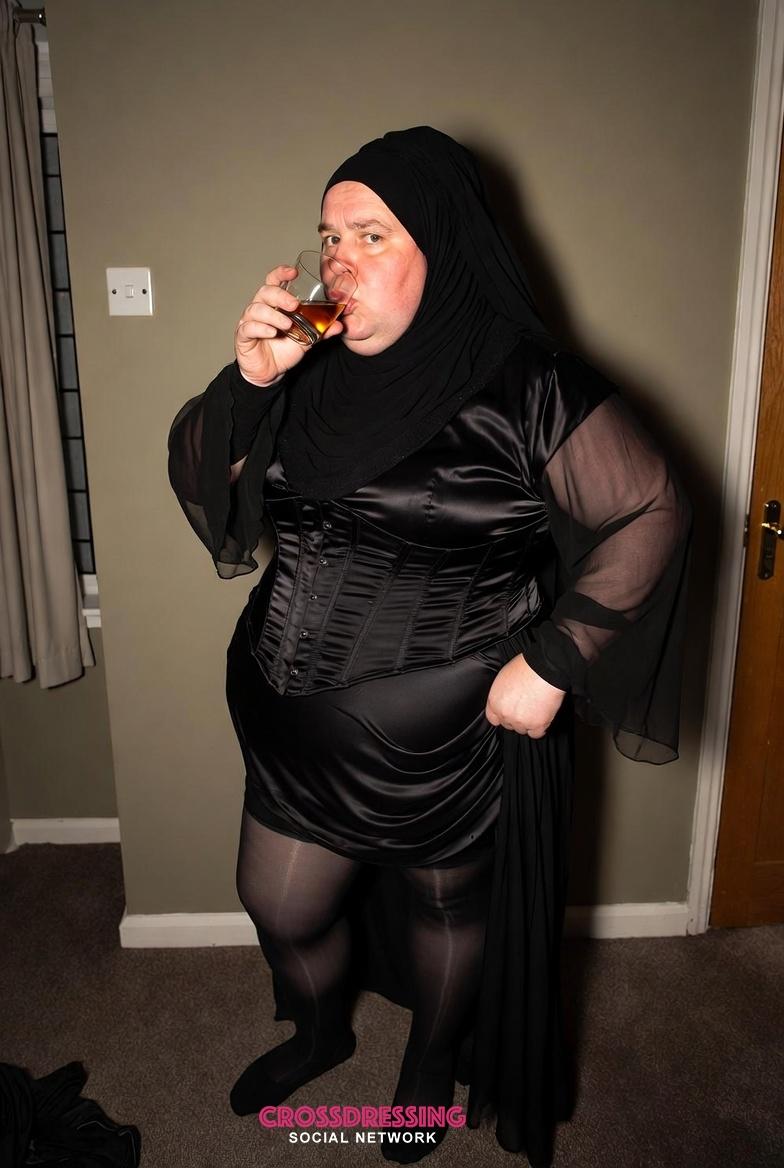
I undress slowly. The mirror on the wardrobe door is cheap and slightly warped, but it is honest. Naked, sixty-four, soft belly, thin legs, the body of a man who has outlived his usefulness. I reach for the black satin corset first, cheap second hand eBay corset lingerie, lightly boned, size 3XL. I hook it closed until my waist and soft belly shrink and my breathing turns shallower. Then the high waisted black satin knickers, the sheer black stockings with the wide lace tops, the long line black satin slip that whispers against my skin like a promise.
Next the dress: a full skirted 1950s style mourning day dress made from heavy black polyester satin, high collar, long sleeves, hem that brushes my ankles. Over it I tie a wide black satin sash that cinches across my contained belly. The fabric is slippery, cool, obscene in its shine.
Now the head. This is the part that matters most.
I choose the largest satin hijab first, jet black, 140 cm square, heavy bridal satin that catches every stray bit of light. I fold it into a triangle, drape it over my head so the point hangs down my back, then bring the two ends under my chin and tie them in a tight knot at the nape of my neck. The satin lies glossy and taut across my forehead, smooth over my ears, covering every grey hair. It feels like being sealed.
Over the satin I pin a second layer: a sheer black chiffon voile scarf, almost transparent, 120 cm square. I drape it loosely so it falls across my face like a mourner’s veil from another century, but softer, more sensual. The chiffon drifts against my lips when I breathe. I can see through it, only just, but the world is softened, blurred, intimate. I add a third scarf, a smaller polyester foulard in charcoal, tied bandana style over the top to weight the chiffon down and keep it in place. The layers stack: satin underneath, chiffon floating, polyester binding. My face is gone. Only eyes, mouth, the suggestion of a nose remain.
I step back. The mirror shows a figure that is neither man nor woman, neither past nor present. A black satin widow from a fever dream. The train of the dress drags on the cheap carpet, the petticoat beneath it rustles. Every movement makes the satin sigh.
I walk downstairs like this, tiny steps because the corset and the long skirt will allow nothing else. The chiffon veil brushes my lashes. In the kitchen I pour a large whisky with gloved hands, black satin opera gloves that reach my elbows. I carry the glass into the living room, sit on the sofa, cross my legs at the ankle the way she used to. The layers of satin and chiffon settle around me like a second skin.
Outside, a car passes. Inside, the only sound is the soft hiss of fabric when I breathe.
Three months a widower. Forty five years a husband. Sixty four years a man who has always, secretly, wanted to disappear inside silk and satin and the soft prison of a veil.
I lift the edge of the chiffon just enough to sip the whisky. The taste is sharp against the sweetness of the fabric against my mouth. Then I let the veil fall again.
In this house, in this year 2026, no one is watching.
No one will ever know.
And for the first time since November, I feel almost at peace
perfectly veiled,
perfectly hidden,
perfectly hers.
We were married forty five years. I worked in the same warehouse until they made me redundant in 2020, she kept the books for a small solicitor until her diagnosis. After the funeral I sold her car, cancelled the window cleaner, and the weekly supermarket internet shopping and started drawing on my tiny pension. The days are long and the nights are longer.
Most evenings I sit in the front room with the curtains drawn and the television on mute. Tonight the house feels smaller than usual. The clock on the mantelpiece says 21:17. I stand up, switch off the lamp, and walk upstairs in the dark.
In the spare bedroom her sewing room that became my dressing room I open the tall IKEA wardrobe. The left side is still her dresses and coats. The right side is mine: the secret side. Rows of satin headscarves in every colour, polyester foulards bought on eBay, oversized satin hijabs in midnight black and charcoal, metres and metres of sheer chiffon voile in black, graphite, and the deepest ink. Some still smell faintly of the fabric softener she used.
I undress slowly. The mirror on the wardrobe door is cheap and slightly warped, but it is honest. Naked, sixty-four, soft belly, thin legs, the body of a man who has outlived his usefulness. I reach for the black satin corset first, cheap second hand eBay corset lingerie, lightly boned, size 3XL. I hook it closed until my waist and soft belly shrink and my breathing turns shallower. Then the high waisted black satin knickers, the sheer black stockings with the wide lace tops, the long line black satin slip that whispers against my skin like a promise.
Next the dress: a full skirted 1950s style mourning day dress made from heavy black polyester satin, high collar, long sleeves, hem that brushes my ankles. Over it I tie a wide black satin sash that cinches across my contained belly. The fabric is slippery, cool, obscene in its shine.
Now the head. This is the part that matters most.
I choose the largest satin hijab first, jet black, 140 cm square, heavy bridal satin that catches every stray bit of light. I fold it into a triangle, drape it over my head so the point hangs down my back, then bring the two ends under my chin and tie them in a tight knot at the nape of my neck. The satin lies glossy and taut across my forehead, smooth over my ears, covering every grey hair. It feels like being sealed.
Over the satin I pin a second layer: a sheer black chiffon voile scarf, almost transparent, 120 cm square. I drape it loosely so it falls across my face like a mourner’s veil from another century, but softer, more sensual. The chiffon drifts against my lips when I breathe. I can see through it, only just, but the world is softened, blurred, intimate. I add a third scarf, a smaller polyester foulard in charcoal, tied bandana style over the top to weight the chiffon down and keep it in place. The layers stack: satin underneath, chiffon floating, polyester binding. My face is gone. Only eyes, mouth, the suggestion of a nose remain.
I step back. The mirror shows a figure that is neither man nor woman, neither past nor present. A black satin widow from a fever dream. The train of the dress drags on the cheap carpet, the petticoat beneath it rustles. Every movement makes the satin sigh.
I walk downstairs like this, tiny steps because the corset and the long skirt will allow nothing else. The chiffon veil brushes my lashes. In the kitchen I pour a large whisky with gloved hands, black satin opera gloves that reach my elbows. I carry the glass into the living room, sit on the sofa, cross my legs at the ankle the way she used to. The layers of satin and chiffon settle around me like a second skin.
Outside, a car passes. Inside, the only sound is the soft hiss of fabric when I breathe.
Three months a widower. Forty five years a husband. Sixty four years a man who has always, secretly, wanted to disappear inside silk and satin and the soft prison of a veil.
I lift the edge of the chiffon just enough to sip the whisky. The taste is sharp against the sweetness of the fabric against my mouth. Then I let the veil fall again.
In this house, in this year 2026, no one is watching.
No one will ever know.
And for the first time since November, I feel almost at peace
perfectly veiled,
perfectly hidden,
perfectly hers.
I am sixty four, unemployed after caring for the last few years for my wife, and a widower of exactly three months. My wife died from a long ilness on the 12th of November 2025. The house is a 1970s terraced end of row in a quiet Midlands estate, two up, two down, pebble dash front, UPVC windows, the kind of place where neighbours know when you put the bins out. No children, long grown up and moved away, nor other family members, just me and the central heating that clicks on at six-thirty every morning whether I want it to or not.
We were married forty five years. I worked in the same warehouse until they made me redundant in 2020, she kept the books for a small solicitor until her diagnosis. After the funeral I sold her car, cancelled the window cleaner, and the weekly supermarket internet shopping and started drawing on my tiny pension. The days are long and the nights are longer.
Most evenings I sit in the front room with the curtains drawn and the television on mute. Tonight the house feels smaller than usual. The clock on the mantelpiece says 21:17. I stand up, switch off the lamp, and walk upstairs in the dark.
In the spare bedroom her sewing room that became my dressing room I open the tall IKEA wardrobe. The left side is still her dresses and coats. The right side is mine: the secret side. Rows of satin headscarves in every colour, polyester foulards bought on eBay, oversized satin hijabs in midnight black and charcoal, metres and metres of sheer chiffon voile in black, graphite, and the deepest ink. Some still smell faintly of the fabric softener she used.
I undress slowly. The mirror on the wardrobe door is cheap and slightly warped, but it is honest. Naked, sixty-four, soft belly, thin legs, the body of a man who has outlived his usefulness. I reach for the black satin corset first, cheap second hand eBay corset lingerie, lightly boned, size 3XL. I hook it closed until my waist and soft belly shrink and my breathing turns shallower. Then the high waisted black satin knickers, the sheer black stockings with the wide lace tops, the long line black satin slip that whispers against my skin like a promise.
Next the dress: a full skirted 1950s style mourning day dress made from heavy black polyester satin, high collar, long sleeves, hem that brushes my ankles. Over it I tie a wide black satin sash that cinches across my contained belly. The fabric is slippery, cool, obscene in its shine.
Now the head. This is the part that matters most.
I choose the largest satin hijab first, jet black, 140 cm square, heavy bridal satin that catches every stray bit of light. I fold it into a triangle, drape it over my head so the point hangs down my back, then bring the two ends under my chin and tie them in a tight knot at the nape of my neck. The satin lies glossy and taut across my forehead, smooth over my ears, covering every grey hair. It feels like being sealed.
Over the satin I pin a second layer: a sheer black chiffon voile scarf, almost transparent, 120 cm square. I drape it loosely so it falls across my face like a mourner’s veil from another century, but softer, more sensual. The chiffon drifts against my lips when I breathe. I can see through it, only just, but the world is softened, blurred, intimate. I add a third scarf, a smaller polyester foulard in charcoal, tied bandana style over the top to weight the chiffon down and keep it in place. The layers stack: satin underneath, chiffon floating, polyester binding. My face is gone. Only eyes, mouth, the suggestion of a nose remain.
I step back. The mirror shows a figure that is neither man nor woman, neither past nor present. A black satin widow from a fever dream. The train of the dress drags on the cheap carpet, the petticoat beneath it rustles. Every movement makes the satin sigh.
I walk downstairs like this, tiny steps because the corset and the long skirt will allow nothing else. The chiffon veil brushes my lashes. In the kitchen I pour a large whisky with gloved hands, black satin opera gloves that reach my elbows. I carry the glass into the living room, sit on the sofa, cross my legs at the ankle the way she used to. The layers of satin and chiffon settle around me like a second skin.
Outside, a car passes. Inside, the only sound is the soft hiss of fabric when I breathe.
Three months a widower. Forty five years a husband. Sixty four years a man who has always, secretly, wanted to disappear inside silk and satin and the soft prison of a veil.
I lift the edge of the chiffon just enough to sip the whisky. The taste is sharp against the sweetness of the fabric against my mouth. Then I let the veil fall again.
In this house, in this year 2026, no one is watching.
No one will ever know.
And for the first time since November, I feel almost at peace
perfectly veiled,
perfectly hidden,
perfectly hers.


 Arabic
 French
 Spanish
 Portuguese
 Deutsch
 Turkish
 Dutch
Dutch
 Italiano
 Russian
 Romaian
 Portuguese (Brazil)
 Greek
Greek