


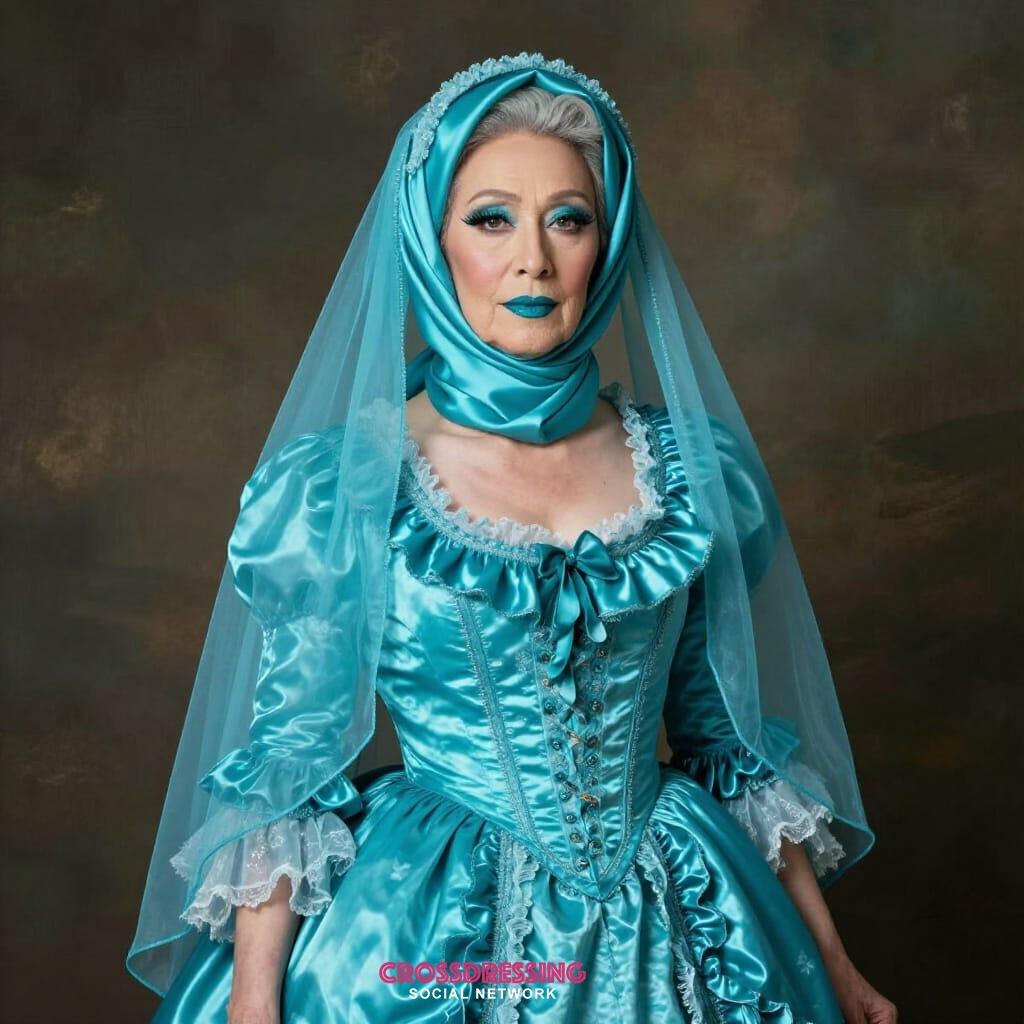
I had just finished fastening the last hidden hook at the back of my turquoise gown when the knock came. Five soft raps. Familiar. Unhurried. For a moment my heart stuttered, the old reflex, the ancient fear and my hands flew to the veil as if I could suddenly disappear beneath it. No one ever came unannounced anymore. At sixty four, surprises usually meant doctors or delivery drivers. Then I recognised the rhythm. Only one person still knocked like that. “Don’t answer,” I whispered to myself. But I already knew I would. I moved toward the door, satin whispering around my legs, chiffon brushing my cheeks. Each step felt like a small confession. When I opened it, there she stood, Margaret. “Well,” she said gently, taking a long appraisal at me from headscarf to hem, “you’ve finally gone back to turquoise.” The relief hit me so hard I had to grip the doorframe. She didn’t gasp. Didn’t stare. Didn’t ask. She stepped inside as if this were the most ordinary thing in the world. Margaret and I had known each other forty years. We met in a crossdressing support group that didn’t dare use honest language, two frightened middle aged men pretending we were only “curious.” We had survived marriages, divorces, children, funerals, health scares, church shame, private wardrobes, public disguises. She was the only one who knew about her, the other side of me and about my wife, about the promise I made to bury this part of myself with her. Then she laughed a low, delighted laugh I hadn’t heard in years. “Well,” she said, stepping back to take me in properly, “someone’s been practising.” “And someone,” I replied, eyes dropping pointedly to her coat, “is hiding something under there.” She raised one eyebrow, theatrical as ever, and swept inside without another word. In the sitting room she removed her coat slowly, with ceremony. Underneath, she bloomed. Lavender satin skirt, soft as spilled dusk. A pearl-grey blouse with tiny buttons marching down its front. Her shoulders were draped in a pale mourning shawl, but beneath it shimmered a corset modest, yes, but unmistakably intentional. Her hair still stubbornly silver and short was crowned with a small violet fascinator tilted at a hopeful angle. We stared at each other. Then, at exactly the same moment, we burst into laughter. “Oh my God,” she said, clutching the back of a chair. “Look at us.” “Two antique chandeliers,” I said. “With arthritis.” She crossed the room and turned me gently by the shoulders toward the mirror. “Look properly,” she said. And I did. Two elderly figures in satin and chiffon and stubborn colour, layered with grief and courage and too many decades of silence. My turquoise against her lavender, mourning shades learning how to speak joy. “I never thought,” I said quietly, “that I’d be doing this at sixty four. With company.” “Better late than embalmed,” she replied. We helped each other settle in the armchairs, cushions adjusted, skirts arranged, veils tamed. She fixed my eyeliner with the same tenderness she’d used the last time we met. I fastened a hook she couldn’t quite reach at the back of her corset. Our hands lingered, not with desire, but with recognition. Tea became sherry. Sherry became stories. We spoke of first dresses bought in secret, of wigs hidden in lofts, of wives who never knew and wives who half knew and one who knew everything and loved anyway. We spoke of shame, of church halls, of changing rooms we never dared enter. At one point she stood and curtsied, wobbling dangerously. “Behold,” she announced, “the ghost of femininity past.” I applauded, carefully, so I didn’t spill my sherry. Later, when the light softened and the veil cast turquoise shadows across the wall, we grew quieter. “I was so lonely after Shirley died,” she said softly. “Not for another woman to replace her. For… this.” She gestured between us. “I know,” I said. And I did. Before she left, we stood by the door together, adjusting each other one last time, smoothing frills, straightening shawls, checking lipstick like two conspirators before a masquerade. “We should do this again,” she said. “Regularly,” I said at once. “Before courage changes its mind.” She smiled. “You know,” she said gently, “we don’t have to call it mourning forever.” I watched her walk away in lavender, support cane tapping, skirt swaying stubbornly against time. When I closed the door, the house no longer felt like a place of echoes. It felt like a dressing room. And for the first time in a very long life, I looked forward not to remembering, but to the next time I would become myself with someone who truly understood.
I had just finished fastening the last hidden hook at the back of my turquoise gown when the knock came. Five soft raps. Familiar. Unhurried. For a moment my heart stuttered, the old reflex, the ancient fear and my hands flew to the veil as if I could suddenly disappear beneath it. No one ever came unannounced anymore. At sixty four, surprises usually meant doctors or delivery drivers. Then I recognised the rhythm. Only one person still knocked like that. “Don’t answer,” I whispered to myself. But I already knew I would. I moved toward the door, satin whispering around my legs, chiffon brushing my cheeks. Each step felt like a small confession. When I opened it, there she stood, Margaret. “Well,” she said gently, taking a long appraisal at me from headscarf to hem, “you’ve finally gone back to turquoise.” The relief hit me so hard I had to grip the doorframe. She didn’t gasp. Didn’t stare. Didn’t ask. She stepped inside as if this were the most ordinary thing in the world. Margaret and I had known each other forty years. We met in a crossdressing support group that didn’t dare use honest language, two frightened middle aged men pretending we were only “curious.” We had survived marriages, divorces, children, funerals, health scares, church shame, private wardrobes, public disguises. She was the only one who knew about her, the other side of me and about my wife, about the promise I made to bury this part of myself with her. Then she laughed a low, delighted laugh I hadn’t heard in years. “Well,” she said, stepping back to take me in properly, “someone’s been practising.” “And someone,” I replied, eyes dropping pointedly to her coat, “is hiding something under there.” She raised one eyebrow, theatrical as ever, and swept inside without another word. In the sitting room she removed her coat slowly, with ceremony. Underneath, she bloomed. Lavender satin skirt, soft as spilled dusk. A pearl-grey blouse with tiny buttons marching down its front. Her shoulders were draped in a pale mourning shawl, but beneath it shimmered a corset modest, yes, but unmistakably intentional. Her hair still stubbornly silver and short was crowned with a small violet fascinator tilted at a hopeful angle. We stared at each other. Then, at exactly the same moment, we burst into laughter. “Oh my God,” she said, clutching the back of a chair. “Look at us.” “Two antique chandeliers,” I said. “With arthritis.” She crossed the room and turned me gently by the shoulders toward the mirror. “Look properly,” she said. And I did. Two elderly figures in satin and chiffon and stubborn colour, layered with grief and courage and too many decades of silence. My turquoise against her lavender, mourning shades learning how to speak joy. “I never thought,” I said quietly, “that I’d be doing this at sixty four. With company.” “Better late than embalmed,” she replied. We helped each other settle in the armchairs, cushions adjusted, skirts arranged, veils tamed. She fixed my eyeliner with the same tenderness she’d used the last time we met. I fastened a hook she couldn’t quite reach at the back of her corset. Our hands lingered, not with desire, but with recognition. Tea became sherry. Sherry became stories. We spoke of first dresses bought in secret, of wigs hidden in lofts, of wives who never knew and wives who half knew and one who knew everything and loved anyway. We spoke of shame, of church halls, of changing rooms we never dared enter. At one point she stood and curtsied, wobbling dangerously. “Behold,” she announced, “the ghost of femininity past.” I applauded, carefully, so I didn’t spill my sherry. Later, when the light softened and the veil cast turquoise shadows across the wall, we grew quieter. “I was so lonely after Shirley died,” she said softly. “Not for another woman to replace her. For… this.” She gestured between us. “I know,” I said. And I did. Before she left, we stood by the door together, adjusting each other one last time, smoothing frills, straightening shawls, checking lipstick like two conspirators before a masquerade. “We should do this again,” she said. “Regularly,” I said at once. “Before courage changes its mind.” She smiled. “You know,” she said gently, “we don’t have to call it mourning forever.” I watched her walk away in lavender, support cane tapping, skirt swaying stubbornly against time. When I closed the door, the house no longer felt like a place of echoes. It felt like a dressing room. And for the first time in a very long life, I looked forward not to remembering, but to the next time I would become myself with someone who truly understood.


 English
 Arabic
 French
 Spanish
 Deutsch
 Turkish
 Dutch
Dutch
 Italiano
 Russian
 Romaian
 Portuguese (Brazil)
 Greek
Greek